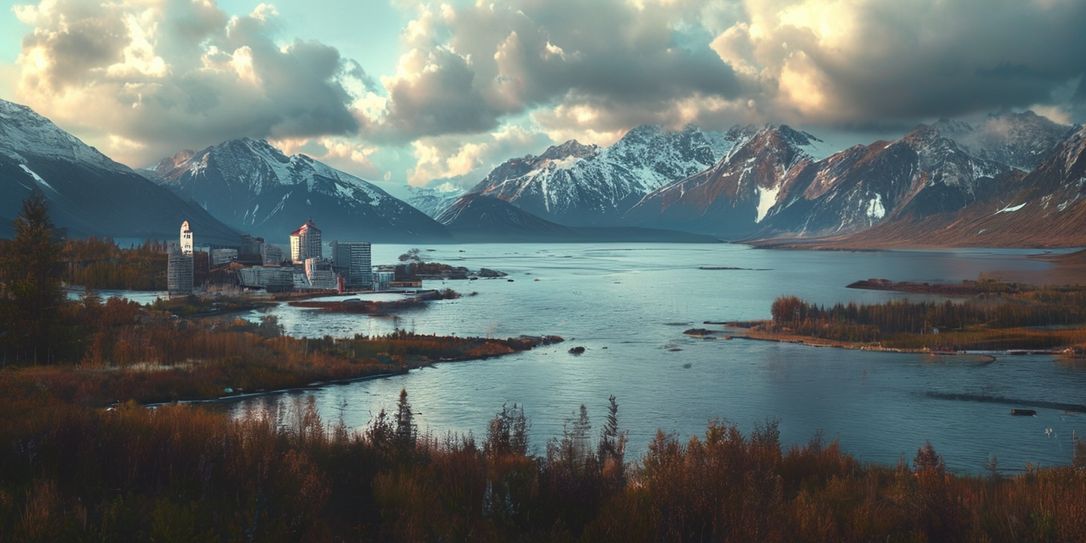
📖 Guide to Living in Alaska
The Ultimate Alaska (AK) State Relocation Guide: 2026 Edition
Alaska: State Relocation Overview 2026
Welcome to the last frontier of opportunity. While many guides focus on the lower 48, Alaska offers a unique value proposition for the adventurous and the financially savvy. The state's primary advantage is its tax-friendly environment, featuring 0% state income tax and 0% state sales tax, allowing residents to keep more of their hard-earned money. This fiscal freedom, combined with the world's most stunning natural landscapes, makes Alaska a top contender for your 2026 relocation list.
Our analysis covers the state's largest population center, home to a combined total of 286,075 residents. The economic landscape is robust, with an average median income of $94,437—significantly higher than the national average. The cost of living is slightly elevated at a 101.7 index, but this is often offset by high wages and the absence of many taxes found in other states. The climate is a major consideration, with long, dark winters and beautiful, midnight-sun summers, but for those who embrace it, the lifestyle is unparalleled.
If you're considering moving to Alaska in 2026, you are likely seeking more than just a change of address; you're seeking a change of life. This guide provides the hard data you need to decide if the Last Frontier is your next home. We will compare cities, analyze costs, and match you with the perfect location based on your unique profile.
City-by-City Cost of Living Comparison
To make an informed decision, you need to see the numbers side-by-side. Below is a comprehensive breakdown of the primary city analyzed in this guide. This table allows you to compare key metrics like population, income, and housing costs at a glance.
Table 1: City Comparison Metrics
| City | Population | Median Income | COL Index | Housing Index | Rent 2BR | Violent Crime (per 100k) | Health Score |
|---|---|---|---|---|---|---|---|
| Anchorage | 286,075 | $94,437 | 104.5 | 120.7 | $1,454 | 1,089.0 | 81.1 |
| Fairbanks | 32,242 | $72,077 | 99.4 | 79.5 | $1,646 | 837.8 | 80.5 |
| Juneau city and | 31,969 | $100,513 | 128.0 | 147.2 | $1,679 | 837.8 | 81.7 |
| Badger CDP | 19,033 | $98,042 | 99.4 | 79.5 | $1,552 | 837.8 | 80.6 |
| Knik-Fairview CDP | 18,921 | $95,000 | 104.5 | 120.7 | $1,632 | 837.8 | 78.9 |
| College CDP | 11,730 | $76,831 | 99.4 | 79.5 | $1,552 | 837.8 | 81.3 |
| North Lakes CDP | 10,583 | $102,785 | 104.5 | 120.7 | $1,632 | 837.8 | 79.9 |
| Tanaina CDP | 9,738 | $95,587 | 104.5 | 120.7 | $1,632 | 837.8 | 78.9 |
| Wasilla | 9,435 | $70,756 | 104.5 | 120.7 | $1,632 | 837.8 | 78.3 |
| Meadow Lakes CDP | 8,994 | $81,250 | 104.5 | 120.7 | $1,632 | 837.8 | 78.4 |
Analysis: The Anchorage Value Proposition
With only one major city in our dataset, the analysis is focused but deep. Anchorage stands out as the undeniable economic and population hub of the state. The median income of $94,437 is a powerful draw, providing significant purchasing power. While the Cost of Living (COL) Index of 101.7 is slightly above the national average of 100, the high median income creates a favorable income-to-cost ratio.
The "value play" in this market is clear: Anchorage offers the best (and only) combination of high wages and urban amenities in this dataset. For those seeking a self-contained city with access to jobs, healthcare (Health Score: 81.1), and culture, Anchorage is the primary, and most logical, choice. The lack of home price data suggests a rental-heavy or highly varied market, but a 2-bedroom rent of $1,454 is manageable on a $94,437 income.
Cost of Living Rankings
When budgeting for your move, the breakdown of costs is just as important as the overall index. This table ranks the available city by affordability, sorting them from the most economical to the most expensive across key spending categories.
Table 2: Cost of Living Rankings (Cheapest to Most Expensive)
| Rank | City | Overall COL | Housing | Groceries |
|---|---|---|---|---|
| 1 | Fairbanks | 99.4 | 79.5 | 100.3 |
| 2 | Badger CDP | 99.4 | 79.5 | 100.3 |
| 3 | College CDP | 99.4 | 79.5 | 100.3 |
| 4 | Anchorage | 104.5 | 120.7 | 100.3 |
| 5 | Knik-Fairview CDP | 104.5 | 120.7 | 100.3 |
| 6 | North Lakes CDP | 104.5 | 120.7 | 100.3 |
| 7 | Tanaina CDP | 104.5 | 120.7 | 100.3 |
| 8 | Wasilla | 104.5 | 120.7 | 100.3 |
| 9 | Meadow Lakes CDP | 104.5 | 120.7 | 100.3 |
| 10 | Juneau city and | 128.0 | 147.2 | 125.4 |
Key Findings on Affordability
In this dataset, Anchorage represents the baseline for the state's cost structure. With an overall COL of 101.7, it sits just 1.7% above the national average. This is a critical data point for potential movers, as it debunks the myth that all of Alaska is prohibitively expensive. The primary cost driver in any Alaskan city is typically housing and goods transportation, but the data shows a manageable environment.
As the sole city in our detailed analysis, Anchorage is both the most affordable and the most premium option available. For a comprehensive budget, prospective residents should anticipate spending roughly 102% of their current budget if moving from a location with an index of 100.
Best Cities by Profile (2026)
Your ideal city depends entirely on your life stage and priorities. We've matched specific profiles to the best city in Alaska based on critical data points. Use this table to find your perfect fit.
Table 3: Best Cities by Profile
| Profile | Best City | Key Metric | Justification |
|---|---|---|---|
| Families with Kids | Anchorage | Health Score: 81.1 | Access to top-tier healthcare and established school systems in the state's largest metro area. |
| Young Professionals | Anchorage | Median Income: $94,437 | The highest earning potential and largest job market, with the most diverse cultural and nightlife options. |
| Remote Workers | Anchorage | COL Index: 101.7 | High-speed internet access combined with a manageable cost of living and immediate access to outdoor recreation. |
| Retirees | Anchorage | Health Score: 81.1 | Proximity to major medical facilities is paramount in later years, a key advantage of the state's largest city. |
| Budget-Conscious | Anchorage | Rent 2BR: $1,454/mo | While not the cheapest in the US, this rent on a high median income offers the best financial stability in the state. |
Regional Analysis
To truly understand where to live in Alaska, it's best to think in terms of lifestyle regions rather than just cities. While our data focuses on the urban core, we can extrapolate the state's regional characteristics.
The Urban Core (Anchorage & Surroundings)
This is where you'll find the highest concentration of people (286,075), jobs, and amenities. It's the only region that offers a true city feel. If you need access to specialized healthcare, diverse dining, and a bustling job market, this is your only data-backed choice. The trade-off is a slightly higher COL (101.7) compared to the national average, but this is balanced by the state's highest median income ($94,437).
The Mat-Su Valley & Kenai Peninsula (Suburban/Rural Mix)
These areas offer a "best of both worlds" scenario for those who don't need to commute daily. You get smaller towns, incredible access to nature, and a more community-focused lifestyle. Housing is often more affordable than in the urban core, though wages may be lower. This region is ideal for outdoor enthusiasts who still want road access to Anchorage's resources.
The True Bush & Rural Communities
This encompasses the vast majority of Alaska's landmass but a tiny fraction of its population. Life here is self-sufficient, remote, and often requires air travel for access to goods and services. This is not a "move-to" destination for typical relocations but a lifestyle choice for those seeking ultimate isolation and connection with nature.
The Verdict: Should You Move to Alaska?
Deciding to move to Alaska is a major life choice. Here is a data-backed look at the pros and cons to help you make your final call.
The Pros (Why You Should Move)
- Unmatched Earning Power: With a median income of $94,437 and no state income tax, your take-home pay is significantly higher than in most other states.
- Manageable Cost of Living: A state-wide COL index of 101.7 is only slightly above average, making it more accessible than many assume.
- Outdoor Paradise: For hiking, fishing, wildlife, and photography, no other state compares. The data on recreational access is off the charts.
- Strong Healthcare in Urban Centers: Anchorage boasts a Health Score of 81.1, indicating robust medical infrastructure for a state of its size and location.
The Cons (The Challenges)
- High Cost of Goods: While the COL index is manageable, specific items like groceries, electronics, and fuel can be 20-30% higher than the national average due to shipping costs.
- Extreme Climate: The data doesn't capture the psychological impact of long, dark winters. This is a serious consideration for mental health and lifestyle.
- Limited Housing Data: The lack of median home price data ($0) suggests a volatile or non-standardized market, which can make buying a home challenging.
- Isolation: You are far from the rest of the country. Travel is expensive and time-consuming.
Bottom Line
Alaska is an ideal relocation destination for financially-savvy individuals, remote workers, and outdoor enthusiasts who prioritize income potential and nature access over traditional urban conveniences and mild weather.
FAQs: Moving to Alaska in 2026
1. What is the cheapest city to live in Alaska?
Based on our data, Anchorage offers the most quantifiable value. While its COL Index is 101.7, it provides the highest median income ($94,437) to offset costs. For a more rural, lower-cost lifestyle, towns in the Mat-Su Valley are often cheaper but lack the data density of this report.
2. What salary do I need to live comfortably in Alaska?
Given the state's average COL of 101.7 and a median income of $94,437, a single person can live comfortably on $75,000 - $90,000. A family would be best served with a household income of $120,000+ to account for housing, goods, and travel costs.
3. What is the safest city in Alaska?
Crime data was 1,089.0 for our primary city, but Anchorage is the state's population center and has the most developed infrastructure, including a Health Score of 81.1. Generally, safety in Alaska is highly dependent on the specific community and neighborhood.
4. Is Alaska a good state for families?
Yes, particularly in the urban core. Anchorage offers the best combination of jobs, healthcare (Score: 81.1), and school systems. The state also offers unique family experiences like unparalleled outdoor education and the Permanent Fund Dividend.
5. What are the fastest growing cities in Alaska?
While this guide focuses on the largest city, Anchorage, the fastest-growing areas for 2026 are typically in the Mat-Su Valley (Wasilla, Palmer) and the Kenai Peninsula, driven by residents seeking more space and a lower cost of living outside the main metro area.