Farmington Hills
2026 Analysis

Cost of Living in
Farmington Hills, MI

Real data on housing, rent, and daily expenses. See exactly how far your dollar goes in Farmington Hills.

COL Index
98
vs National Avg (100)
Median Income
$91k
Household / Year
Avg Rent
$1,029
1-Bedroom Apt
Home Price
$367k
Median Value
Cost Savings
Farmington Hills is Cheaper
Rental Market
Better Rent Prices
Income Potential
Higher Local Salaries

Farmington Hills: The True Cost of Living Analysis (2026)

Let's cut through the marketing brochure nonsense. You're looking at Farmington Hills, Michigan, and you see a Cost of Living (COL) Index of 94.2. That number suggests you’re getting a bargain compared to the national average of 100. But that index is a blunt instrument that hides the real financial bleed. It averages out the highs and lows to give you a number that feels safe, but it doesn't account for the specific tax structure of Michigan or the localized housing volatility in Oakland County. If you are a single earner trying to establish a foothold here, the baseline number you need to keep your head above water is $49,828. This isn't the salary for a lavish lifestyle; it is the minimum entry fee to rent a two-bedroom unit, keep the lights on, put gas in the car, and eat without stress. It represents a "comfortable" survival—meaning you aren't drowning, but you certainly aren't building generational wealth on that income alone. To actually thrive here, understanding where that paycheck disappears requires a forensic audit of your monthly outflow.

📝 Detailed Cost Breakdown

Category / Metric Farmington Hills National Average
Financial Overview
Median Income $90,598 $74,580
Unemployment Rate 5%
Housing Market
Median Home Price $367,000 $412,000
Price per SqFt $168 $undefined
Monthly Rent (1BR) $1,029 $1,700
Housing Cost Index 93.0 100.0
Cost of Living
Groceries Index 98.0 100.0
Gas Price (Gallon) $3.40 $undefined
Safety & Lifestyle
Violent Crime (per 100k) 449.2 380.0
Bachelor's Degree+ 56.5%
Air Quality (AQI) 30
Loading...

The Big Items: Where the Paycheck Goes to Die

Housing: Renting vs. The Buying Trap

The housing market in Farmington Hills is currently a game of "pick your poison." If you are looking to rent, the market is surprisingly accessible compared to coastal cities, but don't get comfortable. The median rent for a two-bedroom unit sits around $1,080. This is your anchor point. However, this price point is deceptive because it often excludes the rising cost of utilities and the hidden fee structures landlords are increasingly attaching to leases. The rental market is currently stable, but inventory is tight for anything below that price point, forcing renters into older stock that requires higher maintenance costs.

Buying a home, on the other hand, is becoming a trap for the uninitiated. While specific median home price data is fluctuating, the trend is clear: property values are being driven up by the migration of buyers from higher-tax neighboring areas. The trap lies in the mortgage interest rates combined with the property tax load. You might secure a mortgage that looks manageable on paper, but the "sticker shock" hits when the property tax assessment arrives. In this market, buying is only financially superior if you plan to hold the property for 7+ years. If you sell within five, the closing costs and entry fees usually eat any equity you built. It’s a leverage game, and for the average earner, the leverage is currently working against you.

Taxes: The Michigan Tax Bite

Michigan is a tax-heavy state for the working class, and Farmington Hills residents feel the pinch. First, the income tax: Michigan levies a flat 4.25% on your adjusted gross income. There is no progressive bracket to hide in; if you make $50,000, the state takes $2,125 immediately. While some local jurisdictions (like cities) have an income tax, Farmington Hills does not, which is a small mercy. However, don't mistake that for a break. The real villain here is the property tax. Michigan has some of the highest property tax rates in the Midwest. Oakland County is particularly aggressive with assessments. You can expect effective property tax rates to hover between 1.8% and 2.2% of the home's assessed value. If you buy a median home for $350,000, you are looking at roughly $6,300 to $7,700 a year in property taxes alone—roughly $525 to $640 a month that builds zero equity. This is pure overhead, a fee for the privilege of owning land.

Groceries & Gas: Eating the Differential

Don't rely on national averages for your grocery budget; the Midwest variance is real. In Farmington Hills, you are looking at a grocery cost index that is roughly 3-5% lower than the national average, but that stat is misleading due to the heavy presence of discount chains. A realistic weekly grocery bill for a single person is $85-$110. For a family of four, expect that to jump to $250+. The "hidden" cost here is the sales tax on unprepared food. Michigan charges a 6% sales tax on groceries. That’s an immediate $6 loss on every $100 spent, which nickel and dimes you to the tune of hundreds annually.

Gas prices in the Detroit metro area fluctuate wildly based on refinery output and regional demand. While we often sit slightly below the national average, the volatility is the issue. You need to budget $3.60 - $3.90 per gallon. If you have a commute of 20 miles each way in stop-and-go traffic, you are burning roughly a tank and a half a week. That is a $60 weekly burn rate that is non-negotiable. The electric rate of 19.3 cents/kWh is also slightly above the national average, meaning your monthly utility bill (especially in older homes with poor insulation) will consistently run $150+ in the summer and winter.
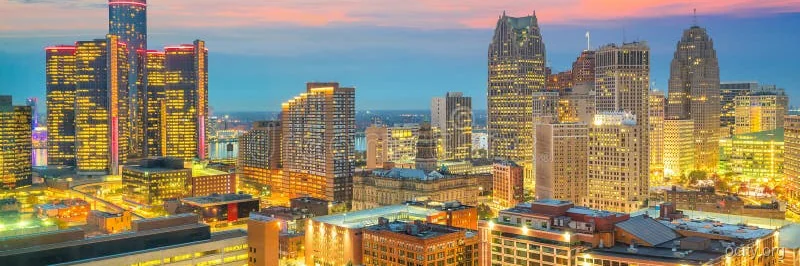
Hidden 'Gotcha' Costs

This is where the budget bleeds out. Farmington Hills is a suburb of Detroit, and it carries the infrastructure costs of that status.

  • Car Insurance: This is the big one. Michigan is a "no-fault" state, and Detroit metro rates are historically the highest in the nation. Do not be surprised if your premium is $200 - $400 per month per vehicle. This is a mandatory tax on driving.
  • HOA Fees: If you buy a condo or a home in one of the many subdivisions, HOA fees are ubiquitous. These range from $150 to $400 monthly. They cover snow removal and landscaping, but they are a sunk cost that never appreciates.
  • Water/Sewer: Unlike many parts of the country, municipal water and sewer bills are not cheap here. Expect a quarterly bill of $200 - $300, which averages out to $70 a month hidden in your bank draft.
  • Road Tolls: There are no toll roads in the immediate Farmington Hills area, but the cost of vehicle depreciation due to potholes and salted roads in winter is a real, albeit informal, tax.

Lifestyle Inflation

Living here isn't just about shelter and food; it's about the daily grind costs.

  • Coffee: A decent latte at a local shop is $5.50 - $6.00. If you buy one every workday, that’s $120 a month or $1,440 a year.
  • Gym Membership: A standard commercial gym (like Planet Fitness or LA Fitness) will run you $30 - $50 per month. Boutique fitness studios in the area will easily charge $120+.
  • Night Out: Dinner for two at a mid-range restaurant (think The Grill or similar) with drinks and tip will run you $100 - $130. A movie ticket is $15, but with the mandatory "convenience fees," you're looking at $18 per head.

Salary Scenarios: The Bottom Line

To survive here, your income needs to match your lifestyle ambition. The following table breaks down the required gross income to meet specific lifestyle tiers, accounting for the tax burdens and cost floors discussed above.

Lifestyle Single Income (Gross) Family Income (Gross)
Frugal $42,000 $65,000
Moderate $58,000 $88,000
Comfortable $78,000 $125,000

Scenario Analysis

Frugal (Single: $42k / Family: $65k):
This is the "ramen and roommates" tier. For a single person earning $42,000, you are taking home roughly $2,600 monthly after taxes (federal + state). You can afford the $1,080 2BR rent, but only if you split it with a partner or roommate. You are driving a paid-off car because the insurance ($250/mo) would eat you alive otherwise. You cook 95% of your meals and rarely turn the heat above 68 degrees. For a family on $65k, this is a struggle budget. You are likely in a smaller 1BR or an older 2BR, relying on WIC or SNAP assistance, and every unexpected medical copay is a crisis.

Moderate (Single: $58k / Family: $88k):
This is the "keeping up with the Joneses" tier. A single earner at $58,000 has a monthly take-home of about $3,600. You can comfortably afford the $1,080 rent and a decent lease on a reliable car (accounting for that $300 insurance premium). You have a gym membership and can go out to dinner twice a month. For a family of four on $88k, you are managing. You likely own a starter home, meaning a mortgage payment plus taxes might run you $2,200+. You are budgeting carefully for daycare (which is notoriously expensive in Michigan) and are likely maxing out a 401(k) match, but you feel the pinch of grocery inflation.

Comfortable (Single: $78k / Family: $125k):
This is the "peace of mind" tier. At $78,000, you are clearing roughly $4,800 monthly. You can max out your retirement contributions, own a home in a desirable subdivision (paying that $2,000+ mortgage/tax/insurance bill), and afford a new car lease without sweating the insurance bill. You can absorb a $1,000 emergency without disrupting your cash flow. For a family earning $125k, you are living the standard suburban dream: a nice house, two reliable cars, soccer lessons for the kids, and a vacation once a year. You aren't rich, but you are insulated from the daily financial anxiety that plagues the lower brackets.

Check Your Salary

See how much you need to earn to live comfortably in Farmington Hills.

Open Calculator

Quick Stats

Median Household Income

Farmington Hills $90,598
National Average $74,580

1-Bedroom Rent

Farmington Hills $1,029
National Average $1,700

Median Home Price

Farmington Hills $367,000
National Average $412,000

Violent Crime (per 100k)

Farmington Hills 449.2
National Average 380