Jacksonville
2026 Analysis

Cost of Living in
Jacksonville, FL

Real data on housing, rent, and daily expenses. See exactly how far your dollar goes in Jacksonville.

COL Index
99.2
vs National Avg (100)
Median Income
$68k
Household / Year
Avg Rent
$1,354
1-Bedroom Apt
Home Price
$305k
Median Value
Cost Savings
Jacksonville is Cheaper
Rental Market
Better Rent Prices
Income Potential
Lower vs National Avg

The Real Price Tag: The Jacksonville "Comfort" Illusion

The commonly cited median household income for Jacksonville hovers around $68,069, a figure that suggests a manageable existence for the average American. However, for a single earner attempting to secure a genuine sense of stability—renting a decent one-bedroom apartment, driving a reliable car, and saving a few dollars for a rainy day—the floor is significantly higher. You need to clear approximately $37,437 annually just to keep your head above water, but that number is a mirage. To live without the constant stress of a surprise $400 car repair bill or a sudden insurance premium hike, you realistically need to target a gross income north of $50,000. The Cost of Living Index of 103.5 (100 being the national average) paints Jacksonville as "slightly above average," but this aggregate number hides the brutal reality of the local "bleed" costs that nickel and dime residents until their savings are empty. The $1,354 average rent for a one-bedroom unit looks deceptively reasonable compared to major metros, but it is a baseline that assumes you won't need to live in a high-crime area or pay premium prices for flood zones. True financial comfort here isn't about affording luxuries; it's about absorbing the inevitable shocks of Florida living without spiraling into debt.

📝 Detailed Cost Breakdown

Category / Metric Jacksonville National Average
Financial Overview
Median Income $68,069 $74,580
Unemployment Rate 4.3%
Housing Market
Median Home Price $304,745 $412,000
Price per SqFt $181 $undefined
Monthly Rent (1BR) $1,354 $1,700
Housing Cost Index 108.0 100.0
Cost of Living
Groceries Index 95.6 100.0
Gas Price (Gallon) $2.60 $undefined
Safety & Lifestyle
Violent Crime (per 100k) 612.0 380.0
Bachelor's Degree+ 33.2%
Air Quality (AQI) 34
Loading...

The Big Items: The Bleed Breakdown

Housing is the primary battlefield for your wallet, and the decision to rent or buy in Jacksonville is often a trap disguised as an opportunity. The median home price of $315,000 feels accessible compared to the national insanity, but the interest rate environment turns a $315,000 mortgage into a financial anchor. With current rates hovering around 6.5% - 7%, the principal and interest alone sit near $2,000 per month, not including property taxes or insurance. Renting a two-bedroom for $1,604 seems like the smarter play initially, but the rental market is heating up due to constant migration, meaning that $1,604 is rarely a locked-in rate for longer than a 12-month lease. The "trap" is the hidden cost of maintenance; homeowners face $315,000 in asset risk, while renters face 8% year-over-year rent hikes that erode their ability to save for a down payment. The market heat is palpable in neighborhoods like Riverside or San Marco, where older stock is snatched up for cash offers, forcing the median price up and squeezing out the entry-level buyer.

Taxes in Florida are a double-edged sword: you get the benefit of 0% state income tax, which is a massive chunk of change saved on a $50,000 salary compared to states like New York or California. However, the state makes up for it by targeting property owners aggressively. The property tax bite in Duval County is roughly 1.9% of the assessed value. On that $315,000 home, you are looking at an annual bill of roughly $5,985, or $498 per month that builds zero equity. This is a non-negotiable bleed that increases every year as the home value is reassessed. For the renter, this cost is invisibly baked into the $1,604 monthly check, meaning you are paying a landlord's tax bill without any of the deductions. There is no escaping the tax man in Jacksonville; if you live here, you are paying for the infrastructure, and the property tax rate ensures that the "no income tax" slogan is more marketing than math for the average homeowner.

Groceries and gas represent the daily nickel and diming that slowly drains your bank account. Jacksonville is a sprawling city, and the reliance on personal vehicles is absolute; there is no realistic public transit alternative. Gas prices fluctuate, but the average tends to sit about $0.15 to $0.20 higher than the national baseline due to state taxes and distribution logistics. A gallon of milk or a carton of eggs will hit you for 8-12% more than the US average, a variance driven by the humidity (spoilage) and the logistics of getting perishables into a coastal peninsula. While the 14.14 cents/kWh electric rate is actually lower than the national average, the brutal summer humidity means the AC runs 24/7, sending monthly electric bills soaring to $180 - $220 for a modest apartment. These aren't massive line items individually, but they are relentless. You aren't paying for premium quality; you are paying for the convenience of a geography that requires constant refrigeration and fuel consumption.
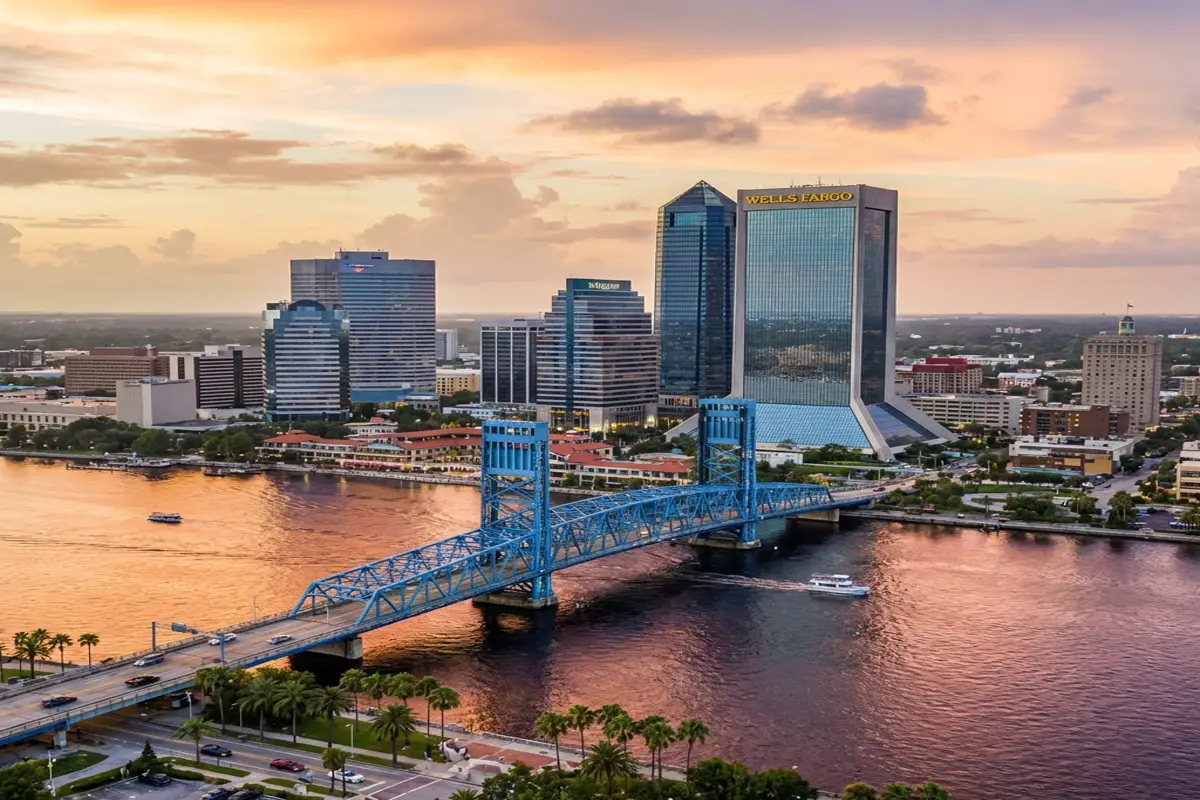
Hidden 'Gotcha' Costs: The Florida Tax You Didn't Budget For

The most cynical costs in Jacksonville are the ones that hit you only when it's too late to back out. The most notorious of these is the car insurance premium, which is consistently among the highest in the nation. It is not uncommon to see quotes for full coverage on a standard sedan exceed $2,500 annually, nearly double the national average. This is due to a toxic cocktail of high accident rates, weather-related claims, and a litigious culture. If you live in a designated flood zone (and a huge chunk of Jacksonville is), your renter's or homeowner's insurance will mandate flood insurance, adding another $800 - $1,200 per year to the bleed. Even parking is a hidden tax; downtown living often requires paying $75 - $150 monthly just to store your car, a fee that doesn't appear in the initial rent calculation.

Then there are the infrastructure costs. Jacksonville is a hub for toll roads, specifically the Mathews Bridge and the Dames Point Bridge alternatives. If you commute cross-town, the $2.50 or $3.00 tolls add up fast, easily costing $50 - $100 a month if you aren't careful with your route. Many apartment complexes charge "convenience fees" of $35 - $50 just to pay your rent online, a blatant nickel and dime tactic. Furthermore, the Homeowners Association (HOA) fees for condos or gated communities are rarely under $300 monthly and can easily exceed $500, covering "amenities" you likely never use. These costs are designed to be invisible until you are locked into a lease or a mortgage, and they are the primary reason why the "sticker price" of living here is a lie.

Lifestyle Inflation: The Tax on "Normalcy"

Once the roof, taxes, and insurance are paid, the cost of simply existing socially in Jacksonville has crept up to insult the wallet. A night out is no longer a cheap affair. A pint of craft beer at a popular spot in San Marco or Jax Beach will set you back $8 - $10, and a standard burger and fries entrée is rarely under $18 before tip. A "moderate" night out for two, including two drinks and an appetizer, easily hits $90 - $110. If you prefer a movie, a ticket at a standard theater is $14.50, and with a popcorn and soda, you are looking at $45 for a single person.

Fitness and wellness are equally expensive. A standard gym membership like Planet Fitness is cheap, but a mid-tier gym with classes, like the YMCA or independent studios, runs $80 - $120 per month. A premium coffee at a local roaster is $5.50 - $6.50, and if you buy one a day, that’s roughly $150 a month—enough to cover a significant portion of your car insurance deductible. The "lifestyle inflation" in Jacksonville is subtle; it doesn't feel like New York prices, but the gap between the "cheap" option and the "socially acceptable" option is widening. You are constantly paying a premium for the basic social experience that defines a "normal" life.

Salary Scenarios: The Brutal Math

The following table breaks down the net income and feasibility of living in Jacksonville based on three distinct lifestyle tiers. Note that "Net Income" is an estimate after federal taxes, FICA, and state taxes (FL has 0% state income tax).

Lifestyle Single Income (Gross) Family Income (Gross) Monthly Net (Single) Feasibility Analysis
Frugal $42,000 $65,000 ~$2,750 High Struggle. Requires a roommate or a very unsafe area. No savings buffer. One major car repair wipes out the month.
Moderate $58,000 $95,000 ~$3,800 Manageable. Can rent a 1BR alone. Can afford a used car note. Can save $300-$500 monthly if disciplined.
Comfortable $85,000 $140,000 ~$5,500 Secure. Can afford a mortgage on a $315k home. Can absorb insurance hikes. Can actually invest.

Analysis of Scenarios:

Frugal Scenario ($42k Single): This is the danger zone. At a net of roughly $2,750 monthly, a rent of $1,354 consumes nearly 49% of your take-home pay. This violates the 30% rule of thumb drastically. You will be living paycheck to paycheck, likely in a roommate situation or a substandard unit. The "bleed" costs—gas, insurance, groceries—will eat the remaining $1,000 quickly. You cannot afford the hidden costs; a $100 toll bill or a $50 parking ticket is a crisis.

Moderate Scenario ($58k Single): This is the baseline for actual adulthood in Jacksonville. At $3,800 net, rent takes about 35% of your income, leaving $2,450 for everything else. This allows you to drive a reliable car (perhaps with a modest payment), eat decently, and save a bit. However, you are still vulnerable to the insurance market. If your car insurance jumps $50 a month or your electric bill spikes in August, your savings rate evaporates. You are comfortable, but not secure.

Comfortable Scenario ($85k Single): This is where you finally start winning. At $5,500 net, a mortgage on a $315k home (likely $2,500 all-in) takes 45% of your income, but the remaining $3,000 covers all other expenses with ease. You can max out a Roth IRA, pay for the $120 gym membership without thinking, and eat out twice a week. You can absorb the $2,500 car insurance bill or the $1,000 flood insurance premium without panic. This is the income level required to stop worrying about Jacksonville's hidden costs.

Check Your Salary

See how much you need to earn to live comfortably in Jacksonville.

Open Calculator

Quick Stats

Median Household Income

Jacksonville $68,069
National Average $74,580

1-Bedroom Rent

Jacksonville $1,354
National Average $1,700

Median Home Price

Jacksonville $304,745
National Average $412,000

Violent Crime (per 100k)

Jacksonville 612
National Average 380