Pueblo
2026 Analysis

Cost of Living in
Pueblo, CO

Real data on housing, rent, and daily expenses. See exactly how far your dollar goes in Pueblo.

COL Index
92.4
vs National Avg (100)
Median Income
$57k
Household / Year
Avg Rent
$881
1-Bedroom Apt
Home Price
$257k
Median Value
Cost Savings
Pueblo is Cheaper
Rental Market
Better Rent Prices
Income Potential
Lower vs National Avg

The Real Cost of Living in Pueblo (2026): A Financial Autopsy

Forget the marketing brochures and the "live where you play" slogans. You’re looking at Pueblo, Colorado, with the skepticism of someone who has to sign the checks. You’ve seen the data points: a Cost of Living (COL) index of 101.4—barely a statistical blip above the national average of 100—and a median household income hovering around $57,170. On paper, this looks like a safe harbor from the inflationary storms battering the coasts. But "average" is a mathematical trap. It smooths over the jagged edges of reality. For a single earner to live here without drowning in debt, the conversation starts at a gross income of roughly $31,443. That number is the floor, not the ceiling. It represents survival: a roof, a diet of ramen and discount meat, and a bus pass. It does not represent "comfort." It does not account for the psychological tax of watching your paycheck evaporate the moment it hits your account. When you dig into the line items, you realize that Pueblo isn't necessarily cheap; it’s just priced differently, trading high housing costs for a slow bleed of taxes and utility hikes.

📝 Detailed Cost Breakdown

Category / Metric Pueblo National Average
Financial Overview
Median Income $57,170 $74,580
Unemployment Rate 3.9%
Housing Market
Median Home Price $257,000 $412,000
Price per SqFt $139 $undefined
Monthly Rent (1BR) $881 $1,700
Housing Cost Index 90.1 100.0
Cost of Living
Groceries Index 94.3 100.0
Gas Price (Gallon) $2.26 $undefined
Safety & Lifestyle
Violent Crime (per 100k) 678.0 380.0
Bachelor's Degree+ 23%
Air Quality (AQI) 39
Loading...

The Big Items

Let's look at the heavy hitters that dictate whether you break even or go broke. The narrative that Pueblo is a "budget-friendly" alternative to Colorado Springs or Denver relies heavily on the housing market, but that narrative is fraying at the edges. If you are renting, you are currently caught in a tightening vise. A one-bedroom apartment averages $881, while a two-bedroom will set you back $1158. While these figures look saintly compared to the national median, you have to ask why they are relatively low. The local economy hasn't exploded with high-paying tech jobs, which keeps a ceiling on rent, but the influx of people fleeing more expensive markets has turned the rental inventory into a feeding frenzy. Landlords know the alternative is homelessness or a commute from Colorado Springs, so they hold the line on pricing. There is very little "bang for your buck" here; you are paying for basic shelter, and the quality of the stock is often dated, requiring negotiation to get anything modern.

Buying a home presents a different, more insidious set of problems. While specific median home price data is currently obscured in this dataset, the trend is undeniable: inventory is low, and the "starter home" is effectively an endangered species. The trap here isn't just the purchase price; it's the Colorado Springs effect. Pueblo is increasingly becoming a bedroom community for the more affluent military and tech hubs to the north. This drives up property values artificially without necessarily driving up local wages to match. If you buy here expecting a stable asset, you are betting on an economy that is struggling to diversify beyond retail and light manufacturing. The "market heat" is real; cash offers from out-of-town investors are snatching up properties, leaving locals fighting over the scraps.

Then comes the tax bite, which is where the "low cost of living" illusion starts to crack. Colorado has a flat state income tax rate of 4.4%. That sounds manageable until you realize it applies to every dollar you earn, unlike states with progressive brackets that protect low earners. However, the real gut punch is property tax. While Colorado’s effective rate is historically low compared to states like Texas or Illinois, the assessed valuation is climbing. In Pueblo County, property taxes are calculated on a specific mill levy. For a home valued at $300,000, you could be looking at an annual bill of roughly $1,500 to $2,000 depending on the specific mill levies passed by local jurisdictions. This sounds low until you factor in the 29% increase in property valuations seen across the region in recent years. The county assessor is catching up to market reality, and your tax bill will reflect that.

Don't forget the utilities. Pueblo sits in a semi-arid region where energy costs are a constant variable. The average electric rate is 14.92 cents per kWh. This is significantly higher than the national average of roughly 13 cents. In the summer, when temperatures routinely break 100°F, your air conditioner becomes a luxury item. A typical 1,500-square-foot home can easily see monthly electric bills exceeding $200 during peak months. That is a direct tax on the climate. If you are renting, you might dodge the heating bill, but landlords bake these costs into the rent increases eventually. There is no escaping the utility bleed.

Groceries and gas provide a slight reprieve, but it’s a double-edged sword. Grocery prices in Pueblo track closely to the national baseline, often hovering 2-3% lower. You save a few cents on a gallon of milk or a loaf of bread. However, the variance in "local" costs is high. If you shop at the big-box chains on the north side, you pay north-side prices. If you shop at the local markets near downtown, you might find better deals, but the time cost is significant. Gasoline prices are generally $0.10 to $0.20 cheaper per gallon than the national average due to lower state fuel taxes and proximity to refineries in Commerce City. But this saving is negligible when you realize that Pueblo is a driving city. Public transit is limited; you will drive 15,000+ miles a year. The savings at the pump are immediately devoured by maintenance and depreciation.
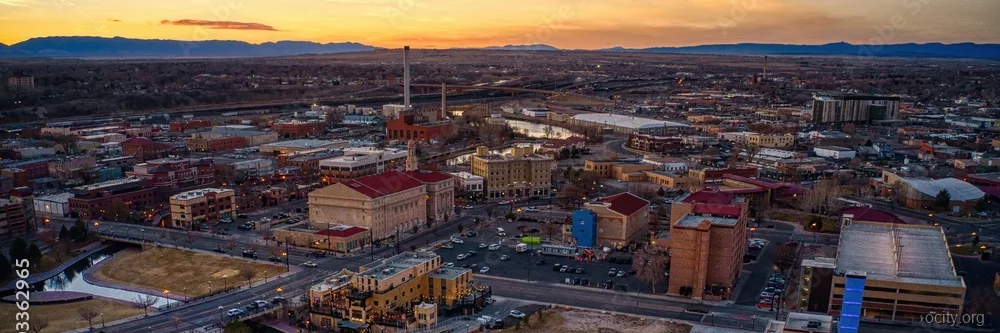
Hidden 'Gotcha' Costs

The "sticker shock" in Pueblo isn't on the big bills; it's on the nickel-and-dime fees that stack up like a house of cards.

First, consider the insurance landscape. Colorado is a natural disaster magnet. We are talking hail, wind, and fire. If you own a home, your homeowners insurance is likely to be a nightmare. Premiums have skyrocketed 20-30% in recent years due to wildfire risk in the foothills and hail damage in the city proper. If you live in a flood zone near the Arkansas River, you are required to carry flood insurance, which is a separate, expensive policy that can easily add $800-$1,200 annually to your overhead.

Then there are the HOA fees. If you buy a condo or a home in a planned development, you are subject to the whims of a Homeowners Association. In Pueblo, these can range from $150 to $400 per month. For that fee, you often get snow removal (which is inconsistent) and landscaping (which is often just rocks). It is a mandatory tax for the privilege of living in a specific zip code.

Parking is the other silent killer. While Pueblo isn't a major metro, the revitalization of the Downtown area and the expansion of the university have introduced paid parking zones. A monthly pass in the wrong block can run you $40-$60. Miss a meter, and the ticket is $25, which balloons to $50 if you don't pay within 24 hours. It’s a municipal cash grab disguised as public service.

And let's not overlook toll roads. While Pueblo itself has few tolls, the lifeline to Denver (I-25) and the access to the recreational areas (I-25 North) are increasingly tolled via the E-470 and Northwest Parkway systems. If you need to make a run to Denver for specialized medical care or a flight, a round trip can easily cost $15-$20 in tolls alone. If you have an out-of-state transponder, you pay even more. These are costs that "average" calculators never account for.

Lifestyle Inflation

The "True Cost" of living isn't just about keeping the lights on; it's about the cost of maintaining your sanity.

A night out is no longer a cheap affair. A mid-range dinner for two at a local spot in Pueblo (think a steakhouse or a decent Mexican joint) will run you $80-$100 before tip. A beer is $6-$7. A cocktail is $12-$14. The days of the $5 happy hour special are largely gone, replaced by "craft" pricing that mimics big-city margins.

The gym membership is another trap. A premium gym like the local YMCA or specialized fitness centers will charge $50-$70 per month. If you want a boutique class (spin, yoga, HIIT), you are looking at $120+. There is no budget option that offers decent equipment; you pay for the facility or you sweat in your garage.

Then there is the daily coffee. A standard drip coffee at a local roaster is $3.50. A latte is $5.50. If you buy one every workday, that’s roughly $100 a month—$1,200 a year—that vanishes into a paper cup. It sounds trivial, but it’s the difference between breaking even and saving for retirement. These micro-transactions are the leaks in the financial hull.

Salary Scenarios

To understand the "bleed," we need to look at specific income scenarios. The following table breaks down what you can realistically expect to achieve in Pueblo based on your gross annual income. Note that "Single Income" refers to a household of one, and "Family Income" refers to a household of four.

Lifestyle Single Income Family Income
Frugal $35,000 $60,000
Moderate $55,000 $90,000
Comfortable $80,000 $140,000

Frugal Analysis ($35k Single / $60k Family):
At this level, you are surviving, not living. For the single earner at $35,000, your take-home pay after taxes (Federal + CO State + FICA) is roughly $2,200 per month. Rent for a modest 1BR is $881. That leaves $1,319 for everything else. You are driving a paid-off car. You eat out once a month. You have no retirement savings. You are one blown transmission away from financial disaster. For the family of four earning $60,000, the math is even bleaker. The tax bracket helps slightly, but the housing requirement jumps to a 2BR at $1,158, leaving roughly $2,800 for food, insurance, gas, and utilities. You are relying on SNAP benefits or WIC to bridge the gap. This is a poverty trap.

Moderate Analysis ($55k Single / $90k Family):
This is the "Pueblo Standard." You have breathing room. The single earner nets around $3,400. You can afford a decent 1BR or a cheap mortgage on a starter home. You can save $500 a month. You have a reliable car and decent insurance. You can go out for a beer without checking your bank balance first. The family earning $90,000 is doing well. Net income is roughly $5,600. After a mortgage or rent, groceries ($800), and car payments, you can still put away $1,000 into savings/retirement. You are insulated from minor emergencies. This is the target zone for most relocators.

Comfortable Analysis ($80k Single / $140k Family):
This is the tier where Pueblo feels "cheap." The single earner nets $4,800+. You can afford a nice 2BR apartment or a home in a lower-tax area. You max out your Roth IRA. You have a car payment and still save $1,500 a month. The family earning $140,000 is living large by local standards. Net is $8,500+. You can afford a mortgage on a $400k home, private school or high-quality daycare, vacations, and a healthy investment portfolio. You are effectively insulated from the local economic volatility. In this bracket, the hidden costs (HOA, tolls, insurance hikes) are annoyances, not crises.

Check Your Salary

See how much you need to earn to live comfortably in Pueblo.

Open Calculator

Quick Stats

Median Household Income

Pueblo $57,170
National Average $74,580

1-Bedroom Rent

Pueblo $881
National Average $1,700

Median Home Price

Pueblo $257,000
National Average $412,000

Violent Crime (per 100k)

Pueblo 678
National Average 380