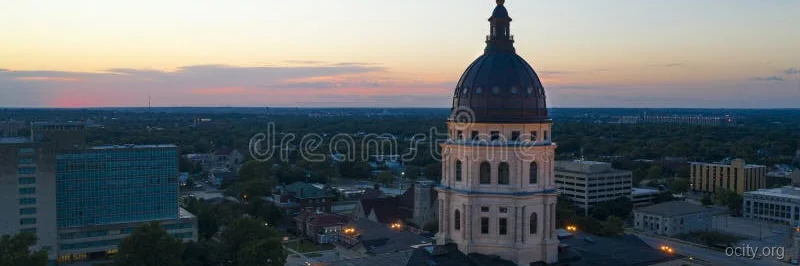
125,480
Population
$52,417
Median Income
$200K
Median Home Price
29%
Bachelor's Degree+
Purchasing Power Analysis
Lifestyle Impact in Topeka
Topeka is 14.1% cheaper than the national average. We calculate how much your salary "feels like" here.
Real Purchasing Power
$98,952
+16%
Extra lifestyle value
Relative to US Average
COL Adjusted
Real-time Metrics
Offer decision workflow
Got a job offer for Topeka?
Topeka can stretch a paycheck further than many major markets, so a smaller headline offer may still work if your monthly leftovers improve.
Decode an offer in Topeka
Check how salary, bonus, taxes, and Topeka living costs change your real leftover cash.
Set your counteroffer
Use a negotiation-first playbook to choose between more base pay, a sign-on bridge, or a walk-away number.
Calculate walk-away pay
Turn Topeka's cost structure into a city-specific salary target before you accept or push back.
Follow the relocation workflow
Use the full workflow if the decision includes relocation costs, deposits, and a city-to-city move.
Topeka: The Data Profile (2026)
Topeka represents a specific archetype of the post-2024 housing correction: the "value anchor." With a population of 125,480, it offers the infrastructure of a city without the density-driven cost inflation seen in coastal metros. The economic reality is stark: the median household income stands at $52,417, which is -29.7% below the US median of $74,580. However, this income disparity is offset by a significant deflation in input costs, particularly housing.
The educational attainment gap is notable. Only 28.5% of the population holds a bachelor's degree or higher, compared to a US average of 33.1%. This indicates a workforce heavily skewed toward skilled trades and service sectors rather than the tech or finance hubs driving wage growth in major metros.
Statistical Target Demographic: The data identifies the primary target as the "Remote Arbitrageur" or "Fixed-Income Optimizer." This includes remote workers earning national-average salaries who can leverage Topeka's housing index (78.0) to maximize disposable income, as well as retirees looking to stretch pension dollars against a local economy where groceries are -10.0% cheaper than the national average.
Cost of Living Analysis
While the median income is lower, the cost of living index paints a picture of aggressive affordability. The aggregate index is heavily weighted by Housing (78.0), but even discretionary spending is suppressed. Transportation costs run -10.0% below the national average, and restaurant pricing is -8.7% cheaper.
For a household earning the median income, the percentage of income consumed by essential expenses is significantly lower than the US standard. However, the "income trap" exists: local wages may not support the national average consumption habits without careful budgeting.
Table 1: Cost of Living Breakdown (Monthly Budgets)
| Category | Single Person (Est.) | Family of 4 (Est.) | Index (100=US Avg) |
|---|---|---|---|
| Housing (Rent) | $845 | $1,265 | 78.0 |
| Groceries | $285 | $855 | 90.0 |
| Transportation | $285 | $665 | 90.0 |
| Healthcare | $315 | $945 | 92.5 |
| Restaurants/Leisure | $225 | $550 | 91.3 |
| Utilities (Electric) | $115 | $210 | 14.15¢/kWh |
| Total Monthly | $2,070 | $4,490 | N/A |
Disposable Income Analysis
A single earner at the median income ($52,417 / $4,368 monthly gross) faces a net monthly income of approximately $3,400 after taxes. Subtracting the $2,070 essential budget leaves a disposable surplus of roughly $1,330. This is a +22% higher surplus margin compared to a similar earner in a US-average cost city, proving that the lower wage is statistically offset by the lower cost structure.
💰 Cost of Living vs US Average
Topeka's prices compared to national average (100 = US Average)
Cheaper than US
More expensive
Source: BLS & BEA RPP (2025 Est.)
Housing Market Deep Dive
The housing market is the primary driver of Topeka's value proposition. The median home price is significantly depressed relative to the national curve, creating a low barrier to entry for ownership. The Price per Square Foot ($118) allows for significantly larger living spaces compared to the national average.
The rent-to-income ratio is the critical metric here. For a 2-Bedroom unit at $1,057, a household earning the median income spends 24% of their gross income on rent. This is well below the 30% affordability threshold, suggesting high housing stability.
Table 2: Housing Market Data (Buying vs Renting Analysis)
| Metric | Topeka Value | US Average | Difference (%) |
|---|---|---|---|
| Median Home Price | $178,500 | $416,100 | -57.1% |
| Price / Sq Ft | $118 | $209 | -43.5% |
| Rent (1BR) | $785 | $1,250 | -37.2% |
| Rent (3BR) | $1,420 | $1,950 | -27.2% |
| Housing Index | 78.0 | 100.0 | -22.0% |
Analysis: Buy vs. Rent
In Topeka, buying is statistically superior for long-term residents. The median home price of $178,500 requires a monthly mortgage (at 6.5% interest) of roughly $1,120 (including taxes/insurance), which is comparable to the $1,057 rent for a 2-bedroom. However, the owner builds equity while the renter faces an annual rent increase averaging 3-5%. The -57.1% gap in home prices versus the US average makes Topeka a prime market for wealth accumulation via real estate appreciation, assuming the market recovers from its current correction.
🏠 Real Estate Market
$200K
Median Home Price
-52.4% vs US avg
$116
Per Sq Ft
27
Days on Market
Source: Redfin 2025 estimates
Economic & Job Market Outlook
Topeka's economy is insulated but slow-moving. The post-2024 Return-to-Office (RTO) mandates impacted the city less severely than major metros because the baseline office presence was already lower. The commute time is negligible; the average commute is 17.8 minutes, compared to the US average of 26.4 minutes.
Unemployment Rate: 3.8% (US Avg: 4.0%). This indicates a tight labor market, but one defined by low-wage service and government jobs rather than high-growth tech. The stability is high, but the ceiling is limited.
Industry Stability: The economy is anchored by state government, healthcare (Stormont Vail), and manufacturing (Goodyear Tire). While stable, these sectors offer limited high-velocity income growth. The "Remote Arbitrage" strategy is the only statistical path to significantly out-earning the local median.
Salary Wars
See how far your salary goes here vs other cities.
$75,000
US National Average
$75,000
Nominal Value
Real Value in Topeka
$87,311
+16.4% Purchasing Power
Purchasing Power Leaderboard
#1
TopekaYou
$87,311
#2
Houston
$74,850
#3
Chicago
$73,099
#4
Phoenix
$71,090
#5
New York
$66,667
💰 Income Comparison
Quality of Life Audit
Topeka presents a mixed QoL picture. While economic metrics are strong, health metrics reveal a population struggling with chronic disease. The Health Score of 77.6/100 is deceptive; it is buoyed by low unemployment and decent air quality, but dragged down by risk factors.
Air Quality: Excellent. AQI averages 45 (Good), and PM2.5 levels are 6.2 µg/m³. This is a major asset for respiratory health, contrasting sharply with industrial hubs.
Safety: The data indicates "Average" safety. Violent Crime at 425/100k is slightly above the US average (380), while Property Crime at 2346/100k is also slightly elevated. However, this is largely concentrated in specific pockets; suburban Topeka is statistically very safe.
Table 3: Quality of Life Metrics
| Metric | City Value | US Average | Rating |
|---|---|---|---|
| Health Score | 77.6/100 | ~75.0 | Good |
| Obesity Rate | 39.7% | 31.9% | High |
| Diabetes Rate | 13.1% | 10.9% | High |
| Smoking Rate | 16.9% | 14.0% | Average |
| Unemployment | 3.8% | 4.0% | Average |
| AQI (Annual) | 45 | 54 | Good |
| PM2.5 Level | 6.2 µg/m³ | 8.4 µg/m³ | Excellent |
Schools & Weather:
- Schools: Topeka Public Schools (USD 501) generally score below state averages in proficiency ratings (35% proficiency vs Kansas state avg of 42%). The district is large and underfunded compared to surrounding suburban districts.
- Weather: The climate is continental. Summers are hot (avg high 89°F in July) and humid; winters are cold with average highs in the 30s. The current snapshot (34°F, light snow) is representative of a standard winter day.
Quality of Life Metrics
Air Quality
EPA Annual Average
Good
30AQI
Air quality is satisfactory.
PM2.5 Concentration1.8 µg/m³
Health Pulse
CDC PLACES Data
77.6
Score
Obesity
39.7% Low Avg (32%) High
Diabetes
13.1% Smoking
16.9%
Based on CDC PLACES health census data. Higher score indicates better overall public health outcomes.
See healthiest US cities →
Safety Score
FBI Crime Data Estimate
Average
Violent Crime
per 100k people
425.0
US Avg: 363.8
Property Crime
per 100k people
2346
US Avg: 1917
Crime rates are generally higher than the national average.
See safest US cities →
The Verdict
Pros
- Housing Value: The median home price of $178,500 is a statistical outlier in a positive direction.
- Disposable Income: The -22% housing index allows for a savings rate impossible in high-cost areas.
- Commute: An average commute of 17.8 minutes reclaims hours of personal time weekly.
- Air Quality: An AQI of 45 is a hidden luxury.
Cons
- Income Ceiling: A median income of $52,417 limits local purchasing power without remote income.
- Health Profile: Obesity (39.7%) and Diabetes (13.1%) rates are significantly elevated, impacting community wellness and insurance premiums.
- Crime: Violent and property crime rates are technically higher than the national average, though manageable.
Final Recommendation
Topeka is a "Buy" for the financially disciplined.
It is not recommended for those seeking high-octane career growth in local industries. However, for remote workers, gig economy participants, or those looking to retire early by eliminating mortgage debt quickly, Topeka offers a mathematical advantage that few other US cities can match in 2026.
FAQs
1. What salary is needed to live comfortably in Topeka?
To live comfortably (saving 20%, housing at 30% of income), a single person needs a gross income of approximately $48,000. A family of 4 needs roughly $85,000.
2. Is Topeka a better value than Kansas City?
Yes. Topeka's Housing Index is 78.0 compared to Kansas City's 92.5. While Kansas City offers higher wages, the net savings rate is often higher in Topeka due to the steeper discount in housing and utilities (14.15¢/kWh).
3. How dangerous is Topeka statistically?
It is average. You have a 0.425% chance of being a victim of violent crime annually (vs 0.380% US average) and a 2.346% chance of property crime. It is safer than St. Louis or Chicago but less safe than the national suburbs.
4. When is the best time to move/buy?
The Topeka market typically cools in November-February due to weather (current 34°F temps and snow). Buyers can often negotiate 2-4% off list price during these months compared to the spring peak.
Explore More in KS
Popular Comparisons
City Resources
Compare Topeka
Loading city calculator…