Queen Creek
2026 Analysis

Cost of Living in
Queen Creek, AZ

Real data on housing, rent, and daily expenses. See exactly how far your dollar goes in Queen Creek.

COL Index
105.5
vs National Avg (100)
Median Income
$135k
Household / Year
Avg Rent
$1,424
1-Bedroom Apt
Home Price
$612k
Median Value
Cost Savings
US Avg is Cheaper
Rental Market
Better Rent Prices
Income Potential
Higher Local Salaries

The Real Price Tag: Queen Creek's Financial Reality

Forget the median household income figure of $135,444 often touted in glossy relocation brochures. That number represents a dual-income household scraping by in a specific bracket. For the single earner looking to establish a genuine foothold here without living paycheck to paycheck, the number you need to burn into your spreadsheet is $74,494. This isn't the "money is no object" fantasy; this is the bare minimum baseline for "comfort"—defined here as housing costs consuming no more than 30% of gross income, the ability to absorb a $1,000 emergency without panic, and not feeling like you're drowning in the constant Arizona heat.

However, a Cost of Living Index of 101.1 is a deceptive average. It suggests Queen Creek is merely a whisper above the national baseline, but that math collapses when you look at the specific inputs driving this community. The index masks the reality that while consumer goods might be average, the housing and insurance markets are playing by a completely different, aggressive set of rules.

📝 Detailed Cost Breakdown

Category / Metric Queen Creek National Average
Financial Overview
Median Income $135,444 $74,580
Unemployment Rate 4.3%
Housing Market
Median Home Price $612,490 $412,000
Price per SqFt $255 $undefined
Monthly Rent (1BR) $1,424 $1,700
Housing Cost Index 124.3 100.0
Cost of Living
Groceries Index 98.4 100.0
Gas Price (Gallon) $3.40 $undefined
Safety & Lifestyle
Violent Crime (per 100k) 449.3 380.0
Bachelor's Degree+
Air Quality (AQI) 61
Loading...

The Big Items: Where Your Paycheck Disappears

Housing: The Equity Trap vs. The Rental Squeeze

The housing market in Queen Creek is a study in volatility disguised as stability. If you are looking to rent, the data point you have is a 2-bedroom average of $1,380. In a vacuum, this looks reasonable. However, the "vacuum" is the problem. Inventory is perpetually tight because this is a high-equity flight destination. Landlords know they can push rents higher because the alternative—buying—is even more punishing. The median home price data is "None" in your set, which is the most honest answer of all: the median is irrelevant because the entry-level floor has moved out of reach for the average single earner. Buying a home here is not a mortgage payment; it is a $400,000+ commitment that immediately puts you in the red for the first five years. You are paying for the idea of the lifestyle before you can afford the reality. The market heat comes from the influx of capital from California and Washington; you aren't competing with your neighbors, you are competing with equity transfers from out of state.

Taxes: The "Low Tax" Illusion

Arizona loves to brag about its low income tax, currently sitting at a flat 2.5%. That is technically true, but it’s a distraction. The real financial bleed happens at the county and municipal level. Maricopa County property taxes are calculated on a limited value system, but don't let that fool you. With a median home price hovering around $525,000 (market value), you are looking at an assessed value that creeps up annually. You can expect an effective property tax rate that, when combined with local bonds and overrides for schools and fire departments, hovers around 0.65% to 0.75%. This translates to roughly $3,500 to $4,000 annually in property taxes alone—before you pay the Mello-Roos or Community Facilities District (CFD) fees that plague newer developments in Queen Creek. These CFDs can add another $500 to $1,200 per year, a hidden tax for infrastructure that doesn't show up in the "low tax" sales pitch.

Groceries & Gas: The Desert Surcharge

You will feel the sting at the grocery store. Queen Creek is a suburban island; getting fresh produce here costs more than in the dense urban cores of Phoenix. While the national baseline for food costs is a benchmark, you should budget for a 10% to 15% premium on staples, specifically dairy and produce, due to logistics and the "affluent suburb" markup. The real killer, however, is transportation. The "local variance" here is massive because of distance. Everything is a 15-minute drive. The electric rate of 14.91 cents/kWh is actually a relief compared to the national average, but that savings is immediately obliterated by gasoline costs and vehicle wear and tear. You will drive significantly more miles here than a national average suggests, and the stop-and-go traffic on the Santan Freeway (Loop 202) destroys fuel efficiency.
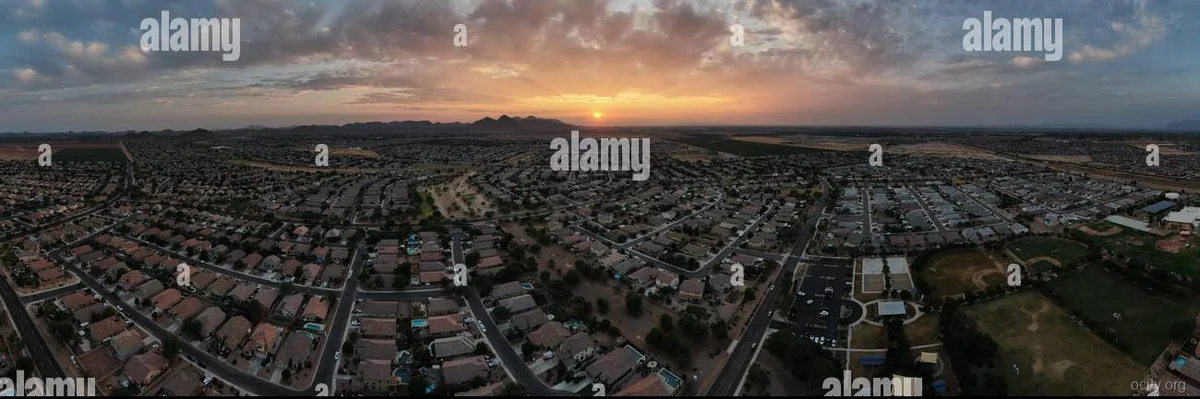
Hidden 'Gotcha' Costs

The "bleed" costs in Queen Creek are specific and nasty. First, the HOA fees. They are ubiquitous. You will struggle to find a neighborhood without one, and they average $80 to $150 per month. That is $960 to $1,800 a year purely for the privilege of having landscaping restrictions. Second, insurance. You are in the Sonoran Desert, which means two specific threats: floods and fire. Standard homeowners insurance often excludes flood, requiring a separate policy that can run $400 to $800 annually depending on the flood zone (which has expanded post-2023 rains). Furthermore, the "fire risk" designation is pushing premiums up by 20% to 30% year-over-year. There is no negotiating this. Finally, there are no toll roads to nickel and dime you directly, but the "hidden tax" is vehicle depreciation. The heat cooks your battery and interior, and the dust clogs your air filters. You will replace consumable car parts 1.5x faster than the national average.

Lifestyle Inflation: The Cost of the "Queen Creek Vibe"

Lifestyle inflation hits hard because the amenities are designed to extract maximum disposable income. A "night out" is not cheap. A casual dinner for two at a mid-range spot in the Town Center area, including a modest tip, will easily hit $80 to $100. If you drink, add $12 to $15 per cocktail. A gym membership is another trap; while you can find a standard gym for $30/month, the "lifestyle" gyms (Life Time Fitness, etc.) that dominate the demographic charge $120 to $160 per month. Even a simple coffee run adds up. A specialty latte at a local boutique shop is going to cost you $6.50 to $7.50. It seems small, but three of those a week is nearly $1,000 a year—burned away for caffeine you could make at home for a fraction of the cost.

Salary Scenarios: The Brutal Math

The following table breaks down the reality of living in Queen Creek based on household composition and spending habits. These are net (take-home) estimates based on current tax brackets.

Lifestyle Single Income (Gross) Family Income (Gross) Monthly Housing Limit Discretionary Buffer
Frugal $55,000 $90,000 $1,375 $400
Moderate $85,000 $140,000 $2,125 $1,200
Comfortable $120,000+ $185,000+ $3,000 $2,500+

Frugal Analysis:
Living on $55,000 as a single person is a war of attrition. You are capped at a $1,375 housing budget. This forces you into a roommates situation or an older, smaller rental unit that likely has high utility costs due to poor insulation. You have a $400 buffer. One unexpected medical bill or car repair wipes out three months of savings. For a family earning $90,000, this scenario is precarious. You are likely living in a cramped apartment or a very old home far from the schools you want. You are not saving for retirement; you are surviving.

Moderate Analysis:
At $85,000 for a single earner, life becomes manageable. You can afford a decent 1-bedroom or a 2-bedroom split with a roommate. The $2,125 housing limit allows you to choose a neighborhood with a decent HOA and amenities. The $1,200 buffer covers the lifestyle inflation (the gym, the occasional dinner out) and allows for actual savings. For a family earning $140,000, this is the "keeping up with the Joneses" trap. You can afford a mortgage, but the $2,125 limit is tight for a family home. You will feel the pinch of childcare costs, which are astronomical in this area, and the $1,200 buffer will vanish quickly into sports fees and grocery runs.

Comfortable Analysis:
This is the entry point for actual financial freedom in Queen Creek. $120,000+ for a single person means you aren't looking at price tags. You can afford a mortgage on a median-priced home without it consuming your entire paycheck. The $3,000 housing budget puts you in a nice, modern home with a manageable payment. The $2,500+ buffer allows you to max out your 401k, absorb the rising insurance premiums, and actually build wealth. For a family earning $185,000+, this is the baseline for the "Queen Creek dream." You can afford the house, the two cars, the private swim club, and the private school tuition without sweating the grocery bill. Anything below this number for a family is just playing defense.

Check Your Salary

See how much you need to earn to live comfortably in Queen Creek.

Open Calculator

Quick Stats

Median Household Income

Queen Creek $135,444
National Average $74,580

1-Bedroom Rent

Queen Creek $1,424
National Average $1,700

Median Home Price

Queen Creek $612,490
National Average $412,000

Violent Crime (per 100k)

Queen Creek 449.3
National Average 380