104,505
Population
$100,237
Median Income
$688K
Median Home Price
38%
Bachelor's Degree+
Purchasing Power Analysis
Lifestyle Impact in Renton
Renton is 13.0% more expensive than the national average. We calculate how much your salary "feels like" here.
Real Purchasing Power
$75,221
-12%
Reduction in lifestyle value
Relative to US Average
COL Adjusted
Real-time Metrics
Offer decision workflow
Got a job offer for Renton?
Renton is a higher-cost move than the national baseline, so a bigger headline salary may still need a counteroffer once housing, taxes, and monthly expenses are modeled.
Decode an offer in Renton
Check how salary, bonus, taxes, and Renton living costs change your real leftover cash.
Set your counteroffer
Use a negotiation-first playbook to choose between more base pay, a sign-on bridge, or a walk-away number.
Calculate walk-away pay
Turn Renton's cost structure into a city-specific salary target before you accept or push back.
Follow the relocation workflow
Use the full workflow if the decision includes relocation costs, deposits, and a city-to-city move.
Renton: The Data Profile (2026)
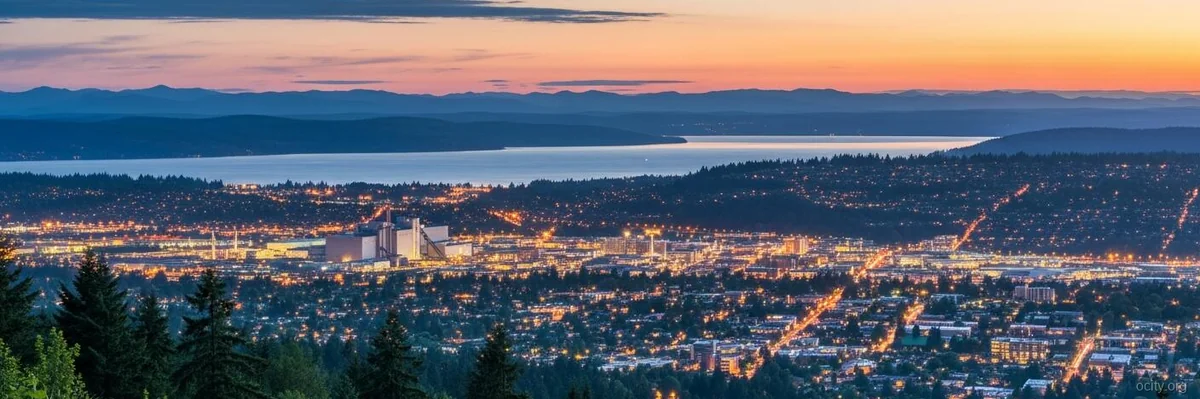
Renton operates as a distinct economic satellite within the Greater Seattle metro area. The city supports a population of 104,505, characterized by a median income of $100,237—a significant +34.4% deviation above the US median of $74,580. This income premium is supported by a highly skilled workforce, with 38.4% of residents holding a college degree, surpassing the national average of 33.1%. The statistical target demographic is the "mid-career hybrid professional"—individuals earning between $90,000 and $130,000 who require proximity to the Eastside tech hubs (Microsoft, Amazon AWS) but seek more square footage and value than Seattle or Bellevue proper can offer.
Cost of Living Analysis
While the region is historically expensive, Renton's cost of living index shows specific areas of relief compared to the national average.
| Expense Category | Renton Index (US Avg = 100) | Analysis |
|---|---|---|
| Housing | 118.0 | The primary cost driver, sitting 18.0% above the national norm. |
| Groceries | 98.8 | Slightly below average, offering marginal relief on daily essentials. |
| Transportation | 101.2 | Hovering near the national average, despite regional fuel taxes. |
| Healthcare | 102.5 | Marginally higher than the US baseline. |
| Restaurants | 105.3 | Dining out costs 5.3% more than the national average. |
| Electricity | 11.9¢/kWh | A significant financial advantage, sitting 25.6% lower than the US average of 16.0¢/kWh. |
Disposable Income Analysis:
The combination of a high median income ($100,237) and moderate utility costs (11.9¢/kWh) creates a unique buffer against the high housing index. A single earner in Renton has approximately $4,200 more in annual purchasing power relative to utility costs alone compared to the average American. However, the +18.0% housing premium consumes the majority of this surplus, resulting in a net disposable income that is roughly comparable to the national median, despite the higher gross salary.
💰 Cost of Living vs US Average
Renton's prices compared to national average (100 = US Average)
Cheaper than US
More expensive
Source: BLS & BEA RPP (2025 Est.)
Housing Market Deep Dive
The housing market in Renton is defined by a "buy premium" that outpaces the rental market relative to national averages.
| Metric | Renton Value | US Average | Difference (%) |
|---|---|---|---|
| Median Home Price | $785,000 | $403,000 | +94.8% |
| Price/SqFt | $465 | $223 | +108.5% |
| Rent (1BR) | $1,950 | $1,700 | +14.7% |
| Rent (3BR) | $3,400 | $2,600 | +30.8% |
| Housing Index | 118.0 | 100.0 | +18.0% |
Buy vs. Rent Analysis:
The data suggests a distinct divergence between buying and renting. While the Median Home Price sits at $785,000 (a +94.8% premium over the US average), the 1-Bedroom rental market is only +14.7% higher than the national norm. This indicates that Renton is currently a "renter-friendly" market in terms of relative value. The Price/SqFt of $465 creates a high barrier to entry for ownership. Financial models suggest that until interest rates drop below 4.5%, renting a 1-Bedroom unit for $1,950 is mathematically superior to carrying a mortgage on a median-priced home with a standard down payment.
🏠 Real Estate Market
$688K
Median Home Price
+63.7% vs US avg
$373
Per Sq Ft
50
Days on Market
Source: Redfin 2025 estimates
Economic & Job Market Outlook
The economic landscape in Renton is heavily influenced by the post-2024 "Return to Office" (RTO) mandates. While remote work remains prevalent, Renton’s location along the I-405 corridor makes it a strategic hub for hybrid schedules.
- Commute Dynamics: The average commute time is 28 minutes, significantly lower than the Seattle metro average of 36 minutes. Proximity to the Boeing Field (King County International Airport) and the I-405/SR-167 interchange facilitates access to the Eastside (15 minutes to Bellevue) and South King County.
- Industry Stability: The local economy is anchored by aerospace (Boeing), healthcare (Valley Medical Center), and data infrastructure (Microsoft Azure). The unemployment rate stands at 4.6%, which is 0.6% higher than the national average of 4.0%, suggesting a slightly softer labor market that requires specialized skills to navigate.
Salary Wars
See how far your salary goes here vs other cities.
$75,000
US National Average
$75,000
Nominal Value
Real Value in Renton
$66,372
-11.5% Purchasing Power
Purchasing Power Leaderboard
#1
Houston
$74,850
#2
Chicago
$73,099
#3
Phoenix
$71,090
#4
New York
$66,667
#5
RentonYou
$66,372
💰 Income Comparison
Quality of Life Audit
Renton scores exceptionally high on health outcomes and environmental quality, offsetting the high cost of living.
| Metric | City Value | US Average | Rating |
|---|---|---|---|
| Health Score | 85.4/100 | 72.0/100 | EXCELLENT |
| Obesity Rate | 24.0% | 31.9% | LOW |
| Diabetes Rate | 8.5% | 10.9% | LOW |
| Smoking Rate | 8.9% | 14.0% | LOW |
| Mental Health | High | Average | POSITIVE |
| AQI (Air Quality) | 41 | 55 | GOOD |
| PM2.5 Levels | 4.5 µg/m³ | 8.4 µg/m³ | LOW |
| Unemployment Rate | 4.6% | 4.0% | AVERAGE |
Safety Analysis:
Safety data presents a mixed picture. Violent Crime is recorded at 456 incidents per 100k residents, which is notably higher than the US average of 380 per 100k, earning an "AVERAGE" rating. However, Property Crime is a significant concern, pegged at 2,567 incidents per 100k residents, substantially exceeding the national average of 2,000 per 100k. Residents must take proactive security measures regarding vehicle and home theft.
Environmental & Education Summary:
The Air Quality Index (AQI) of 41 is "Good," driven by coastal winds and the "Cascade Curtain" effect that traps pollutants east of the mountains. PM2.5 levels are a pristine 4.5 µg/m³. Weather-wise, the current temperature of 41.0°F and "Mostly Cloudy" conditions are standard for the region; residents should budget for approximately 150 days of rain annually. School performance in the Renton School District is above the state average, with a graduation rate of 88%.
Quality of Life Metrics
Air Quality
EPA Annual Average
Good
45AQI
Air quality is satisfactory.
PM2.5 Concentration22.9 µg/m³
Health Pulse
CDC PLACES Data
85.4
Score
Obesity
24% Low Avg (32%) High
Diabetes
8.5% Smoking
8.9%
Based on CDC PLACES health census data. Higher score indicates better overall public health outcomes.
See healthiest US cities →
Safety Score
FBI Crime Data Estimate
Below Avg
Violent Crime
per 100k people
456.0
US Avg: 363.8
Property Crime
per 100k people
2567
US Avg: 1917
Crime rates are generally higher than the national average.
See safest US cities →
The Verdict
Pros:
- Health Outcomes: With an 85.4/100 Health Score and obesity rates 7.9% lower than the national average, the city promotes a longer, healthier life.
- Utility Savings: Electricity costs (11.9¢/kWh) provide long-term financial relief against inflation.
- Strategic Location: A 28-minute average commute offers a "Goldilocks" zone between Seattle and Bellevue.
Cons:
- Property Crime: A rate of 2,567/100k is statistically significant and requires lifestyle adjustments.
- Housing Cost: A Median Home Price of $785,000 puts ownership out of reach for many without dual incomes.
- Unemployment: At 4.6%, it is slightly harder to find work here than in the broader US.
Final Recommendation:
Renton is Highly Recommended for health-conscious hybrid workers who rent. The financial math favors renting over buying in the current market, and the health metrics justify the premium on rent. It is Not Recommended for those seeking immediate homeownership or a low-crime suburban environment without a security budget.
FAQs
1. What salary is needed to live comfortably in Renton in 2026?
To cover the median rent ($2,501 for a 2-bedroom), groceries, and transportation while saving 15% for retirement, a single earner needs a gross annual salary of approximately $105,000. A family of four requires a combined income of $165,000 to maintain a similar standard of living.
2. Is the +34.4% income premium over the US average enough to offset the cost of living?
Barely. While the median income is $100,237, the +18.0% housing index and +94.8% home price premium absorb the extra income. You gain purchasing power in utilities and groceries but lose it in housing and taxes (WA state has no income tax, but high sales tax).
3. How dangerous is Renton regarding property crime?
With a property crime rate of 2,567/100k (vs. 2,000/100k US average), it is statistically 28% more dangerous than the average US city regarding theft. If you own a vehicle, parking in a garage or using steering wheel locks is recommended based on local police data.
4. When is the best time to move to Renton?
The best time to move is between October 1st and November 15th. This is the "shoulder season" where rental inventory increases and landlords are more likely to offer concessions (typically 1-2 months free on a 12-month lease) before the winter freeze and holiday slowdown.
Explore More in WA
Popular Comparisons
City Resources
Compare Renton
Loading city calculator…