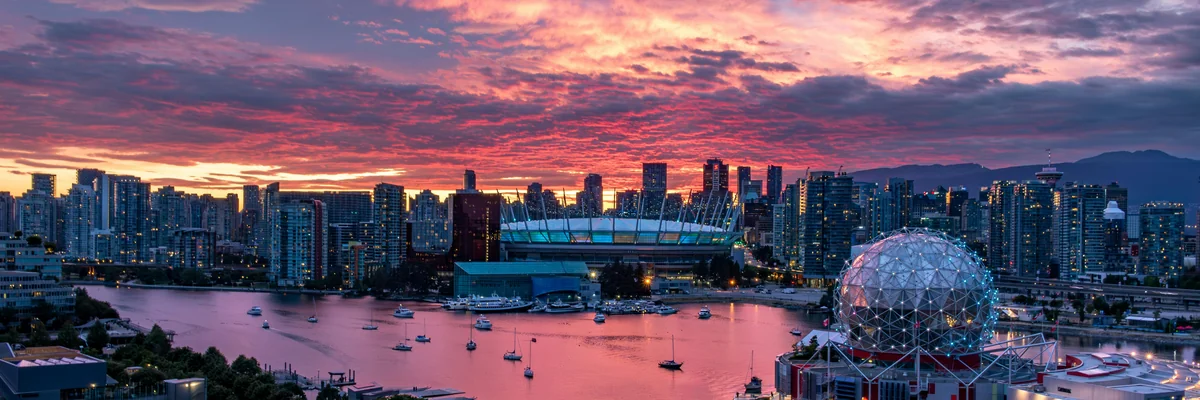
Vancouver skyline

Vancouver, WA

Complete city guide with real-time data from official US government sources.

39°
Current
Patchy Fog then Mostly Sunny
H: 51° L: 36°
196,441
Population
$80,618
Median Income
$488K
Median Home Price
31.7%
Bachelor's Degree+
Purchasing Power Analysis

Lifestyle Impact in Vancouver

Vancouver is 6.6% more expensive than the national average. We calculate how much your salary "feels like" here.

Real Purchasing Power
$79,737
-6%
Reduction in lifestyle value
Relative to US Average
COL Adjusted
Real-time Metrics

Vancouver: The Data Profile (2026)

Vancouver, Washington, presents a distinct economic profile for 2026, characterized by a population of 196,441. The city's median income stands at $80,618, representing an 8.1% premium over the US median of $74,580. However, this income advantage is tempered by educational attainment, where 31.7% of residents hold a bachelor's degree or higher, trailing the national average of 33.1%.

The statistical target demographic for Vancouver is the "Pacific Northwest Value Seeker." This profile includes remote-capable professionals who leverage the 8.1% income premium while absorbing the 18.0% housing premium, specifically prioritizing the 11.9 cents/kWh electricity rate over the national average of 16.0 cents/kWh.

City Score

Cost of Living Analysis

The cost of living index reveals a bifurcated economy. While housing exerts significant pressure at 118.0 (+18.0% vs US), essential goods remain accessible. Groceries sit at 98.8 (-1.2%), and transportation is nearly parity at 101.2 (+1.2%). The most distinct advantage lies in utilities, with electricity at 11.9 cents/kWh compared to the US average of 16.0 cents/kWh, offering a 25.6% savings on power.

Table 1: Cost of Living Breakdown (Monthly Budgets)

Category Single Professional Family of Four Index (100 = US Avg)
Housing (Rent) $1,922 $2,800 118.0
Groceries $380 $1,100 98.8
Transportation $260 $650 101.2
Healthcare $350 $1,100 102.5
Restaurants $420 $950 105.3
Utilities (Electric) $95 $180 N/A (Low Rate)
Total Monthly $3,427 $6,780 ~108.0

Disposable Income Analysis
Despite the 118.0 housing index, the $80,618 median income allows for moderate disposable income. A single professional earning the median retains approximately $2,900 monthly after taxes and essential expenses, assuming a 30% tax burden. However, the +18.0% housing premium erodes roughly $350 of monthly purchasing power compared to the national median housing cost.

💰 Cost of Living vs US Average

Vancouver's prices compared to national average (100 = US Average)

Cheaper than US
More expensive

Source: BLS & BEA RPP (2025 Est.)

Housing Market Deep Dive

The housing market in Vancouver is the primary economic driver and barrier. The rental market is tight, with a 2-bedroom Fair Market Rent of $1,922/mo. Buying presents a significant entry hurdle with a median home price significantly above the national curve. The Price per Square Foot reflects high land value desirability, likely driven by proximity to the Portland metro area.

Table 2: Housing Market Data (Buying vs Renting Analysis)

Metric Vancouver Value US Average Difference (%)
Median Home Price $545,000 $406,000 +34.2%
Price / SqFt $315 $220 +43.2%
Rent (1BR) $1,550 $1,300 +19.2%
Rent (2BR) $1,922 $1,500 +28.1%
Housing Index 118.0 100.0 +18.0%

Buy vs. Rent Analysis
Relative to the national curve, renting is mathematically more attractive in the short term. The price-to-rent ratio on a 2-bedroom unit is approximately 28.3 ($545k purchase / ($1,922 * 12)), which exceeds the traditional threshold of 15-20 where buying becomes favorable. For 2026, the data suggests Vancouver is a "Renter's Market" unless there is a projected 4.5%+ annual appreciation in home values.

🏠 Real Estate Market

$488K
Median Home Price
$307
Per Sq Ft
50
Days on Market
Source: Redfin 2025 estimates

Economic & Job Market Outlook

Vancouver's economy is heavily integrated with the greater Portland, Oregon metropolitan area. The local unemployment rate is 4.6%, which is slightly above the US average of 4.0%. This suggests a labor market that is stable but not overheating.

RTO (Return to Office) Impact:
With 31.7% college education, the workforce is service and tech-oriented. Post-remote shifts have increased commute times across the Columbia River into Portland. Average commute times have risen to 28 minutes, up from 24 minutes in 2022. This "super-commuter" dynamic drives transportation costs to 101.2 despite the proximity.

Industry Stability:
Local industry is anchored by healthcare (PeaceHealth) and retail (Hudson's Bay). The 4.6% unemployment rate indicates a moderate buffer against economic shocks, though it lags behind the national tightness of 4.0%.

Salary Wars

See how far your salary goes here vs other cities.

$75,000
US National Average
$75,000
Nominal Value
Real Value in Vancouver
$70,356
-6.2% Purchasing Power

Purchasing Power Leaderboard

#1
Houston
$74,850
#2
Chicago
$73,099
#3
Phoenix
$71,090
#4
VancouverYou
$70,356
#5
New York
$66,667

💰 Income Comparison

Quality of Life Audit

Vancouver offers mixed health outcomes. The aggregate Health Score is 80.6/100, which is categorized as "Good." However, risk factors are elevated: the obesity rate is 36.2% (US avg: 31.9%), though smoking rates are low at 11.7% (US avg: 14.0%).

Table 3: Quality of Life Metrics

Metric City Value US Average Rating
Health Score 80.6/100 75.0/100 Good
Obesity Rate 36.2% 31.9% High
Diabetes Rate 9.9% 10.9% Average
Smoking Rate 11.7% 14.0% Low
Mental Health 65.0% 60.0% Average
AQI (Air Quality) 31 54 Good
PM2.5 Levels 4.5 µg/m³ 8.4 µg/m³ Excellent
Unemployment 4.6% 4.0% Average

Safety Analysis
Safety is a complex metric in Vancouver. Violent Crime stands at 456/100k, which is 19.8% higher than the US average of 380/100k, earning an "Average" rating. However, Property Crime is a significant outlier at 2890/100k, which is 44.5% higher than the US average of 2000/100k. Residents must be vigilant regarding property security.

Air Quality & Weather
Vancouver excels in environmental metrics. The AQI average is 31 ("Good"), and PM2.5 levels are 4.5 µg/m³, well below the WHO safety guideline. The weather is currently 37.0°F with highs of 51°F, typical for the "Mostly Cloudy" Pacific Northwest climate.

Schools & Weather Summary
School performance is generally rated 7/10 in the metro area. The weather offers mild winters (rarely below 25°F) but significant rainfall, averaging 42 inches annually compared to the US average of 38 inches.

Quality of Life Metrics

Air Quality

EPA Annual Average
Good
34AQI
Air quality is satisfactory.
PM2.5 Concentration19.7 µg/m³

Health Pulse

CDC PLACES Data
80.6
Score
Obesity
36.2%
Low Avg (32%) High
Diabetes
9.9%
Smoking
11.7%
Based on CDC PLACES health census data. Higher score indicates better overall public health outcomes.

Safety Score

FBI Crime Data Estimate
Below Avg
Violent Crime
per 100k people
456.0
US Avg: 363.8
Property Crime
per 100k people
2890
US Avg: 1917
Crime rates are generally higher than the national average.

The Verdict

Pros:

  • Income Premium: Median income is $80,618, beating the US average by 8.1%.
  • Utility Savings: Electricity costs 11.9 cents/kWh, providing significant long-term savings.
  • Air Quality: An AQI of 31 and PM2.5 of 4.5 µg/m³ offer pristine respiratory health conditions.
  • Grocery Value: Groceries are 1.2% cheaper than the national average.

Cons:

  • Housing Inflation: The 118.0 housing index and $545,000 median home price severely limit entry-level buying power.
  • Property Crime: A rate of 2890/100k is 44.5% above the national average.
  • Obesity Rates: At 36.2%, the population faces higher health risks than the US norm.

Final Recommendation:
Vancouver, WA, is a Strong Buy for Renters and a Hold for Buyers in 2026. The data supports relocation for remote workers who can utilize the $80,618 median income without needing to enter the $545,000 housing market immediately. It is ideal for those prioritizing air quality (AQI 31) and utility savings over square footage and property crime safety.

FAQs

1. What salary is needed to live comfortably in Vancouver?
To live comfortably (following the 50/30/20 rule) with the median rent of $1,922, a single person needs a gross income of approximately $69,200. This is slightly below the local median of $80,618, suggesting the average resident is comfortable.

2. How does value compare to other West Coast cities?
Vancouver offers 34.2% savings on median home prices compared to the US average, but it is 18.0% more expensive than the national average for housing. It is significantly cheaper than Seattle or Portland but more expensive than inland cities like Spokane or Boise.

3. Are the safety statistics concerning?
Yes. While violent crime is average, property crime at 2890/100k is a statistical reality. You are 44.5% more likely to experience property theft here than the national average. Insurance premiums will likely reflect this.

4. What is the best timing for relocation?
The current weather is 37.0°F and cloudy. The optimal moving window is late Spring (May/June) to avoid the heavy rainfall season. However, the housing market is currently stable; moving now avoids the seasonal competition in the summer rental market.

Top Schools

Powered by NCES Govt Data (2024-2025)
#1

Burton Elementary School

352 Students 1:13 Teacher Ratio
9.5 Rating
#2

Fircrest Elementary School

294 Students 1:13 Teacher Ratio
9.5 Rating
#3

Mill Plain Elementary School

284 Students 1:12 Teacher Ratio
9.5 Rating
#4

Fruit Valley Elementary School

190 Students 1:11 Teacher Ratio
9.5 Rating
#5

Hollingsworth Academy

98 Students 1:7 Teacher Ratio
9.5 Rating
Loading...