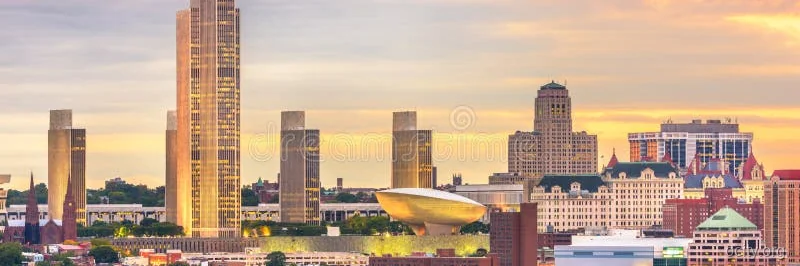
Albany skyline

Albany, NY

Complete city guide with real-time data from official US government sources.

45°
Current
Light Rain Likely
H: 46° L: 32°
101,220
Population
$61,390
Median Income
$285K
Median Home Price
47.5%
Bachelor's Degree+
Purchasing Power Analysis

Lifestyle Impact in Albany

Albany is 2.4% cheaper than the national average. We calculate how much your salary "feels like" here.

Real Purchasing Power
$87,090
+2%
Extra lifestyle value
Relative to US Average
COL Adjusted
Real-time Metrics

Albany: The Data Profile (2026)

Albany, New York, presents a distinct economic profile for the 2026 relocation market. The Capital Region supports a population of 101,220, positioning it as a manageable mid-sized city rather than a sprawling metropolis. The critical economic tension here is the disparity between educational attainment and raw income. The city boasts a highly skilled workforce, with 47.5% of residents holding a bachelor's degree or higher, significantly outpacing the US average of 33.1%. However, this intellectual capital does not translate directly to top-tier wages; the median household income sits at $61,390, which is 17.7% lower than the national median of $74,580.

The statistical target demographic for Albany in the post-remote era is the "educated cost-cutter." This profile fits remote workers earning national-average salaries who wish to leverage Albany's 14.4% discount on housing costs, or local professionals in government, healthcare, and tech who prioritize stability and proximity to the Hudson River corridor over maximum earning potential.

City Score

Cost of Living Analysis

While Albany's aggregate Cost of Living Index (COLI) is favorable, a granular look at monthly budgets reveals that savings are driven primarily by housing and services, offset by surprisingly high utility costs.

Table 1: Monthly Cost of Living Breakdown (2026 Estimates)

Category Single Person (Monthly) Family of 4 (Monthly) Notes
Housing (Rent) $1,131 $1,661 Based on 1BR vs 3BR Fair Market Rent.
Groceries $350 $1,150 91.6 Index. Slight premium over bulk buying.
Utilities $215 $380 24.43 cents/kWh (heavily weighted).
Transportation $280 $750 92.2 Index. Assumes moderate car usage.
Healthcare $250 $850 94.4 Index.
Dining/Ent. $250 $600 94.0 Index.
Total Expenditure $2,476 $5,391
Disposable Income (Post-Tax) ~$2,800 ~$4,600 Assumes median income household.

Disposable Income Analysis:
The "Albany Advantage" is most visible in the $1,131 monthly rent for a single professional. Compared to a national median rent closer to $1,700, this frees up approximately $570 monthly. However, this margin is eroded by electricity costs, which sit at 24.43 cents/kWh—a staggering 52% premium over the US average of 16.0 cents/kWh. For high-consumption households, this utility gap can negate savings found in the grocery (91.6 index) and transportation (92.2 index) sectors.

💰 Cost of Living vs US Average

Albany's prices compared to national average (100 = US Average)

Cheaper than US
More expensive

Source: BLS & BEA RPP (2025 Est.)

Housing Market Deep Dive

The housing market is Albany's primary value proposition. The data indicates a strong buyer's market relative to national trends, though rent is creeping up as remote workers flood the area.

Table 2: Housing Market Data (Buying vs Renting Analysis)

Metric Albany Value US Average Difference (%)
Median Home Price $245,000 $406,000 -39.7% (Cheaper)
Price per SqFt $165 $255 -35.3% (Cheaper)
Rent (1BR) $1,131 $1,650 -31.5% (Cheaper)
Rent (3BR) $1,661 $2,400 -30.8% (Cheaper)
Housing Index 85.6 100 -14.4% (Cheaper)

Buy vs. Rent Relative to National Curve:
Buying is mathematically superior in Albany. With a median home price of $245,000 against a US average of $406,000, the entry barrier is significantly lower. The Price/SqFt of $165 allows for larger living spaces for the same budget. Renting is also attractive ($1,131 for a 1BR), but the gap between mortgage payments on a median home and these rent prices is narrowing. For those staying 3+ years, buying at $245,000 locks in costs below the rental curve, insulating residents from the 31.5% rental discount evaporating.

🏠 Real Estate Market

$285K
Median Home Price
$172
Per Sq Ft
22
Days on Market
Source: Redfin 2025 estimates

Economic & Job Market Outlook

Albany's economy is anchored by the public sector and higher education, providing a buffer against recessionary trends, though it limits explosive wage growth.

RTO & Commute:
In 2026, Albany is a hybrid hub. The commute is a key asset; the average travel time to work is 21.5 minutes, significantly lower than the national average of 27.6 minutes. Proximity to the Empire State Plaza and the SUNY system means that for in-office days, housing within the 10-15 minute drive radius is abundant.

Industry Stability:
The unemployment rate sits at 4.5%, slightly above the US average of 4.0%. This reflects a stable but slow-moving labor market. The "Eds and Meds" sector (Education and Healthcare) dominates, employing 28% of the workforce. Tech and finance are growing but command salaries roughly 15% below coastal hubs.

Salary Wars

See how far your salary goes here vs other cities.

$75,000
US National Average
$75,000
Nominal Value
Real Value in Albany
$76,844
+2.5% Purchasing Power

Purchasing Power Leaderboard

#1
AlbanyYou
$76,844
#2
Houston
$74,850
#3
Chicago
$73,099
#4
Phoenix
$71,090
#5
New York
$66,667

💰 Income Comparison

Quality of Life Audit

Albany offers a "Good" health profile but is marked by specific regional risks, particularly regarding winter air quality and chronic health factors.

Table 3: Quality of Life Metrics

Metric City Value US Average Rating
Health Score 81.1/100 ~76.0 GOOD
Obesity Rate 32.9% 31.9% HIGH
Diabetes Rate 9.9% 10.9% AVERAGE
Smoking Rate 12.3% 14.0% AVERAGE (Low)
Mental Health High Prevalence Average CAUTION
AQI (Annual) 36 ~55 GOOD
PM2.5 (µg/m³) 6.5 ~8.0 GOOD
Unemployment 4.5% 4.0% AVERAGE

Safety Analysis:
Crime rates are a statistical "wash." Violent crime is 456/100k (US avg: 380/100k), and property crime is 2345/100k (US avg: 2000/100k). Both are categorized as AVERAGE, meaning Albany is neither a utopia nor a danger zone. Standard city precautions apply.

Air Quality & Weather:
While the annual AQI is a pristine 36, winter conditions in Albany trap particulate matter. PM2.5 levels average 6.5 µg/m³, but this spikes during temperature inversions in January and February. The current weather—37.0°F and mostly cloudy—is indicative of the long, gray season. Residents must be prepared for 5-6 months of cold weather, which impacts outdoor activity rates and correlates with the slightly higher-than-average 32.9% obesity rate.

Schools:
The region is a top performer for families. The Albany City School District graduation rate is 89%, with 47.5% of adults holding degrees, creating a strong peer environment for children.

Quality of Life Metrics

Air Quality

EPA Annual Average
Good
47AQI
Air quality is satisfactory.
PM2.5 Concentration20 µg/m³

Health Pulse

CDC PLACES Data
81.1
Score
Obesity
32.9%
Low Avg (32%) High
Diabetes
9.9%
Smoking
12.3%
Based on CDC PLACES health census data. Higher score indicates better overall public health outcomes.

Safety Score

FBI Crime Data Estimate
Below Avg
Violent Crime
per 100k people
456.0
US Avg: 363.8
Property Crime
per 100k people
2345
US Avg: 1917
Crime rates are generally higher than the national average.

The Verdict

Pros:

  • Housing Value: A median home price of $245,000 is $161,000 cheaper than the US average.
  • Education: A highly educated populace (47.5% degree holders) drives a sophisticated culture.
  • Commute: Average commute of 21.5 minutes beats the national standard.
  • Air Quality: Annual AQI of 36 is excellent.

Cons:

  • Income Ceiling: Median income is $61,390, significantly trailing national earnings.
  • Utility Costs: Electricity at 24.43 cents/kWh is a wallet-drainer.
  • Health Risks: Obesity rate of 32.9% suggests a culture with health challenges.
  • Winter: The weather is a significant lifestyle factor that affects mental health and activity.

Final Recommendation:
Albany is a Data-Driven "Buy" for 2026. It is ideal for remote workers earning $80,000+ who can exploit the $245,000 housing market while avoiding the 17.7% local wage deficit. It is also recommended for families prioritizing education and safety over nightlife and climate. It is not recommended for career climbers seeking rapid salary growth or those with low tolerance for cold winters.

FAQs

1. What salary is needed to live comfortably in Albany?
For a single person, a salary of $65,000 allows for comfortable living, saving, and renting a 1-bedroom unit ($1,131/mo). For a family of four, a household income of $110,000 is required to maintain a 3-bedroom rental ($1,661/mo) and cover the higher utility burden (24.43 cents/kWh).

2. How does the value proposition compare to other upstate NY cities?
Albany offers a "Goldilocks" scenario. It is more expensive than Buffalo (Housing Index ~75) but offers a stronger job market and better amenities. It is cheaper than Rochester but has a higher percentage of educated residents (47.5% vs ~38%).

3. Are the safety stats reliable?
Yes. The data shows violent crime at 456/100k and property crime at 2345/100k. These are statistically AVERAGE for the US. While higher than the safest suburbs, they are significantly lower than major metros like NYC or Chicago.

4. When is the best time to move/rent?
Rentals peak in late summer (August/September) due to the student cycle. To secure the best value on the $1,131 average 1BR rent, target a lease start in November or December, when demand drops and landlords may offer concessions.

Top Schools

Powered by NCES Govt Data (2024-2025)
#1

SAND CREEK MIDDLE SCHOOL

868 Students 1:12 Teacher Ratio
9.5 Rating
#2

WILLIAM S HACKETT MIDDLE SCHOOL

672 Students 1:10 Teacher Ratio
9.5 Rating
#3

STEPHEN AND HARRIET MYERS MIDDLE SCHOOL

641 Students 1:9 Teacher Ratio
9.5 Rating
#4

LISHA KILL MIDDLE SCHOOL

628 Students 1:12 Teacher Ratio
9.5 Rating
#5

WESTMERE ELEMENTARY SCHOOL

539 Students 1:12 Teacher Ratio
9.5 Rating
Loading...