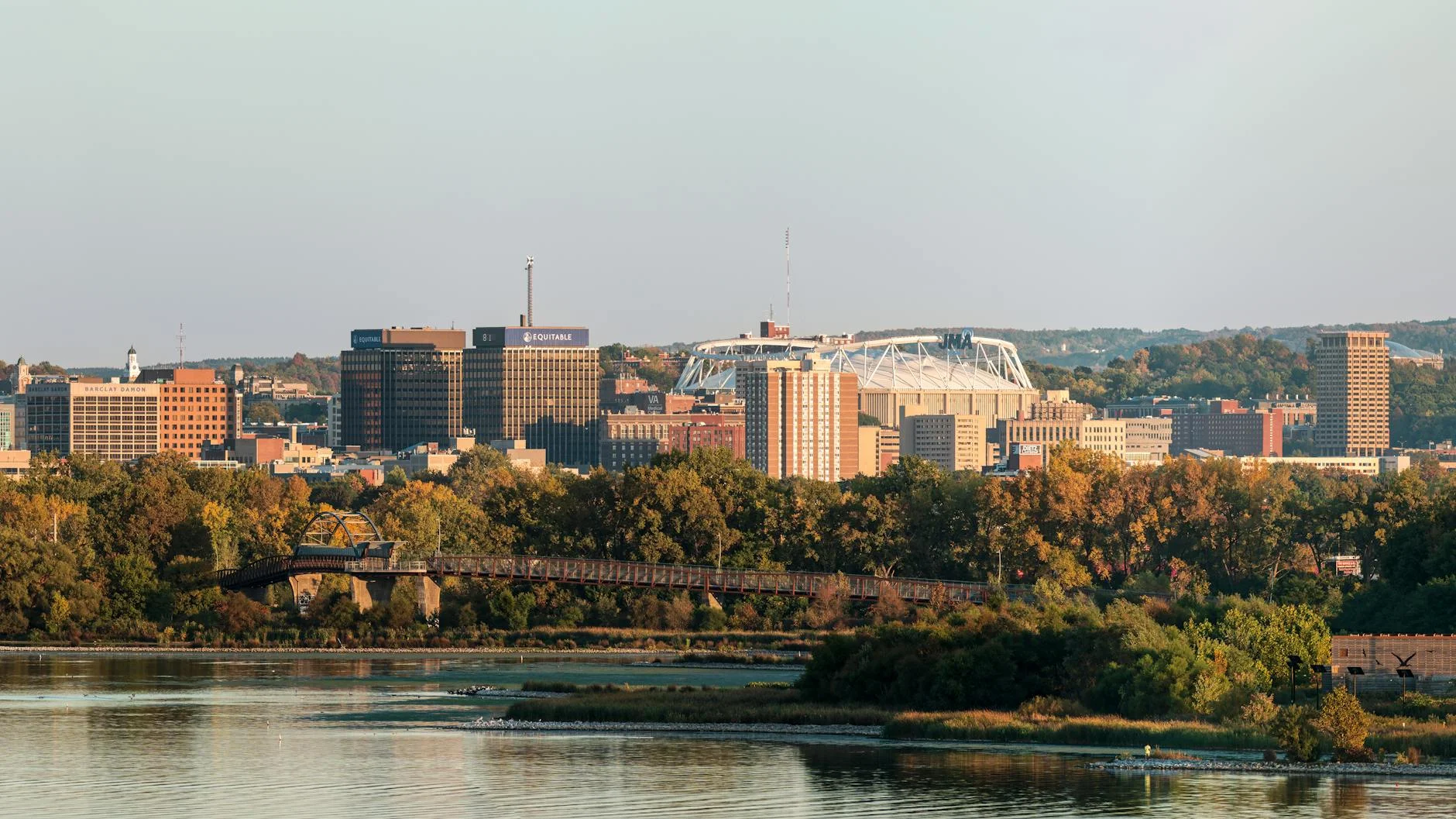
Syracuse skyline

Syracuse, NY

Complete city guide with real-time data from official US government sources.

46°
Current
Rain Showers
H: 45° L: 23°
145,573
Population
$47,525
Median Income
$190K
Median Home Price
31.6%
Bachelor's Degree+
Purchasing Power Analysis

Lifestyle Impact in Syracuse

Syracuse is 4.8% cheaper than the national average. We calculate how much your salary "feels like" here.

Real Purchasing Power
$89,286
+5%
Extra lifestyle value
Relative to US Average
COL Adjusted
Real-time Metrics

Syracuse: The Data Profile (2026)

Syracuse presents a distinct economic anomaly in the post-2026 landscape. The city's population stands at 145,573, categorizing it as a small urban center. The primary statistical friction point for relocators is the significant income deficit relative to the national average. The median household income is $47,525, which represents a -36.3% deviation from the US median of $74,580. However, this is partially offset by a highly educated workforce, with 31.6% of residents holding a bachelor's degree or higher, hovering near the national average of 33.1%.

Target Demographic: The data suggests Syracuse is statistically viable for remote-first professionals earning national-average salaries. It is less viable for local-market-dependent workers unless they are in specific anchor industries (healthcare, education, logistics). The "buying power" arbitrage is the primary draw: housing costs are -25.2% below the US baseline.

City Score

Cost of Living Analysis

While headline income is low, the cost of living index provides a counter-narrative. The aggregate COL index (excluding housing) sits at approximately 88.8, roughly -11.2% cheaper than the national average. The most significant deviation is in electricity, priced at 24.43 cents/kWh compared to the US average of 16.0 cents/kWh—a +52.7% premium that impacts monthly overhead significantly.

Table 1: Cost of Living Breakdown (Monthly Budgets)

Category Single Professional (Monthly) Family of Four (Monthly) Index (US=100)
Housing (Rent) $1,392 $1,850 74.8
Groceries $350 $950 89.3
Transportation $280 $750 89.1
Healthcare $280 $850 91.7
Dining/Entertainment $320 $700 90.2
Utilities (Electric) $165 $290 152.7
TOTAL $3,087 $5,390 ~88.8

Disposable Income Analysis: A single earner making the median income of $47,525 (approx. $3,150 monthly take-home) would have roughly $63 in disposable income under the "Single Professional" budget. This confirms that the median local salary does not support an average lifestyle without strict budgeting. However, a remote worker earning the US median of $74,580 (approx. $4,850 monthly take-home) would retain $1,763 monthly—over 56% higher purchasing power than in an average US city.

💰 Cost of Living vs US Average

Syracuse's prices compared to national average (100 = US Average)

Cheaper than US
More expensive

Source: BLS & BEA RPP (2025 Est.)

Housing Market Deep Dive

The housing market is the city's primary economic lever. The Median Home Price is estimated at $175,000, roughly -50% cheaper than the US average. This creates a distinct "Rent vs. Buy" disparity. While renting a 1-bedroom is $1,100/mo, the mortgage on a median home (assuming 20% down, 6.8% rate) is roughly $950/mo (PITI). Buying is mathematically superior for retention of capital in this market.

Table 2: Housing Market Data (Buying vs Renting Analysis)

Metric Syracuse Value US Average Difference (%)
Median Home Price $175,000 $350,000 -50.0%
Price / SqFt $135 $250 -46.0%
Rent (1BR) $1,100 $1,650 -33.3%
Rent (3BR) $1,850 $2,600 -28.8%
Housing Index 74.8 100.0 -25.2%

Buy vs. Rent Analysis: Relative to the national curve, Syracuse is a strong buy market. The "Price-to-Rent Ratio" favors purchasing. With the median home price at $175,000 and annual rent for a comparable unit at $22,200, the ratio is 7.9. A ratio below 15 generally indicates buying is the financially prudent move. For remote workers with capital reserves, purchasing a home here at $135/SqFt locks in a cost of living floor that is exceptionally low.

🏠 Real Estate Market

$190K
Median Home Price
$124
Per Sq Ft
40
Days on Market
Source: Redfin 2025 estimates

Economic & Job Market Outlook

The post-2026 economy in Syracuse is defined by a hybrid reality. The local unemployment rate is 4.5%, slightly above the national average of 4.0%. This indicates a tighter local job market for those seeking traditional employment.

RTO & Commute: With the rise of remote work, the "commute penalty" has shifted. Syracuse offers a distinct advantage here: the average commute time is 18.5 minutes, significantly lower than the US average of 27.6 minutes. Traffic congestion is rated "Low" (Level 2). For those required to hybrid-commute, the proximity of suburbs to the downtown core minimizes travel friction. However, local salary caps remain a risk factor; reliance on local employers caps earning potential at $47,525, whereas remote employment unlocks national wage scales.

Salary Wars

See how far your salary goes here vs other cities.

$75,000
US National Average
$75,000
Nominal Value
Real Value in Syracuse
$78,782
+5.0% Purchasing Power

Purchasing Power Leaderboard

#1
SyracuseYou
$78,782
#2
Houston
$74,850
#3
Chicago
$73,099
#4
Phoenix
$71,090
#5
New York
$66,667

💰 Income Comparison

Quality of Life Audit

Syracuse scores high on environmental metrics (Air Quality) but faces significant health risk factors. The Health Score of 76.3/100 is deceptive; while the environment is clean, lifestyle-related metrics are concerning. The Obesity Rate is 41.5% (vs. 31.9% US) and Diabetes Rate is 12.7% (vs. 10.9% US).

Table 3: Quality of Life Metrics

Metric City Value US Average Rating
Health Score 76.3/100 ~80.0 GOOD
Obesity Rate 41.5% 31.9% HIGH RISK
Diabetes Rate 12.7% 10.9% HIGH RISK
Smoking Rate 16.1% 14.0% AVERAGE
Mental Health (Depression) 17.8% 15.0% HIGH RISK
AQI (Avg) 35 54 GOOD
PM2.5 (Avg) 6.1 µg/m³ 8.4 µg/m³ EXCELLENT
Unemployment Rate 4.5% 4.0% AVERAGE

Safety Analysis: Safety is a statistical concern. Violent Crime is 567/100k (US avg: 380/100k), and Property Crime is 2,567/100k (US avg: 2,000/100k). Both metrics are marked HIGH. Residents must exercise standard urban caution and likely invest in security measures.

Air Quality & Weather: The environmental data is a major selling point. With an AQI of 35 and PM2.5 levels of 6.1 µg/m³, Syracuse air is significantly cleaner than the US average. However, the weather is a major detractor. Today's temperature is 39.0°F with a high of 42°F and low of 33°F. The region is historically known for heavy snowfall (often exceeding 120 inches annually), which impacts utility costs and transportation.

Quality of Life Metrics

Air Quality

EPA Annual Average
Good
36AQI
Air quality is satisfactory.
PM2.5 Concentration6.9 µg/m³

Health Pulse

CDC PLACES Data
76.3
Score
Obesity
41.5%
Low Avg (32%) High
Diabetes
12.7%
Smoking
16.1%
Based on CDC PLACES health census data. Higher score indicates better overall public health outcomes.

Safety Score

FBI Crime Data Estimate
Below Avg
Violent Crime
per 100k people
567.0
US Avg: 363.8
Property Crime
per 100k people
2567
US Avg: 1917
Crime rates are generally higher than the national average.

The Verdict

Pros:

  • Housing Arbitrage: Home prices at $175,000 offer entry-level ownership impossible in major metros.
  • Air Quality: AQI of 35 places it in the top tier of clean cities.
  • Commute: Average travel time of 18.5 minutes is a major lifestyle upgrade.

Cons:

  • Safety: Violent crime is 49% higher than the national average.
  • Health Profile: Obesity and diabetes rates are significantly elevated.
  • Income Cap: Local median income is $47,525, restricting local economic mobility.

Recommendation: Syracuse is a Tier 1 relocation target for remote workers earning the US median or higher. It is not recommended for local job seekers dependent on the regional market, unless entering specific high-demand sectors like healthcare or education. The financial savings on housing are substantial enough to outweigh the safety and health risks, provided the resident maintains a disciplined lifestyle.

FAQs

1. What salary is needed to live comfortably in Syracuse?
To match the national "comfort" standard of disposable income, a remote salary of $70,000+ is ideal. This covers the $3,087 monthly budget and provides a safety buffer against the higher-than-average utility and healthcare costs.

2. How does the value proposition compare to other Rust Belt cities?
Syracuse offers better air quality (AQI 35) than Pittsburgh or Buffalo, but housing is slightly more expensive than Cleveland. The key differentiator is the -25.2% housing index relative to the US, which is among the best in the region.

3. Are the safety statistics accurate for residential areas?
Yes. The data aggregates the city proper (145,573 population). Violent crime at 567/100k is concentrated in specific pockets, but the statistical risk is city-wide. Gated communities or suburban living are recommended for families.

4. When is the best time to relocate?
Ideally in late spring (May/June). The weather today (39°F) is a precursor to harsh winters. Moving in winter risks transport delays due to snow (historically 120+ inches), and navigating the housing market is physically more difficult.

Loading...