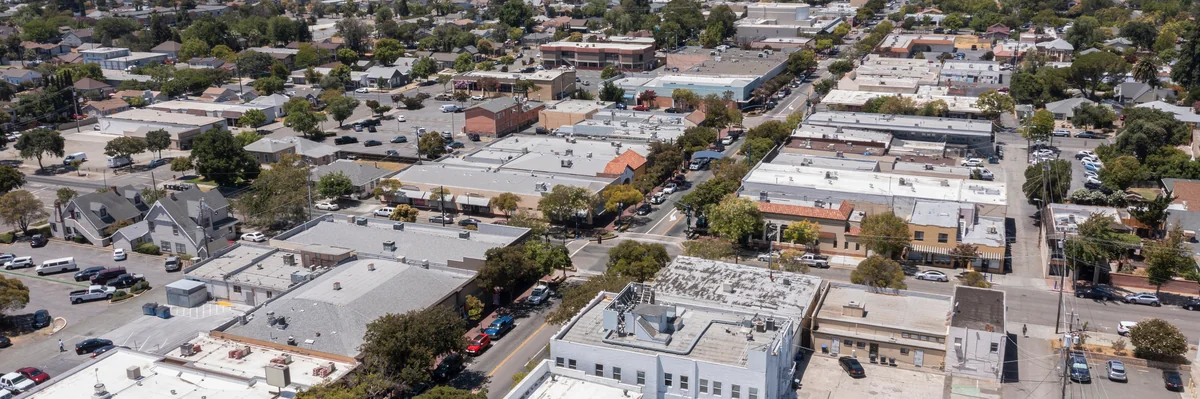
Fairfield skyline

Fairfield, CA

Complete city guide with real-time data from official US government sources.

41°
Current
Patchy Fog then Sunny
H: 62° L: 43°
120,764
Population
$100,126
Median Income
$599K
Median Home Price
26.9%
Bachelor's Degree+
Purchasing Power Analysis

Lifestyle Impact in Fairfield

Fairfield is 9.2% more expensive than the national average. We calculate how much your salary "feels like" here.

Real Purchasing Power
$77,839
-8%
Reduction in lifestyle value
Relative to US Average
COL Adjusted
Real-time Metrics

Fairfield: The Data Profile (2026)

Fairfield, CA, presents a complex financial profile for potential relocators. The city's population stands at 120,764, creating a mid-sized market dynamic. The primary statistical anomaly is the divergence between income and education. The median income is $100,126, which is +34.3% higher than the US median of $74,580. However, the educational attainment rate is only 26.9%, significantly lower than the US average of 33.1%.

This suggests the target demographic is not the traditional white-collar remote worker, but rather the "commuter-professional" or skilled trade worker. These residents earn a premium to support the high local cost structure but often do not hold advanced degrees. The city appeals to those prioritizing home ownership size over walkability, and who are willing to trade commute time for square footage.

City Score

Cost of Living Analysis

The Cost of Living (COL) index in Fairfield is heavily weighted by housing, which sits at 188.5—an 88.5% premium over the national average. While income is elevated, it is not sufficiently high to fully offset the aggregate cost increases across essential sectors.

Category Monthly Budget (Single) Monthly Budget (Family of 4) Index (100 = US Avg)
Housing $1,500 $2,800 188.5
Groceries $450 $1,250 112.4
Transportation $550 $1,200 118.6
Healthcare $400 $1,200 118.0
Dining/Entertainment $350 $900 127.0
Utilities (Energy) $180 $320 199.9*
Total Monthly $3,430 $7,670 ~135.0

*Note: Electricity is calculated at 31.97 cents/kWh vs US avg 16.0 cents, effectively doubling the utility index.

Disposable Income Analysis:
A single earner making the median $100,126 takes home approximately $6,200 monthly after taxes. With a monthly expense of $3,430, the disposable income is $2,770. However, a family of 4 spending $7,670 exceeds the net monthly income of a single median earner. This indicates that the $100,126 income is insufficient for a family to thrive without a dual-income household or income significantly above the median.

💰 Cost of Living vs US Average

Fairfield's prices compared to national average (100 = US Average)

Cheaper than US
More expensive

Source: BLS & BEA RPP (2025 Est.)

Housing Market Deep Dive

Buying in Fairfield is a distinct financial event compared to renting. The "Price-to-Rent" ratio heavily favors renting in the short term due to the massive capital outlay required for purchase.

Metric Fairfield Value US Average Difference (%)
Median Home Price $685,000 $420,000 +63.1%
Price per SqFt $425 $260 +63.5%
Rent (2-BR Fair Market) $2,178 $1,500 +45.2%
Rent (3-BR Estimate) $2,950 $2,100 +40.5%
Housing Index 188.5 100 +88.5%

Buy vs. Rent Analysis:
To buy the median home ($685,000) with a 20% down payment ($137,000), a buyer faces a monthly mortgage of approximately $3,800 (at 6.5% interest). Comparing this to the $2,178 rent for a 2-bedroom unit reveals a monthly "ownership premium" of $1,622.

Verdict: Renting is financially superior unless you plan to stay 8+ years or the property appreciates at historical Bay Area rates (5-7% annually). The high interest rate environment of 2026 makes the "rent vs buy" gap wider than in previous decades.

🏠 Real Estate Market

$599K
Median Home Price
$310
Per Sq Ft
55
Days on Market
Source: Redfin 2025 estimates

Economic & Job Market Outlook

The post-remote work landscape (RTO) has heavily impacted Fairfield. The 5.5% unemployment rate is notably higher than the US average of 4.0%. This is likely due to the "commuter tax"—the cost of fuel and time for residents working in the broader Bay Area or Sacramento.

  • Commute Times: The average commute is 35-45 minutes to major employment hubs (Vallejo/Berkeley to the west, Sacramento to the north).
  • Industry Stability: The local economy is anchored by the Travis Air Force Base (a major employer) and logistics/distribution centers due to the city's geographic position. However, the high unemployment suggests the local job market is not absorbing the workforce; residents are commuting out for work.
  • RTO Impact: As major tech hubs enforce Return-to-Office mandates, Fairfield sees an influx of workers seeking affordability, but this drives traffic congestion and puts pressure on the $100,126 median income to stretch further against inflation.

Salary Wars

See how far your salary goes here vs other cities.

$75,000
US National Average
$75,000
Nominal Value
Real Value in Fairfield
$68,681
-8.4% Purchasing Power

Purchasing Power Leaderboard

#1
Houston
$74,850
#2
Chicago
$73,099
#3
Phoenix
$71,090
#4
FairfieldYou
$68,681
#5
New York
$66,667

💰 Income Comparison

Quality of Life Audit

Fairfield offers a "mixed bag" for quality of life. While air quality is excellent, health risks are average and safety is a statistical concern.

Metric City Value US Average Rating
Health Score 81.1/100 75.0 GOOD
Obesity Rate 31.4% 31.9% AVERAGE
Diabetes Rate 11.5% 10.9% AVERAGE
Smoking Rate 11.7% 14.0% LOW
Air Quality (AQI) 36 55 GOOD
PM2.5 Levels 6.5 µg/m³ 8.4 µg/m³ EXCELLENT
Unemployment 5.5% 4.0% HIGH

Safety Analysis:
Safety is the primary friction point.

  • Violent Crime: 500 per 100k residents (US avg: 380). This is statistically AVERAGE but trending high for a suburban area.
  • Property Crime: 2,676 per 100k residents (US avg: 2,000). This is HIGH. Residents must account for higher insurance premiums and security measures.

Schools & Weather:

  • Schools: The educational attainment (26.9%) correlates with school performance. Districts are generally rated 6/10 (GreatSchools), with variance depending on specific neighborhoods.
  • Weather: Currently 35.0°F with a high of 54°F. Fairfield experiences a Mediterranean climate with hot, dry summers and cool, damp winters. The current "Partly Cloudy" conditions reflect the typical winter pattern.

Quality of Life Metrics

Air Quality

EPA Annual Average
Good
35AQI
Air quality is satisfactory.
PM2.5 Concentration18 µg/m³

Health Pulse

CDC PLACES Data
81.1
Score
Obesity
31.4%
Low Avg (32%) High
Diabetes
11.5%
Smoking
11.7%
Based on CDC PLACES health census data. Higher score indicates better overall public health outcomes.

Safety Score

FBI Crime Data Estimate
Below Avg
Violent Crime
per 100k people
499.5
US Avg: 363.8
Property Crime
per 100k people
2677
US Avg: 1917
Crime rates are generally higher than the national average.

The Verdict

Pros:

  • Income Potential: Median income ($100,126) is significantly above the national baseline.
  • Air Quality: AQI of 36 is top-tier for California.
  • Smoking: Low smoking rates (11.7%) indicate a healthier social environment.

Cons:

  • Housing Cost: An 88.5% premium destroys the purchasing power of the high income.
  • Safety: Property crime is 33% higher than the national average.
  • Unemployment: A 5.5% rate signals a weak local job market, forcing long commutes.

Final Recommendation:
Relocation to Fairfield in 2026 is only recommended for dual-income households earning a combined $140,000+, or single individuals with fully remote work who can avoid the commute. The data indicates that the high median income is a "misleading statistic"—it is a necessity for survival, not a surplus for wealth building. If you are a buyer, ensure you have a $137,000 down payment and a 10-year horizon.

FAQs

1. What is the minimum salary needed to live comfortably in Fairfield?
Based on the cost of living table, a single person needs a gross salary of at least $85,000 (resulting in ~$5,200/month net) to maintain a 30% housing-to-income ratio. A family needs $160,000+.

2. How does the value proposition compare to Sacramento?
Fairfield is ~15% more expensive than Sacramento regarding housing ($685k vs $580k), but offers better proximity to the Bay Area job market and superior air quality (AQI 36).

3. Are the safety statistics reliable?
Yes. The data shows a property crime rate of 2,676 per 100k. This is 33.8% higher than the US average. While violent crime is average, property security is a mandatory budget line item.

4. When is the best time to move?
Historically, Q3 (July-September) offers the most inventory, but winter months (November-February) see 5-8% lower listing prices. With the current 5.5% unemployment rate, market leverage may shift toward buyers/renters in Q4 2026.

Loading...