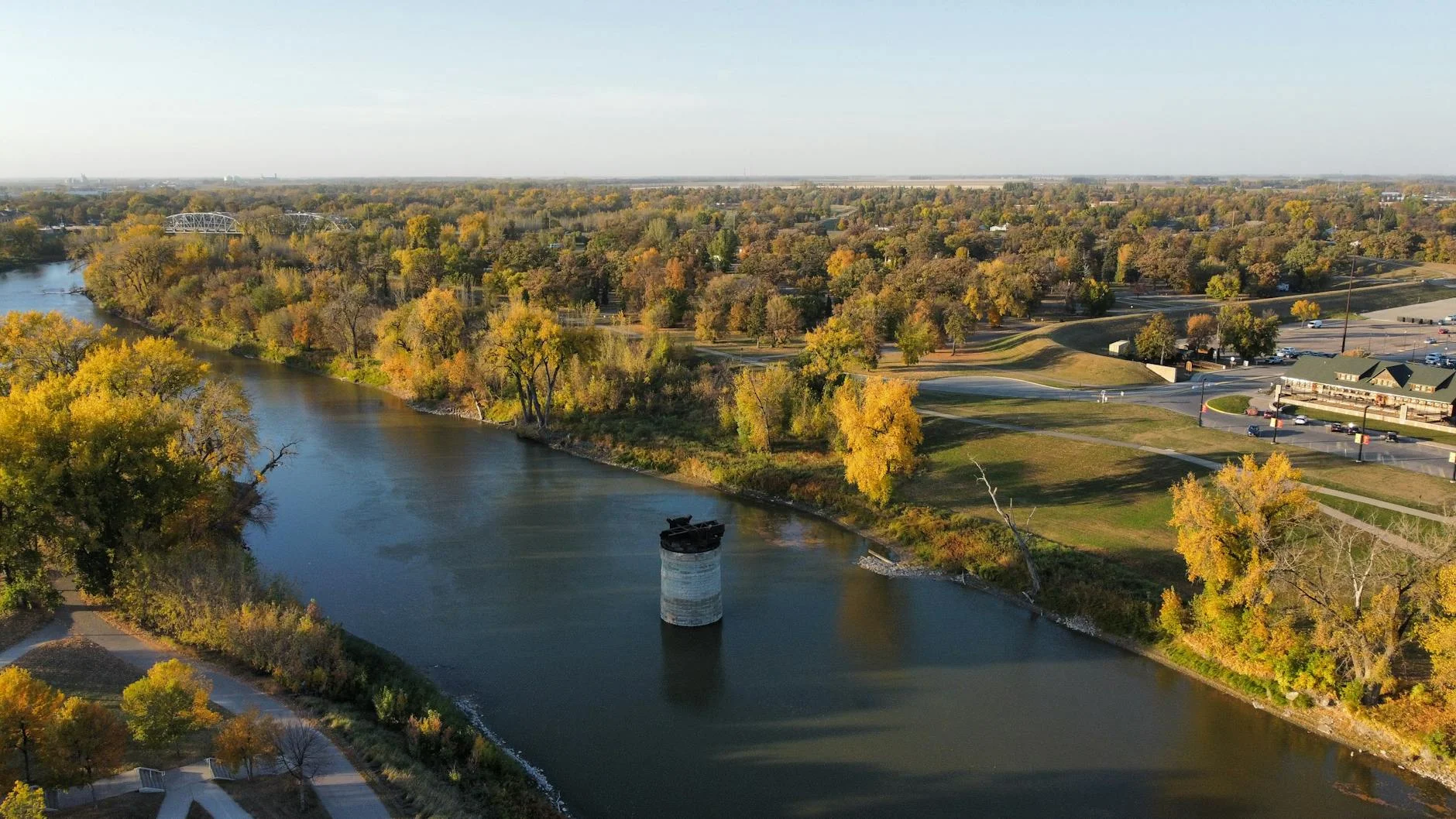
Grand Forks
2026 Analysis

Cost of Living in
Grand Forks, ND

Real data on housing, rent, and daily expenses. See exactly how far your dollar goes in Grand Forks.

COL Index
86.2
vs National Avg (100)
Median Income
$64k
Household / Year
Avg Rent
$736
1-Bedroom Apt
Home Price
$243k
Median Value
Cost Savings
Grand Forks is Cheaper
Rental Market
Better Rent Prices
Income Potential
Lower vs National Avg

The Real Price Tag: Beyond the "86.2" Index

The lazy metrics you see on generic cost-of-living calculators will get you into financial trouble fast. Relying on a blanket index of 86.2 (where 100 is the national average) suggests Grand Forks is a bargain bin for housing. It isn't. To live here without constantly checking your bank balance, you need a realistic baseline. The raw data suggests a single earner needs roughly $35,110 just to keep the lights on and the fridge stocked. However, that number is the floor, not the ceiling. It covers the "keep me alive" budget, not the "I can actually save for retirement" plan. If you want to live in a neighborhood that doesn't require a deadbolt on every interior door and eat something other than ramen, you need to adjust your expectations immediately. This isn't about scraping by; it’s about the cost of maintaining a standard of living that feels like you actually earned your paycheck.

📝 Detailed Cost Breakdown

Category / Metric Grand Forks National Average
Financial Overview
Median Income $63,838 $74,580
Unemployment Rate 2.6%
Housing Market
Median Home Price $243,300 $412,000
Price per SqFt $null $undefined
Monthly Rent (1BR) $736 $1,700
Housing Cost Index 56.9 100.0
Cost of Living
Groceries Index 95.9 100.0
Gas Price (Gallon) $3.40 $undefined
Safety & Lifestyle
Violent Crime (per 100k) 315.5 380.0
Bachelor's Degree+ 39.2%
Air Quality (AQI) 30
Loading...

The Big Items: Where Your Paycheck Actually Goes

Housing: The Lease Trap vs. The Equity Gamble
Let's address the elephant in the room: the housing market here is bifurcated and deceptive. The rent figures—$736 for a 1BR and $929 for a 2BR—look punch-the-air happy compared to coastal cities. But you get what you pay for. These low rates are concentrated in older stock or student-adjacent zones where property management companies nickel and dime you for every loose hinge. The "market heat" isn't in the luxury sector; it's in the mid-tier rentals that vanish in 48 hours. Buying is an even stickier wicket. The median home price of $243,300 looks digestible, but don't forget the "North Dakota Special": ungodly high property taxes. Your mortgage payment is just the entry fee; the tax assessment is the recurring punishment. For many, renting is a strategic pause rather than a failure, allowing you to save up for a down payment that actually offsets the tax bleed of ownership.

Taxes: The Silent Wealth Killer
North Dakota doesn't have a "no income tax" halo like South Dakota. You are paying into the state coffers, and the bite is progressive. If you are clearing that $35,110 baseline, your state income tax is manageable, hovering around 1.1% to 1.95%. But as you climb the ladder to a $60,000 salary, that rate pushes toward 2.2% to 2.5%. It’s not California, but it’s not nothing. The real shock, however, is property tax. Grand Forks County leans heavily on property owners to fund local services. Expect effective tax rates to hover between 1.0% and 1.5% of the assessed value. On that $243,300 home, you’re looking at $2,400 to $3,600 annually, paid escrow or not. That is roughly $200 to $300 a month in taxes you never see again, tacked directly onto your housing cost.

Groceries & Gas: The Local Variance
Don't expect the grocery bill to follow the national baseline perfectly. Grand Forks is a transportation hub, but that doesn't always mean cheaper milk. We are insulated from the worst of the supply chain issues, but we pay for the distance. A standard run for a single person will run you $300-$400 a month if you avoid the high-end co-ops. Gas prices fluctuate wildly based on the whims of the refinery markets, but you can generally expect to pay slightly above the national average during peak summer travel due to our isolation. The mileage penalty is real; you will drive everywhere. There is no walking city here. If your commute is 15 miles round trip, that’s a tank of gas a week, easily adding $120 to $150 a month in variable costs.

Hidden 'Gotcha' Costs

The "sticker shock" doesn't come from the big bills; it comes from the death by a thousand cuts.

  • Insurance: You are in a flood zone. Period. If your mortgage lender requires it, FEMA flood insurance will run you $600 to $1,200 annually, depending on the exact elevation. It is non-negotiable.
  • Winter Tires: All-season tires are a myth here. If you value your life, you are buying a second set of wheels and tires. That’s an upfront cost of $800-$1,200, plus the storage.
  • Parking: Unlike metro hubs, street parking is cheap, but if you work downtown or near the university, permit costs and tickets add up fast. If you live in a complex with a garage, expect to pay an extra $50-$75 a month.
  • HOA Fees: If you buy a townhome or condo, HOA fees are creeping up past $250/month in many developments, often covering snow removal (a necessity) but also bloated admin fees.

Lifestyle Inflation: The "Bang for Your Buck" Myth

Grand Forks is cheap because there isn't much to do, not because things are priced low. A night out is a calculated expense. A decent burger and two craft beers at a local taproom will run you $35-$45 per person after tip. A movie ticket is roughly $13, but the popcorn and soda will nickel and dime you another $15. A gym membership at a mid-tier facility like the YMCA or a private gym runs about $50-$65 a month. The "Starbucks index" is relevant here; a venti latte is $5.75, same as anywhere else. The danger here is boredom spending—driving to the mall or ordering takeout because the winter is brutal and you’re sick of your apartment. That boredom can easily bleed $200-$300 a month off your budget if you aren't disciplined.

Salary Scenarios: The Bottom Line

Here is the reality of the income required to sustain specific lifestyles in Grand Forks. Note that the "Single Income" column assumes a household of one; "Family Income" assumes two adults and two children.

Lifestyle Single Income (Annual) Family Income (Annual)
Frugal $38,000 $65,000
Moderate $55,000 $90,000
Comfortable $75,000 $120,000

Frugal Analysis:
At $38,000 for a single person, you are likely renting a 1BR or splitting a 2BR. You are cooking 90% of your meals, driving a paid-off car, and have zero debt. You can save a little, but one car repair wrecks the month. For a family at $65,000, you are strictly budgeting groceries, utilizing every state program available, and likely living in the older parts of town. You are surviving, but you are not thriving.

Moderate Analysis:
This is the "Grand Forks Sweet Spot." $55,000 allows a single person to rent a decent 2BR, own a reliable car, go out once a week, and contribute to a 401(k). For a family earning $90,000, you can afford a modest home (maybe $220k range), two reliable cars, and daycare for one kid. You aren't wealthy, but you aren't panicking at the grocery store. This is the baseline for "comfortable" in the region.

Comfortable Analysis:
At $75,000 (single), you are likely looking at buying a home, maxing out Roth IRA contributions, and taking actual vacations. You absorb the hidden costs (flood insurance, winter tires) without blinking. For a family at $120,000, this is where you have breathing room. You can afford the newer build home with the HOA, the second car payment, and the extracurricular activities for the kids. You are insulated from the "bleed" costs that crush the lower brackets.

Check Your Salary

See how much you need to earn to live comfortably in Grand Forks.

Open Calculator

Quick Stats

Median Household Income

Grand Forks $63,838
National Average $74,580

1-Bedroom Rent

Grand Forks $736
National Average $1,700

Median Home Price

Grand Forks $243,300
National Average $412,000

Violent Crime (per 100k)

Grand Forks 315.5
National Average 380