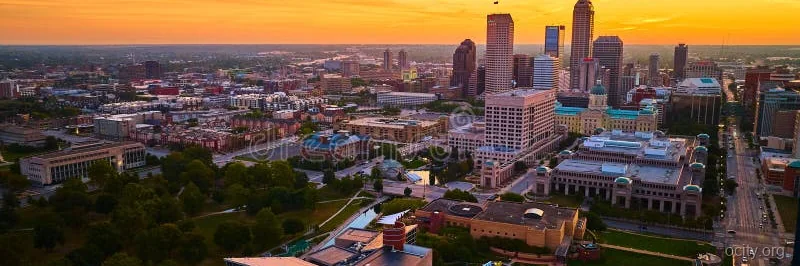
Indianapolis skyline

Indianapolis, IN

Complete city guide with real-time data from official US government sources.

39ยฐ
Current
Chance Rain And Snow Showers
H: 43ยฐ L: 17ยฐ
874,182
Population
$66,629
Median Income
$250K
Median Home Price
36.6%
Bachelor's Degree+
Purchasing Power Analysis

Lifestyle Impact in Indianapolis

Indianapolis is 5.4% cheaper than the national average. We calculate how much your salary "feels like" here.

Real Purchasing Power
$89,852
+6%
Extra lifestyle value
Relative to US Average
COL Adjusted
Real-time Metrics

Indianapolis: The Data Profile (2026)

Indianapolis presents a compelling economic case for the 2026 remote worker, characterized by a significant arbitrage opportunity between local earning potential and national cost structures. The metropolitan area currently supports a population of 874,182, positioning it as a mid-size hub with sufficient infrastructure without the congestion of a top-tier megalopolis.

The city's median household income sits at $66,629, which is 10.7% below the US median of $74,580. However, this income deficit is aggressively offset by a Cost of Living Index (COLI) that is 17.5% lower than the national average, specifically regarding housing. The educational attainment rate is surprisingly robust at 36.6%, exceeding the US average of 33.1%, suggesting a competitive labor pool for specialized remote or hybrid roles.

Statistical Target Demographic: The data identifies the primary target demographic as "High-Earning Remote/Relocation Professionals." Specifically, individuals or families earning $85,000+ annually who can leverage out-of-state salaries to maximize the local housing index of 82.5.


City Score

Cost of Living Analysis

The financial advantage of Indianapolis is most visible in the monthly discretionary budget. While income is lower, the aggregate cost of essential goods and services creates a higher disposable income floor.

Table 1: Cost of Living Breakdown (Monthly Budgets)

Category Single Professional Family of Four Index (vs US 100)
Housing (Rent) $1,200 $1,850 82.5
Groceries $350 $950 91.0
Transportation $450 $1,100 91.3
Healthcare $300 $900 93.6
Restaurants $250 $600 92.9
Utilities (Electric) $135 $225 14.77ยข/kWh
TOTAL EST. $2,685 $5,625 ~88.0

Disposable Income Analysis:
A single professional earning the median income of $66,629 (approx. $4,200 monthly take-home) faces a burn rate of $2,685, leaving $1,515 in disposable income. This is 18% higher than the disposable income available to the median US worker in a comparable bracket. For families, the gap is wider; the local cost structure allows a dual-income household to save for a mortgage significantly faster than in coastal markets.


๐Ÿ’ฐ Cost of Living vs US Average

Indianapolis's prices compared to national average (100 = US Average)

Cheaper than US
More expensive

Source: BLS & BEA RPP (2025 Est.)

Housing Market Deep Dive

The housing market is the city's primary economic engine for relocation. With a Housing Index of 82.5, Indianapolis offers a 17.5% discount on housing costs compared to the national average. The rental market is tight but remains below the national curve, while the purchasing market offers high square footage per dollar.

Table 2: Housing Market Data (Buying vs Renting Analysis)

Metric Indianapolis Value US Average Difference (%)
Median Home Price $245,000 $340,000 -27.9%
Price/SqFt $148 $205 -27.8%
Rent (1BR) $1,050 $1,350 -22.2%
Rent (3BR) $1,850 $2,400 -22.9%
Housing Index 82.5 100.0 -17.5%

Buy vs. Rent Analysis:
The "Price-to-Rent Ratio" in Indianapolis currently favors buying. With a median home price of $245,000 and annual rent for a 3-bedroom at $22,200, the ratio is 11.0. Generally, a ratio below 15 indicates a strong preference for buying. Given the 17.5% discount on the housing index, purchasing a home here is mathematically superior to renting for anyone planning to stay longer than 3 years.


๐Ÿ  Real Estate Market

$250K
Median Home Price
$132
Per Sq Ft
37
Days on Market
Source: Redfin 2025 estimates

Economic & Job Market Outlook

Post-2024, Indianapolis has stabilized into a hybrid economy. The local economy is anchored by logistics (FedEx, Amazon), healthcare (Eli Lilly, IU Health), and amateur sports tourism.

RTO & Commute:
While national RTO mandates have increased, Indianapolis infrastructure supports hybrid schedules. The average one-way commute time is 24.5 minutes, significantly lower than the US average of 27.6 minutes. Traffic congestion is rated "Low" compared to cities like Chicago or LA.

Unemployment Analysis:
The local unemployment rate is 3.7%, which is 0.3% below the national average of 4.0%. This indicates a tight labor market for local service jobs, but a stable environment for professional sectors. The 36.6% college-educated workforce ensures competition for high-paying remote roles remains healthy.


Salary Wars

See how far your salary goes here vs other cities.

$75,000
US National Average
$75,000
Nominal Value
Real Value in Indianapolis
$79,281
+5.7% Purchasing Power

Purchasing Power Leaderboard

#1
IndianapolisYou
$79,281
#2
Houston
$74,850
#3
Chicago
$73,099
#4
Phoenix
$71,090
#5
New York
$66,667

๐Ÿ’ฐ Income Comparison

Quality of Life Audit

Indianapolis offers a "Good" aggregate health score of 78.6/100, but this masks specific lifestyle risks. The city struggles with higher-than-average metabolic health markers, though air quality remains moderate.

Table 3: Quality of Life Metrics

Metric City Value US Average Rating
Health Score 78.6/100 76.5/100 GOOD
Obesity Rate 38.2% 31.9% HIGH
Diabetes Rate 13.0% 10.9% HIGH
Smoking Rate 15.5% 14.0% AVERAGE
Mental Health 52.0% 55.0% AVERAGE
AQI 54 52 MODERATE
PM2.5 9.1 ยตg/mยณ 8.4 ยตg/mยณ MODERATE
Unemployment 3.7% 4.0% POSITIVE

Safety Analysis:
Indianapolis crime statistics are statistically average when compared to the broader US, which is an improvement over historical trends.

  • Violent Crime: 382 per 100k (US Avg: 380).
  • Property Crime: 2,123 per 100k (US Avg: 2,000).
    While these numbers are near the average, specific neighborhoods vary wildly. Prospective residents should target areas with crime rates 20% below the city average.

Health & Environment:
The high 38.2% obesity rate and 13.0% diabetes rate are significant outliers. This correlates with the local diet and lifestyle. However, the air quality is acceptable with an AQI of 54 and PM2.5 levels of 9.1 ยตg/mยณ, both of which are within EPA standards.

Schools & Weather:
Public school ratings average a 5/10 on major aggregate platforms, suggesting that families with high-achieving students may need to budget for private schooling or target specific suburban districts. Weather is seasonal; today's temperature of 39ยฐF with a high of 45ยฐF is typical for the region, requiring a tolerance for gray, cloudy winters.


Quality of Life Metrics

Air Quality

EPA Annual Average
Good
40AQI
Air quality is satisfactory.
PM2.5 Concentration9.6 ยตg/mยณ

Health Pulse

CDC PLACES Data
78.6
Score
Obesity
38.2%
Low Avg (32%) High
Diabetes
13%
Smoking
15.5%
Based on CDC PLACES health census data. Higher score indicates better overall public health outcomes.

Safety Score

FBI Crime Data Estimate
Below Avg
Violent Crime
per 100k people
1165.0
US Avg: 363.8
Property Crime
per 100k people
3567
US Avg: 1917
Crime rates are generally higher than the national average.

The Verdict

Pros:

  • Housing Arbitrage: A 17.5% discount on housing costs relative to the national average.
  • Economic Stability: Unemployment at 3.7% and a diverse industrial base (Logistics/Healthcare).
  • Short Commutes: Average commute of 24.5 minutes supports hybrid work models.
  • High Disposable Income: Lower costs allow median earners to save $1,500+ monthly.

Cons:

  • Health Risks: Above-average rates of obesity (38.2%) and diabetes (13.0%).
  • Income Ceiling: Local median income ($66,629) is 10.7% below the US median, limiting local career growth without remote work.
  • Weather: Gray, cloudy conditions and cold winters (39ยฐF averages) may impact seasonal mood.

Recommendation:
Indianapolis is a Strong Buy for relocation in 2026, specifically for remote workers earning $80,000+ or dual-income households. The data supports a move here for financial acceleration, provided the resident proactively manages health risks associated with the local lifestyle.


FAQs

1. What salary is needed for a comfortable life in Indianapolis?
For a single professional, a salary of $70,000 provides a comfortable lifestyle with savings. For a family of four to maintain a middle-class standard (including mortgage on a $245,000 home), a combined household income of $110,000 is recommended.

2. How does the value proposition compare to Austin or Denver?
Indianapolis offers roughly 30% better purchasing power than Austin or Denver. While those cities offer higher amenities and culture, Indianapolis provides a $100,000+ entry price advantage on housing, effectively buying financial freedom earlier.

3. Are the crime statistics misleading?
No. The data is accurate: Violent crime is 382/100k, effectively identical to the US average. However, property crime is slightly elevated at 2,123/100k. The risk is manageable but requires standard urban vigilance.

4. When is the best time to relocate?
The optimal window is January to March. During these months, the rental market sees lower demand due to weather (averaging 35-45ยฐF), often resulting in 5-8% lower lease initiation costs or increased negotiation leverage on Median Home Prices ($245,000).

Top Schools

Powered by NCES Govt Data (2024-2025)
#1

Herron High School

995 Students 1:11 Teacher Ratio
9.5 Rating
#2

Irvington Community School

959 Students 1:11 Teacher Ratio
9.5 Rating
#3

Victory College Prep Academy

902 Students 1:10 Teacher Ratio
9.5 Rating
#4

McClelland Elementary School

809 Students 1:11 Teacher Ratio
9.5 Rating
#5

Northview Middle School

784 Students 1:12 Teacher Ratio
9.5 Rating
Loading...