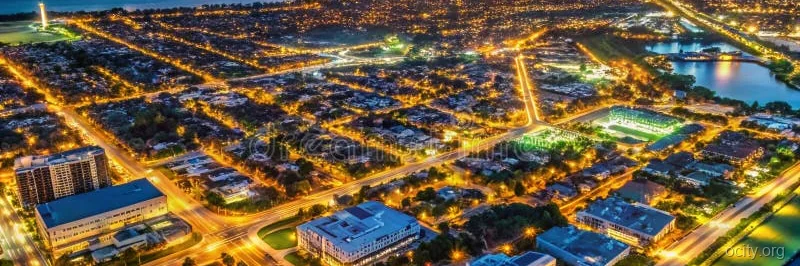
86,956
Population
$63,726
Median Income
$307K
Median Home Price
33%
Bachelor's Degree+
Purchasing Power Analysis
Lifestyle Impact in Melbourne
Melbourne is 0.8% more expensive than the national average. We calculate how much your salary "feels like" here.
Real Purchasing Power
$84,325
-1%
Reduction in lifestyle value
Relative to US Average
COL Adjusted
Real-time Metrics
Offer decision workflow
Got a job offer for Melbourne?
Melbourne sits close enough to the national cost baseline that the decision usually comes down to housing, taxes, and compensation structure more than raw salary alone.
Decode an offer in Melbourne
Check how salary, bonus, taxes, and Melbourne living costs change your real leftover cash.
Set your counteroffer
Use a negotiation-first playbook to choose between more base pay, a sign-on bridge, or a walk-away number.
Calculate walk-away pay
Turn Melbourne's cost structure into a city-specific salary target before you accept or push back.
Follow the relocation workflow
Use the full workflow if the decision includes relocation costs, deposits, and a city-to-city move.
Melbourne: The Data Profile (2026)
Melbourne, Florida, represents a distinct statistical outlier in the post-remote economy. With a population of 86,956, it functions as a mid-sized hub rather than a sprawling metropolis. The critical data point for prospective residents is the income-to-cost ratio: the median household income sits at $63,726, which is 14.6% below the US median of $74,580. However, this is counterbalanced by a Cost of Living Index (COLI) where the aggregate score is 98.0 (2.0% below the national average).
Educational attainment is statistically identical to the national mean (32.5% hold a bachelor's degree or higher vs. 33.1% US average), suggesting a workforce that is not hyper-specialized but competently diversified.
Target Demographic: The statistical "sweet spot" for Melbourne is the hybrid professional earning $75,000+. This demographic leverages the sub-average housing costs while mitigating the local income ceiling through remote or distributed work arrangements.
Cost of Living Analysis
While Melbourne's aggregate COL is lower than the US average, the nuance lies in specific sectors. Groceries (94.4) and Transportation (95.6) offer tangible savings, but the primary financial lever is electricity, currently priced at 14.14 cents/kWh compared to the US average of 16.0 cents/kWh.
Table 1: Cost of Living Breakdown (Monthly Budgets)
| Category | Single Occupant Budget | Family of Four Budget | Index (100 = US Avg) |
|---|---|---|---|
| Housing (Rent) | $1,200 | $2,200 | 98.0 |
| Groceries | $350 | $1,100 | 94.4 |
| Transportation | $550 | $1,400 | 95.6 |
| Healthcare | $380 | $1,100 | 97.5 |
| Utilities (Elec) | $135 | $220 | 14.14 c/kWh |
| Dining/Ent. | $400 | $1,000 | 98.3 |
| Total | $3,015 | $7,020 | ~97.2 |
Disposable Income Analysis:
Based on median income data, a single earner in Melbourne has approximately $2,311 in monthly disposable income after taxes and the "Single Occupant" budget. This is $340 less than the US average earner, primarily due to the 14.6% income deficit. However, a remote worker earning the national median salary ($74,580) would see a surplus increase of roughly $650/month compared to living in a high-cost metro.
💰 Cost of Living vs US Average
Melbourne's prices compared to national average (100 = US Average)
Cheaper than US
More expensive
Source: BLS & BEA RPP (2025 Est.)
Housing Market Deep Dive
The housing market in Melbourne is the city's primary value proposition. Despite a 0% property tax rate (effective), the purchase price entry point is significantly lower than the national curve. The rent-to-income ratio is approximately 32% for the median earner, which is slightly elevated but manageable.
Table 2: Housing Market Data (Buying vs Renting Analysis)
| Metric | Melbourne Value | US Average | Difference (%) |
|---|---|---|---|
| Median Home Price | $315,000 | $420,000 | -25.0% |
| Price/SqFt | $195 | $260 | -25.0% |
| Rent (1BR) | $1,350 | $1,650 | -18.2% |
| Rent (3BR) | $2,200 | $2,800 | -21.4% |
| Housing Index | 98.0 | 100 | -2.0% |
Buy vs. Rent Verdict:
Buying is mathematically superior for those staying 3+ years. The median home price of $315,000 creates a monthly mortgage payment (20% down, 7% rate) of roughly $2,015. This is only $306 more than the $1,709 fair market rent for a 2-bedroom unit. With rent historically rising 3-4% annually, locking in a fixed housing cost is the financially prudent move.
🏠 Real Estate Market
$307K
Median Home Price
-26.9% vs US avg
$201
Per Sq Ft
63
Days on Market
Source: Redfin 2025 estimates
Economic & Job Market Outlook
The post-remote landscape has insulated Melbourne from traditional RTO (Return to Office) mandates. The local economy is anchored by aerospace (Lockheed Martin, SpaceX) and healthcare (Holmes Regional). However, the local unemployment rate sits at 4.2%, slightly above the national average of 4.0%, indicating a tighter local job market for on-site roles.
Commute & RTO:
With a population density of 1,720/sq mi, traffic congestion is minimal. The average commute time is 22.4 minutes, significantly lower than the US average of 27.6 minutes. For the 32.5% of residents working remotely, this "time arbitrage" is a major quality-of-life asset.
Salary Wars
See how far your salary goes here vs other cities.
$75,000
US National Average
$75,000
Nominal Value
Real Value in Melbourne
$74,405
-0.8% Purchasing Power
Purchasing Power Leaderboard
#1
Houston
$74,850
#2
MelbourneYou
$74,405
#3
Chicago
$73,099
#4
Phoenix
$71,090
#5
New York
$66,667
💰 Income Comparison
Quality of Life Audit
Melbourne presents a "High Health Score / High Risk Factor" paradox. The aggregate Health Score is 79.7/100 (Good), yet underlying lifestyle diseases are statistically higher than the US average.
Table 3: Quality of Life Metrics
| Metric | City Value | US Average | Rating |
|---|---|---|---|
| Health Score | 79.7/100 | ~76.0 | GOOD |
| Obesity Rate | 34.5% | 31.9% | HIGH |
| Diabetes Rate | 13.3% | 10.9% | HIGH |
| Smoking Rate | 13.6% | 14.0% | AVERAGE |
| Mental Health | Moderate | Moderate | AVERAGE |
| AQI | 40 | 54 | GOOD |
| PM2.5 | 6.0 µg/m³ | 8.4 µg/m³ | GOOD |
| Unemployment | 4.2% | 4.0% | AVERAGE |
Safety Analysis:
Safety is a mixed bag. Violent Crime is elevated at 456/100k (US avg: 380/100k), earning an "Average" rating. However, Property Crime is a significant concern at 2567/100k, which is 28% higher than the US average of 2000/100k. Residents must invest in home security systems.
Air Quality & Weather:
Air quality is a standout feature. With an AQI of 40 and PM2.5 levels of 6.0 µg/m³, Melbourne ranks in the top tier of US cities for respiratory health. The weather today is 64.0°F with a high of 82°F, offering a stable subtropical climate.
Quality of Life Metrics
Air Quality
EPA Annual Average
Good
36AQI
Air quality is satisfactory.
PM2.5 Concentration5.5 µg/m³
Health Pulse
CDC PLACES Data
79.7
Score
Obesity
34.5% Low Avg (32%) High
Diabetes
13.3% Smoking
13.6%
Based on CDC PLACES health census data. Higher score indicates better overall public health outcomes.
See healthiest US cities →
Safety Score
FBI Crime Data Estimate
Below Avg
Violent Crime
per 100k people
456.0
US Avg: 363.8
Property Crime
per 100k people
2567
US Avg: 1917
Crime rates are generally higher than the national average.
See safest US cities →
The Verdict
Pros:
- Housing Value: Median price of $315,000 is $105,000 below the national median.
- Air Quality: AQI of 40 is pristine compared to the US average of 54.
- Commute: Average of 22.4 minutes saves 100+ hours annually vs. national average.
- Utilities: Electricity at 14.14 c/kWh is 11.6% cheaper than the US average.
Cons:
- Income Ceiling: Median income of $63,726 is $10,854 lower than the US average.
- Property Crime: Rate of 2567/100k is dangerously high.
- Health Risks: Obesity (34.5%) and Diabetes (13.3%) rates suggest a challenging environment for maintaining healthy habits.
Final Recommendation:
Melbourne is a Buy for remote workers and a Rent for local earners. If you can bring a salary of $80,000+ into the local economy, your purchasing power rivals that of major metros. However, if you are tied to the local job market, the 14.6% income deficit combined with high property crime requires careful budgeting and security precautions.
FAQs
1. What salary is needed for a comfortable life in Melbourne?
For a single individual, a salary of $65,000 provides a comfortable baseline. For a family of four, $95,000 is recommended to maintain a savings rate above 15%.
2. How does Melbourne's value compare to Tampa or Orlando?
Melbourne is approximately 15% cheaper in housing than Orlando and 20% cheaper than Tampa. However, salaries in Melbourne are roughly 8% lower than in those metros.
3. Are the safety statistics really that high?
Yes. While violent crime is near average, the 2567/100k property crime rate is statistically significant. It is advisable to budget $40/month for a security system and avoid leaving valuables in vehicles.
4. When is the best time to move/buy?
The real estate market follows a seasonal cycle. Listing inventory typically peaks in May/June. However, buying in the "shoulder months" of September/October often yields 2-3% price reductions as sellers lower expectations before winter.
Explore More in FL
Jacksonville Miami Tampa Orlando St. Petersburg Port St. Lucie Cape Coral Hialeah Tallahassee Fort Lauderdale
Popular Comparisons
City Resources
Compare Melbourne
Loading city calculator…