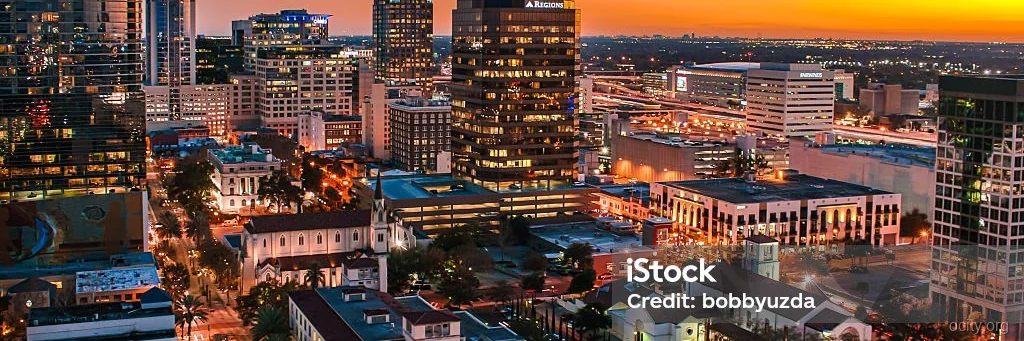
Orlando: The Data Profile (2026)
Orlando presents a complex value proposition for the post-remote workforce, characterized by a divergence between median income and national averages. The city's median income sits at $69,414, which is -6.9% below the US median of $74,580. However, this income gap is partially offset by a highly educated labor pool, with 41.2% of residents holding a college degree, significantly outpacing the national average of 33.1%. This demographic concentration suggests a competitive market for skilled remote workers and hybrid professionals who require proximity to urban amenities without the density of a megacity.
The statistical target demographic for Orlando in 2026 is the "value-seeking hybrid professional." This individual earns slightly below the national median but leverages the city's relatively low cost of goods and utilities to maintain purchasing power. Specifically, the 95.3 grocery index and 96.8 transportation index create a buffer for the 102.3 housing index. The ideal candidate is a dual-income household or a single professional with a remote component, prioritizing the $385,000 median home price over the $420,000 national benchmark.