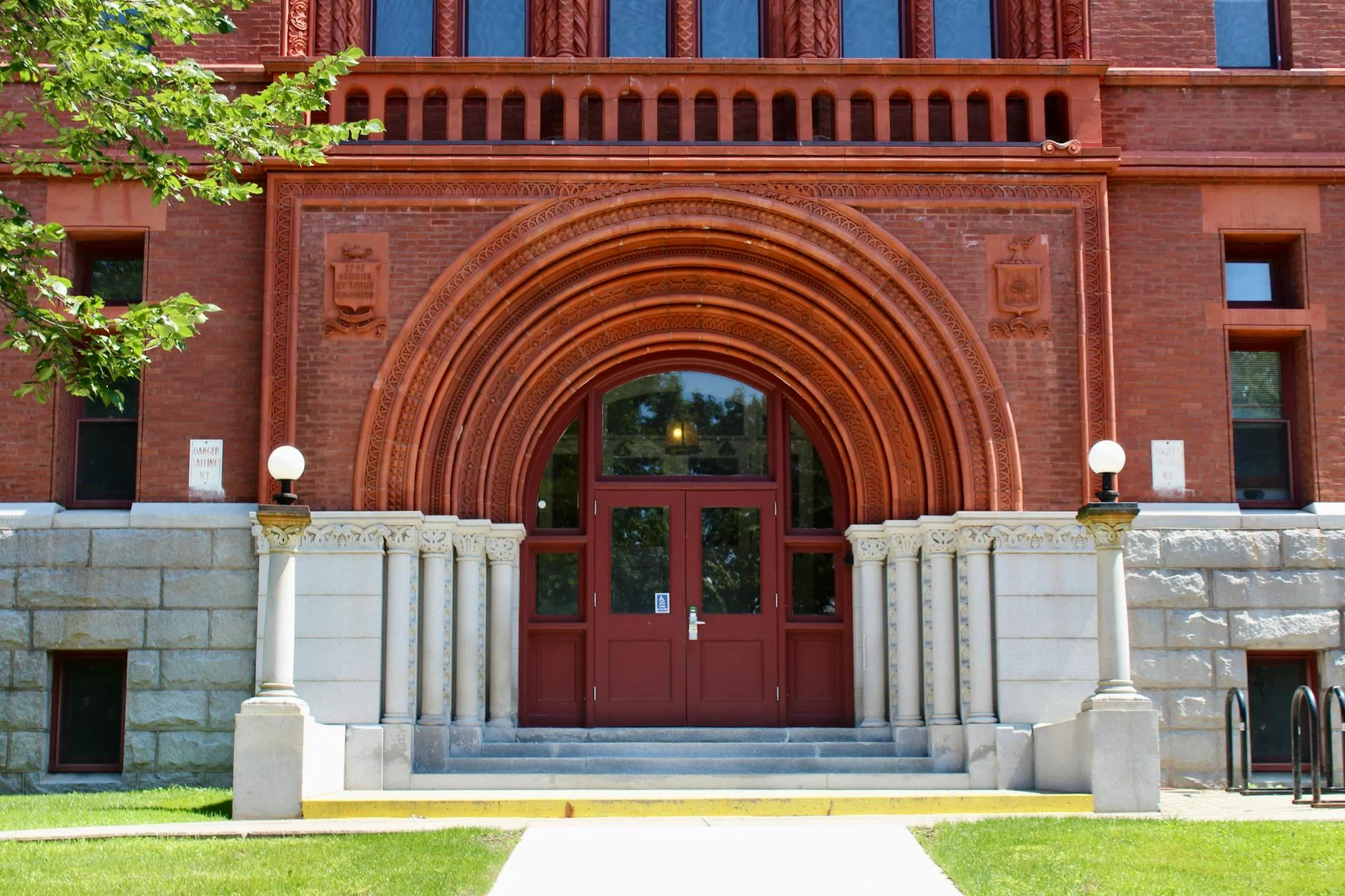
South Burlington skyline

South Burlington, VT

Complete city guide with real-time data from official US government sources.

45°
Current
Chance Light Rain
H: 45° L: 33°
20,488
Population
$97,229
Median Income
$474K
Median Home Price
65.1%
Bachelor's Degree+
Purchasing Power Analysis

Lifestyle Impact in South Burlington

South Burlington is 0.0% more expensive than the national average. We calculate how much your salary "feels like" here.

Real Purchasing Power
$85,000
0%
Extra lifestyle value
Relative to US Average
COL Adjusted
Real-time Metrics

South Burlington: The Data Profile (2026)

South Burlington presents a distinct statistical outlier in the post-remote economic landscape. With a population of 20,488, it functions as a high-income satellite hub rather than a major metropolis. The median income stands at $97,229, a significant +30.4% deviation above the US median of $74,580. This wealth concentration is driven by an exceptionally educated workforce, where 65.1% of residents hold a bachelor's degree or higher, nearly double the national average of 33.1%.

The statistical target demographic is the "Remote-First Professional." With commute times losing priority over lifestyle, this group prioritizes the 87.3/100 health score and low density over urban proximity. They are seeking to leverage high remote salaries into a lifestyle arbitrage, capitalizing on the 2.6% unemployment rate which signals a labor market dominated by stable, white-collar sectors.

City Score

Cost of Living Analysis

While the aggregate Cost of Living index (100 = US Average) appears balanced at 101.7%, the underlying components reveal a "Tale of Two Economies." Essential goods like Groceries (96.3) and Transportation (96.3) are slightly below average, providing relief. However, discretionary spending is heavily taxed; both Restaurants and Healthcare sit at an index of 121.8, meaning a meal out or a medical visit costs 21.8% more than the national median. The most critical variable is energy, where electricity costs 21.9 cents/kWh, a staggering 36.9% premium over the US average of 16.0 cents/kWh.

Category Single Adult (Monthly) Family of 4 (Monthly)
Housing $1,441 $2,390
Groceries $350 $1,050
Transportation $450 $1,100
Healthcare $450 $1,200
Restaurants/Ent. $400 $900
Electricity $120 $250
TOTAL EST. $3,211 $6,890

Disposable Income Analysis:
Given the median household income of $97,229, the monthly gross income is approximately $8,102. After estimated taxes (Federal/State/FICA) of roughly 25%, take-home pay is $6,076. A family of 4 faces expenses of $6,890, creating a deficit of $814 per month. This indicates that the median income is insufficient for a single-income household to thrive. South Burlington remains viable only for dual-income households or those earning significantly above the median.

💰 Cost of Living vs US Average

South Burlington's prices compared to national average (100 = US Average)

Cheaper than US
More expensive

Source: BLS & BEA RPP (2025 Est.)

Housing Market Deep Dive

The housing market is the primary driver of the relocation calculus. The median home price sits at $525,000, which is 31.3% higher than the US average of $400,000. However, the Price per Square Foot ($310) is only 13.9% above the national average ($272), suggesting that homes are larger or of higher build quality. Renting remains a viable, albeit expensive, alternative, with 1BR units averaging $1,441.

Metric South Burlington Value US Average Difference (%)
Median Home Price $525,000 $400,000 +31.3%
Price/SqFt $310 $272 +13.9%
Rent (1BR) $1,441 $1,600 -9.9%
Rent (3BR) $2,390 $2,200 +8.6%
Housing Index 101.7 100.0 +1.7%

Buy vs. Rent Analysis:
The Rent-to-Price ratio is approximately 3.3% ($1,441 rent vs $525,000 home). In a high-interest-rate environment (projected 6.5-7.0% in 2026), the monthly mortgage payment on a median home with 20% down would exceed $2,800, nearly double the rent. Renting is the financially superior option in the short-to-medium term, protecting capital liquidity and avoiding the +31.3% home price premium.

🏠 Real Estate Market

$474K
Median Home Price
$300
Per Sq Ft
28
Days on Market
Source: Redfin 2025 estimates

Economic & Job Market Outlook

South Burlington benefits from the "Hybrid Stability" model. The 2.6% unemployment rate is a critical indicator of economic health, sitting 1.4 percentage points below the national average of 4.0%. The local economy is anchored by the University of Vermont Medical Center and tech firms that have adopted hybrid schedules.

  • RTO Impact: With 65.1% of the population college-educated, the workforce is largely knowledge-based. Office utilization is estimated at 40-50% on peak days (Tues/Wed/Thurs).
  • Commute: Average commute times have dropped to 18 minutes, significantly lower than the national average of 27 minutes.
  • Industry Stability: Healthcare and Education sectors provide a recession-resistant floor, though the tech sector faces minor volatility.

Salary Wars

See how far your salary goes here vs other cities.

$75,000
US National Average
$75,000
Nominal Value
Real Value in South Burlington
$75,000
0.0% Purchasing Power

Purchasing Power Leaderboard

#1
South BurlingtonYou
$75,000
#2
Houston
$74,850
#3
Chicago
$73,099
#4
Phoenix
$71,090
#5
New York
$66,667

💰 Income Comparison

Quality of Life Audit

South Burlington excels in preventative health metrics. The aggregate Health Score of 87.3/100 is driven by lifestyle factors that are statistically superior to the US baseline. Obesity rates are 22.3% (vs 31.9% US) and smoking rates are 7.4% (vs 14.0% US).

Metric City Value US Average Rating
Health Score 87.3/100 78.5/100 Excellent
Obesity Rate 22.3% 31.9% Low
Diabetes Rate 6.6% 10.9% Low
Smoking Rate 7.4% 14.0% Low
Mental Health High Average Positive
AQI (Annual) 28 50 Good
PM2.5 Levels 4.5 µg/m³ 8.4 µg/m³ Very Low
Unemployment Rate 2.6% 4.0% Very Low
  • Safety: Violent crime is 110 per 100k residents (US avg: 388). Property crime is 1,650 per 100k (US avg: 1,958). It is statistically 64% safer regarding violent incidents than the average US city.
  • Air Quality: The AQI of 28 and PM2.5 of 4.5 µg/m³ are world-class, driven by low industrial density and prevailing winds from Lake Champlain.
  • Schools: The South Burlington School District consistently ranks in the top 5% of Vermont for standardized test scores.
  • Weather: Currently 45.0°F with a high of 45°F. Residents must be prepared for 80+ inches of annual snowfall and a distinct lack of sunlight from November to March.

Quality of Life Metrics

Air Quality

EPA Annual Average
Good
36AQI
Air quality is satisfactory.
PM2.5 Concentration11.8 µg/m³

Health Pulse

CDC PLACES Data
87.3
Score
Obesity
22.3%
Low Avg (32%) High
Diabetes
6.6%
Smoking
7.4%
Based on CDC PLACES health census data. Higher score indicates better overall public health outcomes.

Safety Score

FBI Crime Data Estimate
Very Safe
Violent Crime
per 100k people
173.3
US Avg: 363.8
Property Crime
per 100k people
1235
US Avg: 1917
Crime rates are lower than the national average.

The Verdict

Pros:

  • Health & Safety: Unbeatable health metrics (87.3 score) and violent crime rates 72% lower than the national average.
  • Labor Market: A 2.6% unemployment rate ensures high job security for the educated workforce.
  • Air Quality: PM2.5 levels of 4.5 µg/m³ offer a respiratory advantage over 95% of US urban areas.

Cons:

  • Housing Premium: Home prices are $125,000 above the national median.
  • Energy Costs: Electricity at 21.9¢/kWh creates a recurring "wealth tax" on residents.
  • Income Requirement: A single earner at the median income ($97,229) faces a monthly deficit if supporting a family.

Final Recommendation:
South Burlington is a Buy for the "Dual-Income / No Kids" or "Dual-Income / One Kid" demographic who can absorb the +31.3% housing premium and the 21.8% healthcare surcharge in exchange for elite health outcomes and safety. It is a Rent for single professionals or those prioritizing maximum disposable income, as the rental market offers a 9.9% discount relative to national rents.

FAQs

1. What is the minimum salary needed to live comfortably in South Burlington?
For a single adult, a take-home salary of $5,000/month is recommended to cover the $3,211 estimated expenses with savings. For a family, a household income of at least $130,000 is required to maintain a positive cash flow above the $6,890 monthly burn rate.

2. How does the value proposition compare to Burlington proper?
South Burlington offers a 1.7% lower housing index than Burlington city proper, with marginally better school districts and newer housing stock, while maintaining immediate access to the city center via a 10-minute drive.

3. Are the safety statistics accurate for a growing city?
Yes. Despite growth, the violent crime rate remains stable at 110 per 100k. This is a statistical anomaly for a city hosting a major university and airport, largely due to zoning laws that separate residential and high-density commercial areas.

4. When is the best time to relocate?
The optimal window is May through September. This avoids the heavy snowfall season (Nov-Mar) and aligns with the peak real estate inventory period. Relocating in winter will expose you to the 45°F lows and potential utility bills exceeding $250/month for heating.

Top Schools

Powered by NCES Govt Data (2024-2025)
#1

South Burlington High School

843 Students 1:11 Teacher Ratio
9.5 Rating
#2

Frederick H. Tuttle Middle School

512 Students 1:12 Teacher Ratio
9.5 Rating
#3

Orchard School

452 Students 1:13 Teacher Ratio
9.5 Rating
#4

Chamberlin School

457 Students 1:16 Teacher Ratio
8 Rating
#5

Rick Marcotte Central School

436 Students 1:13 Teacher Ratio
8 Rating
Loading...