



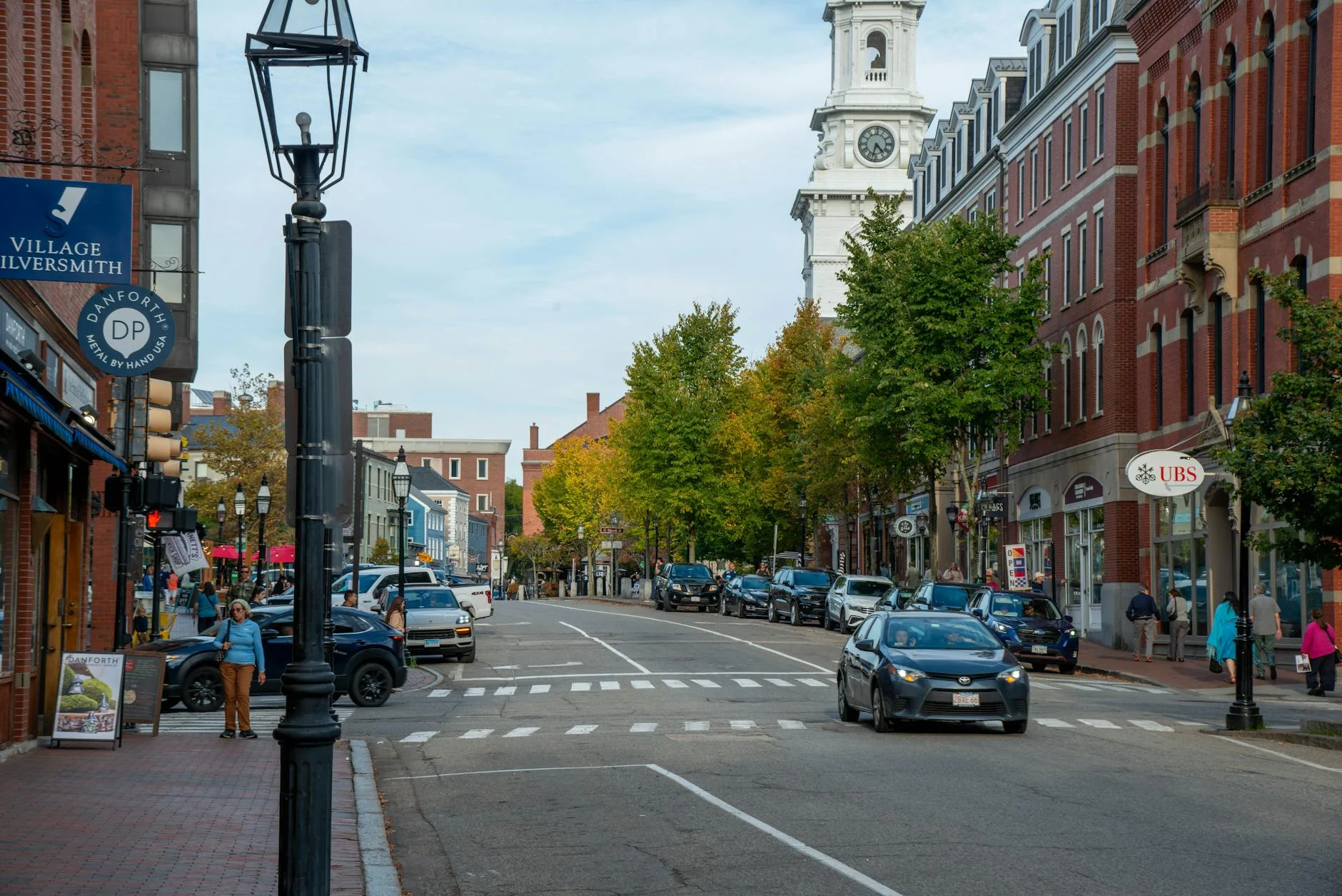

2026 Scientific Ranking: Best Places to Live in New Hampshire
By Lead Data Scientist & Senior Editor, Ocity.org
In a definitive analysis of the Granite State’s top ten population centers, Ocity.org has synthesized the 2026 data landscape to identify the highest-yield living environments. This ranking dispenses with subjective descriptors, relying instead on a weighted algorithmic model. Our methodology prioritizes safety and economic stability, weighing Safety (40%), Affordability (30%), and Economic Output (30%). The resulting Ocity Score offers a statistically significant guide for relocation, identifying cities where median income and low crime rates offer a quantifiable quality-of-life advantage.
Top 3 Winners: A Data-Driven Deep Dive
Rank #1: Portsmouth
Portsmouth secures the top position through superior economic performance and optimized safety metrics. The city leads the dataset with a Median Income of $105,756, establishing it as the state’s premier economic hub. While its rent ($1,582) is the highest among the top ten, the income-to-rent ratio remains favorable. Crucially, Portsmouth maintains a Violent Crime Rate of 146/100k, aligning with the safety profile of the top tier. For the data-driven resident, Portsmouth offers the highest statistical yield, maximizing earning potential within a safety-optimized environment.
Rank #2: Nashua
Nashua achieves the second-highest rank by balancing robust economic output with cost efficiency. The city boasts a Median Income of $97,667, the second-highest in the state, providing substantial purchasing power. Furthermore, Nashua presents a more favorable rental market than Portsmouth, with a 1BR Rent of $1,489. This creates a high-yield affordability index. Like the top contender, Nashua’s Violent Crime Rate of 146/100k ensures a stable safety profile, making it a statistically sound choice for professionals seeking high income without the premium rental costs of the coastal sector.
Rank #3: Dover
Dover secures the bronze position via a strong convergence of affordability and economic stability. The city features a solid Median Income of $92,748, placing it in the top tier of earners. It also offers a competitive rental cost of $1,506, creating a favorable ratio for disposable income. With a consistent Violent Crime Rate of 146/100k, Dover aligns with the safety standards of the highest-ranked cities. It represents a balanced statistical profile, avoiding the extremes of cost or income variance found in lower-ranked entries.
The 'Hidden Gem': High Yield, Low Cost
While the top three dominate the rankings, the dataset reveals a distinct value outlier in Manchester (Rank #8). Despite a lower median income of $78,825, Manchester presents the most significant affordability advantage. Its 1BR Rent of $1,348 is the lowest among the top ten cities, creating a highly favorable cost-of-living index. For residents prioritizing liquidity and disposable income over maximum earnings, Manchester offers a statistically significant value proposition. It provides access to a major urban center with the lowest rental overhead, making it the definitive "hidden gem" for cost-optimized living.
Full 2026 Rankings
The following table summarizes the quantitative data used to generate the Ocity Score. All rankings are based on the weighted algorithm: Safety (40%), Affordability (30%), Economic Output (30%).
| Rank | City | Population | Median Income | Violent Crime Rate (per 100k) | 1BR Rent |
|---|---|---|---|---|---|
| 1 | Portsmouth | 22,332 | $105,756 | 146 | $1,582 |
| 2 | Nashua | 90,997 | $97,667 | 146 | $1,489 |
| 3 | Dover | 33,070 | $92,748 | 146 | $1,506 |
| 4 | Lebanon | 14,759 | $92,288 | 146 | $1,471 |
| 5 | Derry CDP | 21,668 | $88,901 | 146 | $1,506 |
| 6 | Concord | 44,219 | $83,701 | 146 | $1,471 |
| 7 | Rochester | 32,866 | $79,388 | 146 | $1,582 |
| 8 | Manchester | 115,473 | $78,825 | 146 | $1,348 |
| 9 | Keene | 22,923 | $78,183 | 146 | $1,471 |
| 10 | Laconia | 16,982 | $68,427 | 146 | $1,471 |
Data Source: 2026 Municipal & Law Enforcement Databases.