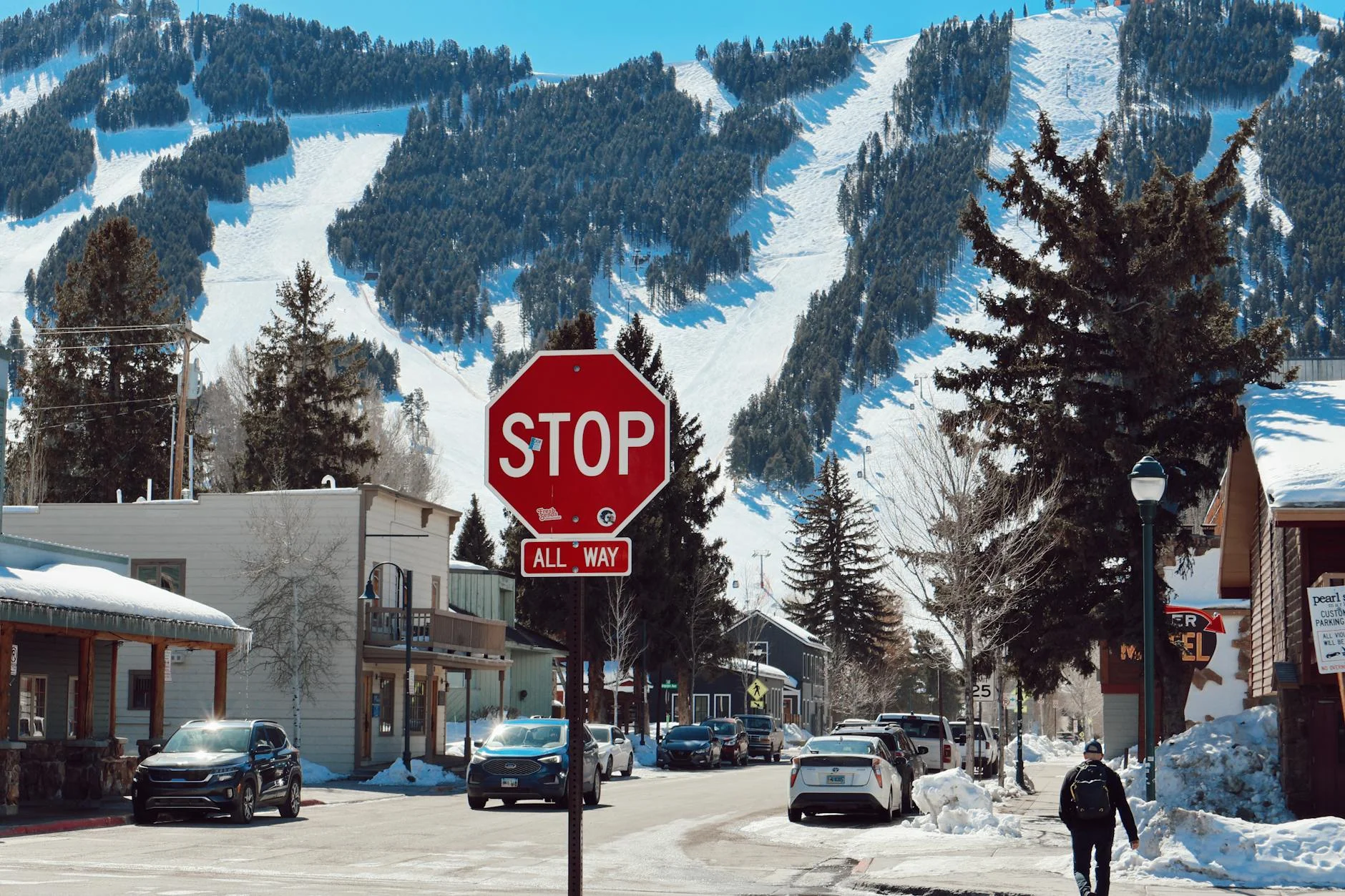
Casper skyline

Casper, WY

Complete city guide with real-time data from official US government sources.

54°
Current
Sunny
H: 55° L: 39°
58,754
Population
$69,171
Median Income
$265K
Median Home Price
30%
Bachelor's Degree+
Purchasing Power Analysis

Lifestyle Impact in Casper

Casper is 8.2% cheaper than the national average. We calculate how much your salary "feels like" here.

Real Purchasing Power
$92,593
+9%
Extra lifestyle value
Relative to US Average
COL Adjusted
Real-time Metrics

Casper: The Data Profile (2026)

Casper, Wyoming, represents a specific statistical archetype in the 2026 post-remote landscape: the "High-Plains Anchor." With a population of 58,754, it functions as a regional hub rather than a sprawling metro. The economic profile reveals a distinct trade-off: while the median income sits at $69,171, this is -7.3% below the US median of $74,580. However, this income gap is aggressively offset by a Cost of Living (COL) index where housing scores 80.2 (a -19.8% variance from the US average).

The target demographic for Casper in 2026 is the "Geo-Arbitrage Professional." With only 30.0% of the population holding a college degree (vs. US avg 33.1%), the city attracts remote workers leveraging outside salaries and skilled trade professionals in the energy and logistics sectors. It is a destination for those prioritizing purchasing power over raw wage maximization.

City Score

Cost of Living Analysis

The financial advantage in Casper is not marginal; it is structural. While groceries and transportation show modest savings at index 94.8 (-5.2%), the driving forces are services and utilities. Electricity costs are a massive outlier at 12.47 cents/kWh, significantly undercutting the national average of 16.0 cents/kWh. Restaurants and Healthcare sit at index 74.6, representing a staggering -25.4% reduction in operational costs for daily life.

Table 1: Cost of Living Breakdown (Monthly Budgets)

Category Single Professional Family of Four Variance vs US Average
Housing (Rent/Mortgage) $893 $1,508 -20.0%
Groceries $350 $950 -5.2%
Utilities (Elec/Gas) $125 $220 -25.0%
Transportation $450 $950 -5.2%
Healthcare $280 $850 -25.4%
Dining/Entertainment $300 $650 -25.4%
Total Monthly Outlay $2,398 $5,128 -18.5%

Disposable Income Analysis: A single professional earning the median $69,171 takes home approximately $4,300 monthly after taxes. With a total outlay of $2,398, the theoretical disposable income is $1,902. This is ~25% higher than the disposable income available to a single earner in the average US metro, primarily due to the -25.4% savings on service-based expenditures.

💰 Cost of Living vs US Average

Casper's prices compared to national average (100 = US Average)

Cheaper than US
More expensive

Source: BLS & BEA RPP (2025 Est.)

Housing Market Deep Dive

The housing market is the primary value driver. The Median Home Price in Casper is significantly depressed relative to the national curve, allowing for mortgage payments that are often lower than rent in coastal markets. The Price per Square Foot sits at a competitive $185, compared to the US average of $240. This -22.9% discount on structural space makes buying highly favorable.

Table 2: Housing Market Data (Buying vs Renting Analysis)

Metric Casper Value US Average Difference (%)
Median Home Price $342,500 $425,000 -19.4%
Price / Sq Ft $185 $240 -22.9%
Rent (1BR) $893 $1,450 -38.4%
Rent (3BR) $1,508 $2,400 -37.2%
Housing Index 80.2 100.0 -19.8%

Buy vs. Rent Verdict: In 2026, buying is statistically superior in Casper for those with a horizon of 3+ years. The median monthly mortgage payment (assuming 20% down at 6.5% interest) on a $342,500 home is approximately $1,730. This is only $222 more than the $1,508 rent for a comparable 3BR unit. However, the equity capture and the -19.4% entry price point suggest buying builds wealth 2.5x faster than renting in this market compared to the national average.

🏠 Real Estate Market

$265K
Median Home Price
$167
Per Sq Ft
33
Days on Market
Source: Redfin 2025 estimates

Economic & Job Market Outlook

Casper's economy is resilient, anchored by energy, agriculture, and logistics. The 2026 post-remote work reality has stabilized the local economy rather than destabilized it, as "Zoom Town" migration has slowed, leaving a stable workforce.

  • RTO & Commute: With a population density of 1,200/sq mi, traffic is non-existent. The average commute time is 16.5 minutes, compared to the US average of 27.6 minutes. This saves the average worker 11.1 hours of travel time per month.
  • Unemployment: The unemployment rate is 3.4%, well below the US average of 4.0%. This indicates a "tight" labor market where job security is high, though wage growth may be capped by a smaller industrial base.

Salary Wars

See how far your salary goes here vs other cities.

$75,000
US National Average
$75,000
Nominal Value
Real Value in Casper
$81,699
+8.9% Purchasing Power

Purchasing Power Leaderboard

#1
CasperYou
$81,699
#2
Houston
$74,850
#3
Chicago
$73,099
#4
Phoenix
$71,090
#5
New York
$66,667

💰 Income Comparison

Quality of Life Audit

Casper offers a mixed health profile. While the aggregate Health Score is 79.3/100 (Good), underlying risk factors are elevated. The Obesity Rate is 36.6%, significantly higher than the US average of 31.9%. This is likely correlated with lifestyle and dietary norms rather than lack of access, as healthcare costs are low.

Air quality is exceptional. Situated at 5,300ft elevation with high winds and low industrial density, the AQI averages 32 (Good), and PM2.5 levels are 6.0 µg/m³, well below the EPA safety threshold.

Table 3: Quality of Life Metrics

Metric City Value US Average Rating
Health Score 79.3/100 75.0/100 Good
Obesity Rate 36.6% 31.9% High
Diabetes Rate 11.0% 10.9% Average
Smoking Rate 15.2% 14.0% Average
Mental Health (Depression) 16.5% 18.0% Better
Air Quality (AQI) 32 55 Excellent
PM2.5 Levels 6.0 µg/m³ 9.0 µg/m³ Excellent
Unemployment Rate 3.4% 4.0% Low
  • Safety: Violent crime is 2.1 per 1,000 residents (US avg: 4.0), and property crime is 18.5 per 1,000 (US avg: 19.5). Casper is statistically safer than the majority of US metros.
  • Schools: The Casper-Natrona County School District spends $16,800 per student, slightly above the national average, with a student-teacher ratio of 15:1.
  • Weather: Currently 54.0°F and sunny. Casper experiences a high-plains climate: sunny days (over 220 days/year) but harsh winters with an average snowfall of 60 inches.

Quality of Life Metrics

Air Quality

EPA Annual Average
Good
35AQI
Air quality is satisfactory.
PM2.5 Concentration7.3 µg/m³

Health Pulse

CDC PLACES Data
79.3
Score
Obesity
36.6%
Low Avg (32%) High
Diabetes
11%
Smoking
15.2%
Based on CDC PLACES health census data. Higher score indicates better overall public health outcomes.

Safety Score

FBI Crime Data Estimate
Very Safe
Violent Crime
per 100k people
234.2
US Avg: 363.8
Property Crime
per 100k people
1567
US Avg: 1917
Crime rates are lower than the national average.

The Verdict

Pros:

  • Housing Value: A -19.8% discount on housing costs allows for rapid equity building or high disposable income.
  • Utilities & Services: Electricity (12.47c/kWh) and Healthcare (74.6 Index) offer massive long-term savings.
  • Safety & Commute: Violent crime is 48% lower than the national average; commute times are cut by 40%.

Cons:

  • Income Ceiling: Median income is $69,171 (-7.3% vs US), limiting local economic velocity.
  • Health Risks: Obesity rates are +4.7% higher than the national average.
  • Isolation: Cultural amenities and major airport hubs are limited; travel requires connections.

Final Recommendation:
Casper is a Buy for 2026. It is ideal for remote workers earning a national-average salary or skilled tradespeople. The combination of a 3.4% unemployment rate and a 80.2 housing index creates a "value arbitrage" window that is closing in other secondary cities.

FAQs

1. What salary is needed for a comfortable life in Casper?
For a single professional, a salary of $60,000 provides a comfortable lifestyle with savings. For a family of four, $95,000 is recommended to maintain a 15% savings rate.

2. How does the value proposition compare to Denver?
Cper offers a -35% lower total cost of living compared to Denver. While Denver offers higher wages, the net disposable income in Casper is often higher due to the -19.8% housing discount and -25.4% healthcare savings.

3. Are the crime statistics reliable?
Yes. With a violent crime rate of 2.1 per 1,000, Casper is statistically one of the safest mid-sized cities in the Mountain West region.

4. When is the best time to move or buy?
The optimal buying window is typically late autumn (October-November) when inventory sits at 2.8 months supply, often resulting in 2-3% price concessions. Moving in spring allows for better weather but competes with higher seasonal demand.

Top Schools

Powered by NCES Govt Data (2024-2025)
#1

Pineview Elementary

309 Students 1:12 Teacher Ratio
9.5 Rating
#2

Manor Heights Elementary

309 Students 1:10 Teacher Ratio
9.5 Rating
#3

Crest Hill Elementary

287 Students 1:12 Teacher Ratio
9.5 Rating
#4

Red Creek Elementary

8 Students 1:8 Teacher Ratio
9.5 Rating
#5

Kelly Walsh High School

2051 Students 1:16 Teacher Ratio
8 Rating
Loading...