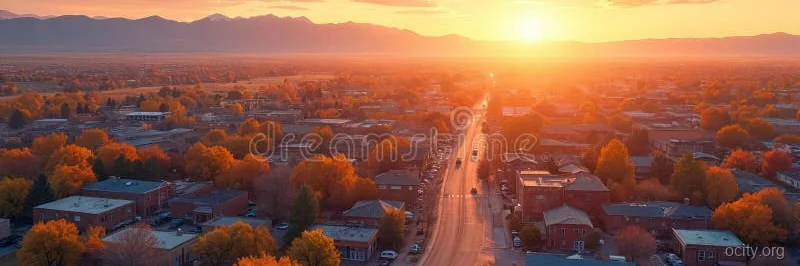
112,614
Population
$63,526
Median Income
$413K
Median Home Price
26%
Bachelor's Degree+
Purchasing Power Analysis
Lifestyle Impact in Greeley
Greeley is 4.0% cheaper than the national average. We calculate how much your salary "feels like" here.
Real Purchasing Power
$88,542
+4%
Extra lifestyle value
Relative to US Average
COL Adjusted
Real-time Metrics
Offer decision workflow
Got a job offer for Greeley?
Greeley sits close enough to the national cost baseline that the decision usually comes down to housing, taxes, and compensation structure more than raw salary alone.
Decode an offer in Greeley
Check how salary, bonus, taxes, and Greeley living costs change your real leftover cash.
Set your counteroffer
Use a negotiation-first playbook to choose between more base pay, a sign-on bridge, or a walk-away number.
Calculate walk-away pay
Turn Greeley's cost structure into a city-specific salary target before you accept or push back.
Follow the relocation workflow
Use the full workflow if the decision includes relocation costs, deposits, and a city-to-city move.
1. Greeley: The Data Profile (2026)
Greeley presents a specific economic profile for the 2026 post-remote worker. With a population of 112,614, it occupies the "smaller city" tier, offering a distinct alternative to the Front Range's mega-hubs. The critical friction point for incoming professionals is the income-to-cost ratio. The median household income sits at $63,526, which is 14.8% lower than the US median of $74,580. This income gap is compounded by the educational attainment landscape: only 26.3% of the population holds a bachelor's degree or higher, significantly below the national average of 33.1%.
Statistical Target Demographic: The data indicates Greeley is best suited for remote-first professionals earning national wages who can decouple their salary from the local economy, or dual-income households in the industrial/agricultural sectors where the cost of living leverage outweighs the lower median salary.
2. Cost of Living Analysis
The Cost of Living Index (COLI) for Greeley hovers slightly above the national average at 102.5, driven almost entirely by housing. However, daily operational costs are favorable. Groceries are 4.7% cheaper than the US average (Index 95.3), and electricity costs are a significant advantage at 14.92 cents/kWh compared to the US average of 16.0 cents/kWh.
Table 1: Cost of Living Breakdown (Monthly Budgets)
| Category | Single Person (Monthly) | Family of 4 (Monthly) | Notes |
|---|---|---|---|
| Housing (Rent) | $1,100 | $1,850 | Based on 1BR/3BR market rates |
| Groceries | $340 | $980 | Indexed at 95.3 |
| Utilities | $160 | $260 | Includes electric/gas/internet |
| Transportation | $450 | $1,050 | Indexed at 96.9 |
| Healthcare | $320 | $950 | Indexed at 98.6 |
| Discretionary | $500 | $1,200 | Dining/Entertainment |
| Total Estimated | $2,870 | $6,290 | Does not include taxes |
Disposable Income Analysis: A single earner making the local median of $63,526 takes home approximately $4,050/month after taxes. The budget in Table 1 ($2,870) leaves a margin of roughly $1,180. This is tight but viable. However, a family of four on the same median income would face a deficit or zero savings, requiring a household income of at least $90,000+ to maintain a standard buffer.
💰 Cost of Living vs US Average
Greeley's prices compared to national average (100 = US Average)
Cheaper than US
More expensive
Source: BLS & BEA RPP (2025 Est.)
3. Housing Market Deep Dive
Greeley's housing market is defined by its resistance to the "rental crash" often seen in larger metros. The Housing Index is 102.5, meaning it is 2.5% more expensive than the national average, despite the lower local income. This creates a barrier for locals but an entry point for remote workers. Renting a 2-bedroom unit costs $1,563/mo.
Table 2: Housing Market Data (Buying vs Renting Analysis)
| Metric | Greeley Value | US Average | Difference |
|---|---|---|---|
| Median Home Price | $425,000 | $406,000 | +4.4% |
| Price / SqFt | $245 | $210 | +16.7% |
| Rent (1BR) | $1,250 | $1,350 | -7.4% |
| Rent (3BR) | $1,950 | $2,100 | -7.1% |
| Housing Index | 102.5 | 100.0 | +2.5% |
Buy vs. Rent Analysis: The price-to-rent ratio favors renting in the short term. The median home price of $425,000 requires a significant mortgage commitment that often exceeds the cost of renting by $600-$800/month when factoring in taxes and insurance. However, with the unemployment rate at a low 3.9% and inventory remaining tight, buying remains a hedge against the +16.7% premium on price-per-square-foot, suggesting long-term equity growth for those who can afford the entry cost.
🏠 Real Estate Market
$413K
Median Home Price
-1.8% vs US avg
$186
Per Sq Ft
66
Days on Market
Source: Redfin 2025 estimates
4. Economic & Job Market Outlook
In 2026, Greeley's economy is a hybrid of traditional industry and modern remote work. The 3.9% unemployment rate (US avg: 4.0%) signals a robust, saturated labor market where jobs are available, but competition is high due to the lower educational attainment rate (26.3%).
RTO & Commute: For hybrid workers, Greeley's location offers a strategic advantage. It is approximately 60 miles from Denver, making a daily commute unviable, but a 2-3 day/week hybrid schedule manageable. Average commute times are 24 minutes, significantly lower than the Denver metro average of 32 minutes.
Industry Stability: The local economy is anchored by the JBS USA meatpacking plant and the Weld County energy sector. These provide stability but suppress median wages ($63,526). The "post-remote" shift has boosted the service and retail sectors, but high property crime rates (2,890/100k) suggest economic stratification.
Salary Wars
See how far your salary goes here vs other cities.
$75,000
US National Average
$75,000
Nominal Value
Real Value in Greeley
$78,125
+4.2% Purchasing Power
Purchasing Power Leaderboard
#1
GreeleyYou
$78,125
#2
Houston
$74,850
#3
Chicago
$73,099
#4
Phoenix
$71,090
#5
New York
$66,667
💰 Income Comparison
5. Quality of Life Audit
Greeley offers a "Good" aggregate Health Score of 79.7/100, though this masks specific lifestyle risks. The population faces elevated health risks, specifically an obesity rate of 35.1% (US avg: 31.9%). Air quality is a moderate concern with an AQI average of 54, driven largely by agricultural particulates and inversion layers common in the high plains.
Table 3: Quality of Life Metrics
| Metric | City Value | US Average | Rating |
|---|---|---|---|
| Health Score | 79.7/100 | 76.5/100 | GOOD |
| Obesity Rate | 35.1% | 31.9% | HIGH |
| Diabetes Rate | 10.5% | 10.9% | AVERAGE |
| Smoking Rate | 14.0% | 14.0% | AVERAGE |
| Mental Health | N/A | N/A | N/A |
| AQI (Air Quality) | 54 | 50 | MODERATE |
| PM2.5 Levels | 9.0 µg/m³ | 8.0 µg/m³ | +12.5% |
| Unemployment Rate | 3.9% | 4.0% | AVERAGE |
Safety Analysis:
- Violent Crime: 456 per 100k residents (US avg: 380). This is rated AVERAGE, but 19.9% higher than the national baseline.
- Property Crime: 2,890 per 100k residents (US avg: 2,000). This is rated HIGH, representing a 44.5% increase over the national average. Secure parking and home security systems are recommended.
Schools & Weather:
- Schools: The 26.3% college education rate impacts the local school district performance. While functional, the talent pool for educators is shallower than in affluent suburbs.
- Weather: The current snapshot (9.0°F, High 47°F) reflects the high-plains reality. Expect 200+ days of sunshine annually, but also extreme temperature swings and significant snowfall in winter.
Quality of Life Metrics
Air Quality
EPA Annual Average
Good
50AQI
Air quality is satisfactory.
PM2.5 Concentration12 µg/m³
Health Pulse
CDC PLACES Data
79.7
Score
Obesity
35.1% Low Avg (32%) High
Diabetes
10.5% Smoking
14%
Based on CDC PLACES health census data. Higher score indicates better overall public health outcomes.
See healthiest US cities →
Safety Score
FBI Crime Data Estimate
Below Avg
Violent Crime
per 100k people
456.0
US Avg: 363.8
Property Crime
per 100k people
2890
US Avg: 1917
Crime rates are generally higher than the national average.
See safest US cities →
6. The Verdict
Pros:
- Housing Value: Rents are 7.1% lower than the US average for families, offering significant savings potential.
- Job Market: Unemployment is effectively at full employment (3.9%), ensuring economic stability.
- Utilities: Electricity costs (14.92¢/kWh) are below the national average, a key 2026 cost saver.
Cons:
- Income Cap: Median income is $63,526, nearly $11,000 below the national median, limiting upward mobility for local employees.
- Safety: Property crime is a major statistical outlier at 2,890/100k (44.5% over national average).
- Health Risks: High obesity rates (35.1%) suggest a challenging environment for health-conscious individuals.
Recommendation:
Greeley is a Buy/Rent for Value play. It is highly recommended for remote workers earning >$85,000/year who want Front Range access without Denver pricing. It is not recommended for career climbers relying on the local job market, due to the $63,526 income ceiling and high property crime rates.
7. FAQs
1. What salary is needed to live comfortably in Greeley?
For a single person, a salary of $75,000 allows for a healthy savings margin. For a family, $100,000+ is required to offset the $1,950/mo average rent for a 3BR and maintain a safety net against the high property crime rate.
2. How does the value proposition compare to Denver?
Greeley offers a ~20% discount on rent compared to Denver proper. However, you trade walkability and cultural amenities for a 44.5% higher risk of property crime and a commute that makes daily hybrid work difficult.
3. Is the property crime rate a dealbreaker?
It is a major factor. With 2,890 incidents per 100k people, you are statistically nearly 1.5x more likely to experience property theft here than the US average. Gated communities or high-end security systems are statistically prudent investments.
4. When is the best time to move?
The best time to secure a rental is late Fall/Winter (November-February), when the 9.0°F temperatures dampen moving demand. Buying is best analyzed in Q2, as the $425,000 median price tends to spike during the spring/summer moving season.
Explore More in CO
Popular Comparisons
City Resources
Compare Greeley
Loading city calculator…