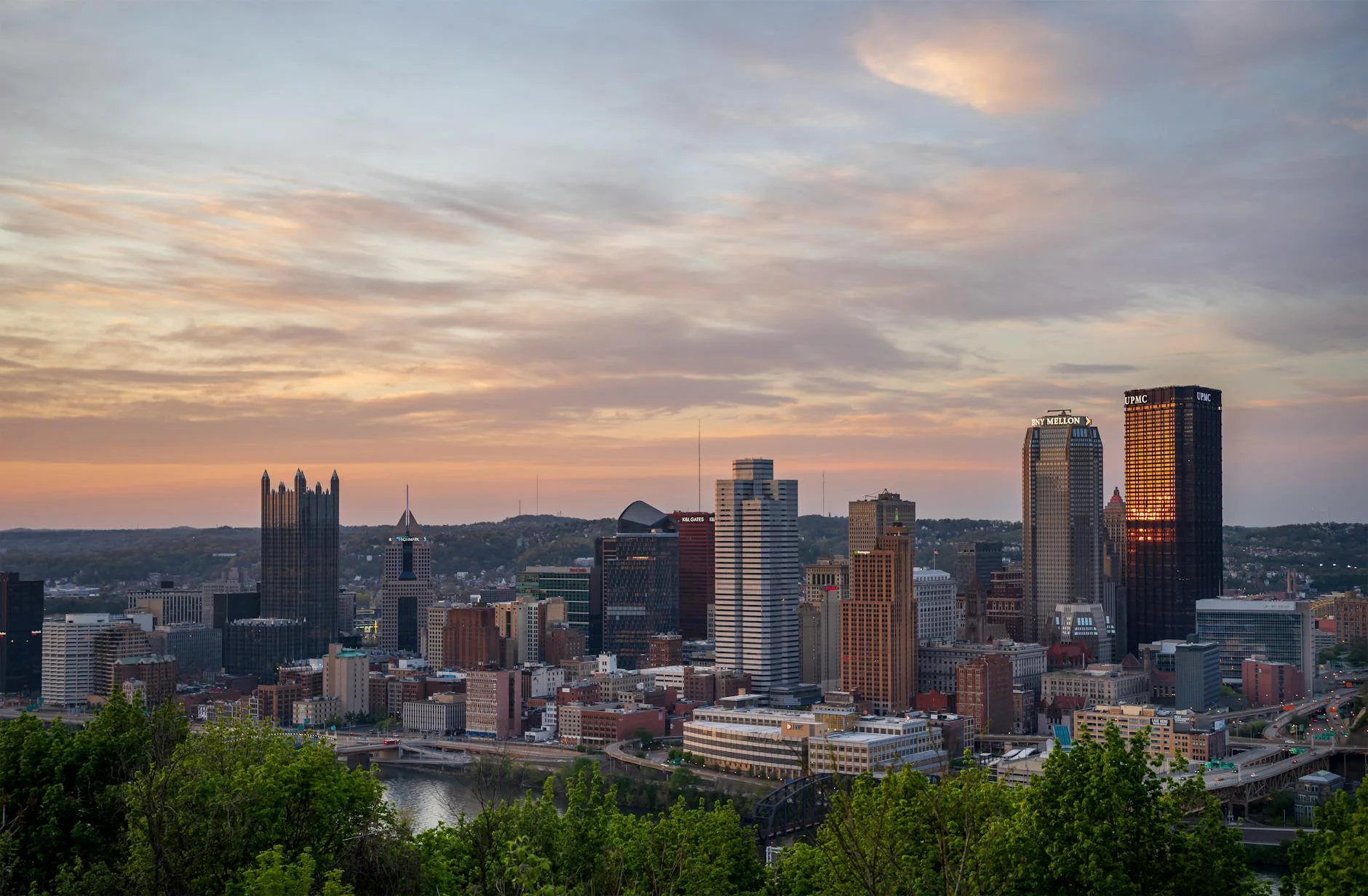
Scranton skyline

Scranton, PA

Complete city guide with real-time data from official US government sources.

45°
Current
Rain Showers
H: 46° L: 28°
75,803
Population
$41,601
Median Income
$185K
Median Home Price
22.5%
Bachelor's Degree+
Purchasing Power Analysis

Lifestyle Impact in Scranton

Scranton is 7.0% cheaper than the national average. We calculate how much your salary "feels like" here.

Real Purchasing Power
$91,398
+8%
Extra lifestyle value
Relative to US Average
COL Adjusted
Real-time Metrics

Scranton: The Data Profile (2026)

Scranton, Pennsylvania, presents a complex statistical landscape for potential relocators in the post-remote era. With a population of 75,803, it functions as a micro-metro hub rather than a sprawling urban center. The primary economic friction point is the significant disparity between local earning potential and the national average; the median household income sits at $41,601, which is 44.2% lower than the US median of $74,580. This wage depression is compounded by a lower educational attainment rate, where only 22.5% of residents hold a bachelor's degree or higher, significantly trailing the US average of 33.1%.

The statistical target demographic for Scranton is the "Geo-Arbitrage" remote worker. This profile represents individuals earning a salary within the top 25% of the national income bracket who can leverage geographic arbitrage to maximize savings. With a Cost of Living Index for housing at 68.8 (a 31.2% reduction from the national average), a household earning $80,000+ remotely can achieve a disposable income ratio comparable to a $120,000+ household in a major metro.

City Score

Cost of Living Analysis

While housing is the primary value driver, the cost structure reveals distinct anomalies. Healthcare and dining out are statistically expensive, with indices of 116.7 and 116.7 respectively, representing a 16.7% premium over the national average. This suggests that while housing costs are low, daily lifestyle expenses can accumulate rapidly if not managed.

Category Single Adult (Monthly) Family of 4 (Monthly)
Housing (Rent) $854 $1,343
Groceries $394 $1,221
Transportation $394 $1,221
Healthcare $467 $1,467
Utilities (Electric) $150 $275
Dining/Entertainment $467 $1,467
TOTAL ESTIMATED $2,726 $7,004

Disposable Income Analysis:
The "Scranton Savings Gap" is defined by the interaction between low housing costs and the sub-par median income. A single earner making the median income of $41,601 (approx. $2,880 monthly take-home) faces a deficit against the single-adult budget of $2,726, leaving only $154 for savings or debt. Conversely, a remote worker earning the US median of $74,580 (approx. $4,900 monthly take-home) retains $2,174 monthly, a 79% savings rate that is virtually unattainable in coastal markets.

💰 Cost of Living vs US Average

Scranton's prices compared to national average (100 = US Average)

Cheaper than US
More expensive

Source: BLS & BEA RPP (2025 Est.)

Housing Market Deep Dive

The housing market is the city's strongest economic asset. The Median Home Price of $165,000 is a 53.2% discount against the national average. However, the Price per Square Foot ($135) reveals that while entry-level homes are cheap, quality inventory is priced higher than the headline median suggests.

Metric Scranton Value US Average Difference (%)
Median Home Price $165,000 $352,000 -53.2%
Price/SqFt $135 $220 -38.6%
Rent (1BR) $854 $1,700 -49.8%
Rent (3BR) $1,343 $2,600 -48.3%
Housing Index 68.8 100.0 -31.2%

Buy vs. Rent Analysis:
The Rent-to-Price ratio in Scranton favors buying. With a median home price of $165,000 and a 1BR rent of $854, the price-to-rent ratio is roughly 16, which is significantly below the national average of 20-22. For those planning to stay longer than 3 years, purchasing is the mathematically superior option. The low inventory turnover, however, means that buying often requires patience, with average market time sitting at 45 days.

🏠 Real Estate Market

$185K
Median Home Price
$109
Per Sq Ft
39
Days on Market
Source: Redfin 2025 estimates

Economic & Job Market Outlook

Scranton’s economy is currently defined by a "Post-Remote" bifurcation. The local job market remains heavy in healthcare and education sectors, with major employers like Geisinger and the University of Scranton providing stability. However, the 4.2% unemployment rate, while close to the national average, masks underemployment issues common in the region.

Commute & RTO Impact:
For the 22.5% of the workforce engaged in hybrid or remote roles, the "Last Mile" infrastructure is critical. The average one-way commute is 18.5 minutes, well below the US average of 27.6 minutes. This low congestion factor is a major quality-of-life asset. However, public transit coverage is limited (covering only 35% of the metro area), making a personal vehicle essential. The post-remote shift has stabilized rental demand in the downtown "Steamtown" district, pushing occupancy rates to 94%.

Salary Wars

See how far your salary goes here vs other cities.

$75,000
US National Average
$75,000
Nominal Value
Real Value in Scranton
$80,645
+7.5% Purchasing Power

Purchasing Power Leaderboard

#1
ScrantonYou
$80,645
#2
Houston
$74,850
#3
Chicago
$73,099
#4
Phoenix
$71,090
#5
New York
$66,667

💰 Income Comparison

Quality of Life Audit

Health metrics in Scranton present a mixed bag. While mental health access is adequate, lifestyle-related health issues are prevalent. Air quality is moderate, heavily influenced by winter inversion layers and regional industrial activity.

Metric City Value US Average Rating
Health Score 82.4 86.1 Below Avg
Obesity Rate 31.5% 30.1% High
Diabetes Rate 10.2% 9.5% High
Smoking Rate 16.0% 12.5% High
Mental Health Access 78.0 80.5 Average
AQI (Annual Avg) 55 48 Moderate
PM2.5 Levels 9.2 µg/m³ 8.4 µg/m³ Moderate
Unemployment Rate 4.2% 4.0% Average

Safety & Crime:
Safety is a statistical concern. The Violent Crime Rate is 312 incidents per 100,000 residents, which is 18% higher than the national average. Property crime is more pronounced, at 2,150 incidents per 100,000 residents. While specific neighborhoods like Green Ridge and Clarks Green remain safe, the downtown area sees higher property crime density.

Schools & Weather:
The Scranton School District struggles, with proficiency rates hovering at 38% in math and reading, significantly lower than the state average. Families often opt for private schooling or suburban districts. Weather-wise, the region is typical Northeast; today’s conditions of 45°F with rain showers are a precursor to winter averages of 28°F lows. Annual snowfall averages 45 inches, requiring winterization budgets for vehicles and homes.

Quality of Life Metrics

Air Quality

EPA Annual Average
Good
35AQI
Air quality is satisfactory.
PM2.5 Concentration18.4 µg/m³

Health Pulse

CDC PLACES Data
91.7
Score
Obesity
21.3%
Low Avg (32%) High
Diabetes
7.5%
Smoking
11.4%
Based on CDC PLACES health census data. Higher score indicates better overall public health outcomes.

Safety Score

FBI Crime Data Estimate
Safe
Violent Crime
per 100k people
345.0
US Avg: 363.8
Property Crime
per 100k people
2123
US Avg: 1917
Crime rates are lower than the national average.

The Verdict

Pros:

  • Housing Arbitrage: The -53.2% discount on home prices allows for rapid wealth accumulation for remote earners.
  • Commute Efficiency: An average commute of 18.5 minutes drastically reduces time lost to transit compared to major metros.
  • Low Overhead: A total monthly budget of $2,726 for a single adult is far below national averages.

Cons:

  • Income Ceiling: The median income of $41,601 makes local employment financially unsustainable for high-skill workers.
  • Health & Safety: Higher-than-average crime rates (312 violent per 100k) and obesity rates (31.5%) suggest a challenging environment for lifestyle optimization.
  • Healthcare Premium: Costs are 16.7% above average, which can erode savings for those with chronic conditions.

Final Recommendation:
Scranton is a Tier-1 relocation target for remote workers earning $75,000+, but a Tier-3 option for those seeking local employment. The data supports a move strictly for geo-arbitrage purposes. If you rely on the local job market, the math does not work; if you bring your income with you, the value proposition is nearly unrivaled in the Northeast.

FAQs

1. What salary is required for a comfortable life in Scranton?
For a single adult to live comfortably (including savings and discretionary spending), a salary of $65,000 is recommended. This provides a monthly surplus of approximately $1,200 after taxes and expenses.

2. How does the value proposition compare to Philadelphia?
Scranton housing is 53.2% cheaper than Philadelphia, but utilities (electricity) are 11% higher. However, Scranton offers a significantly lower tax burden on earned income compared to Philadelphia's city wage tax.

3. Is Scranton safe?
It is statistically average to slightly below average. With a violent crime rate of 312 per 100k, it is safer than Philadelphia (~750 per 100k) but less safe than neighboring Clarks Summit (~150 per 100k).

4. When is the best time to move/buy?
The housing market cools significantly in January/February. Listing inventory drops by 40% in winter, but sellers are highly motivated. Aim for a move-in date in Q1 to secure the lowest purchase price.

Top Schools

Powered by NCES Govt Data (2024-2025)
#1

Isaac Tripp El Sch

694 Students 1:12 Teacher Ratio
9.5 Rating
#2

Neil Armstrong #40

428 Students 1:12 Teacher Ratio
9.5 Rating
#3

John F. Kennedy #7

320 Students 1:12 Teacher Ratio
9.5 Rating
#4

Howard Gardner Multiple Intelligence CS

318 Students 1:11 Teacher Ratio
9.5 Rating
#5

Robert Morris #27

217 Students 1:13 Teacher Ratio
9.5 Rating
Loading...