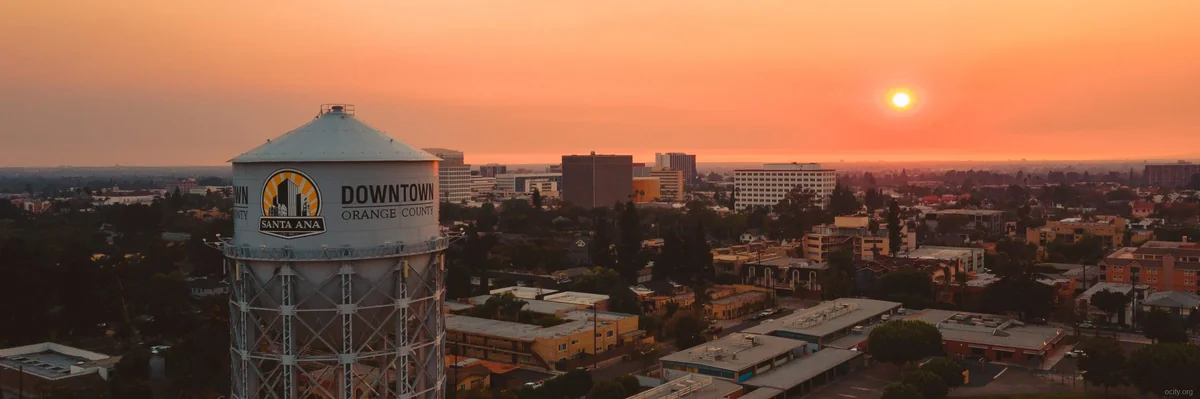
Santa Ana skyline

Santa Ana, CA

Complete city guide with real-time data from official US government sources.

62°
Current
Sunny
H: 82° L: 55°
310,523
Population
$85,914
Median Income
$817K
Median Home Price
16.5%
Bachelor's Degree+
Purchasing Power Analysis

Lifestyle Impact in Santa Ana

Santa Ana is 15.5% more expensive than the national average. We calculate how much your salary "feels like" here.

Real Purchasing Power
$73,593
-13%
Reduction in lifestyle value
Relative to US Average
COL Adjusted
Real-time Metrics

Santa Ana: The Data Profile (2026)

Santa Ana presents a complex economic paradox for the 2026 relocator. With a population of 310,523, the city operates as a dense urban hub within Orange County. The primary statistical anomaly is the income-to-education gap. Median household income stands at $85,914, which is 15.2% higher than the US median of $74,580. However, the educational attainment rate is critically low; only 16.5% of residents hold a bachelor's degree or higher, compared to a national average of 33.1%.

The statistical target demographic is the skilled trade professional or the "high-school diploma + experience" earner who has capitalized on the local industrial base. It is less ideal for the entry-level knowledge worker, as the low education saturation suggests a competitive labor market for white-collar roles relative to the cost of living.

City Score

Cost of Living Analysis

The cost of living in Santa Ana is driven almost exclusively by housing and energy costs. While groceries and transportation hover near the national baseline, the "Housing Index" of 156.3 indicates a 56.3% premium over the US average. The most significant outlier is the price of electricity, which averages 31.97 cents/kWh—nearly double the US average of 16.0 cents.

Table 1: Cost of Living Breakdown (Monthly Budgets)

Category Single Adult (Est.) Family of 4 (Est.) Notes
Housing $2,150 $3,850 Based on 1BR vs 3BR fair market rents.
Groceries $450 $1,250 +7.2% vs US average.
Transportation $550 $1,200 +12.0% vs US average (fuel/insurance).
Healthcare $350 $1,100 +12.1% vs US average.
Utilities (Elec) $110 $220 31.97¢/kWh vs 16.0¢ US avg.
Dining/Ent. $400 $850 +18.7% for restaurants.
Total Monthly $4,010 $8,470 Monthly Discretionary: Low

Disposable Income Analysis:
To maintain the median household income of $85,914 ($7,160/month gross), a family of four faces a net monthly income of approximately $5,600 (after taxes). With a projected cost of living of $8,470, the statistical median earner is operating at a monthly deficit of approximately -$2,870. Relocation here requires a household income significantly above the median—likely exceeding $125,000—to achieve financial stability.

💰 Cost of Living vs US Average

Santa Ana's prices compared to national average (100 = US Average)

Cheaper than US
More expensive

Source: BLS & BEA RPP (2025 Est.)

Housing Market Deep Dive

The housing market is the defining financial hurdle. While renting is expensive, buying is statistically out of reach for the median earner. The median home price is approximately $890,000, which is roughly 4.5x the median household income. The Price per Square Foot sits at $610, reflecting the high land value density.

Table 2: Housing Market Data (Buying vs Renting Analysis)

Metric Santa Ana Value US Average Difference (%)
Median Home Price $890,000 $412,000 +116%
Price / Sq Ft $610 $280 +118%
Rent (1BR) $2,150 $1,650 +30%
Rent (3BR) $3,850 $2,450 +57%
Housing Index 156.3 100.0 +56.3%

Buy vs. Rent Verdict:
The "Price-to-Rent Ratio" in Santa Ana heavily favors renting. With a median home price of $890,000 and annual rent for a 3BR at $46,200, the ratio is roughly 19.2 (anything above 21 suggests renting). Unless you can put down 20% ($178,000) and secure a rate below 6.0%, the monthly mortgage payment (including taxes/insurance) would exceed $6,500—more than double the rental cost. Renting is the only viable option for the median earner.

🏠 Real Estate Market

$817K
Median Home Price
$541
Per Sq Ft
57
Days on Market
Source: Redfin 2025 estimates

Economic & Job Market Outlook

RTO (Return to Office) Impact: Santa Ana is heavily influenced by the "Super-Commute." With a local unemployment rate of 5.5% (vs US 4.0%), the local job market is tight. Many residents work in logistics, manufacturing, or service industries locally, but high earners commute to Irvine or Los Angeles.

  • Commute Times: Average commute is 28 minutes, but this spikes to 45+ minutes during peak hours on the I-5 or SR-55.
  • Industry Stability: The 16.5% college education rate suggests a reliance on non-degree sectors. While stable, these sectors show slower wage growth compared to tech hubs.
  • Unemployment Analysis: The 5.5% rate is 37.5% higher than the national average, indicating a saturated labor pool relative to available professional roles.

Salary Wars

See how far your salary goes here vs other cities.

$75,000
US National Average
$75,000
Nominal Value
Real Value in Santa Ana
$64,935
-13.4% Purchasing Power

Purchasing Power Leaderboard

#1
Houston
$74,850
#2
Chicago
$73,099
#3
Phoenix
$71,090
#4
New York
$66,667
#5
Santa AnaYou
$64,935

💰 Income Comparison

Quality of Life Audit

Health outcomes in Santa Ana are a mixed bag. While the aggregate "Health Score" is a respectable 79.8/100, specific metabolic risks are elevated. The Diabetes Rate of 13.0% is significantly higher than the US average of 10.9%, likely correlating with the high density of fast-food outlets relative to grocery stores.

Table 3: Quality of Life Metrics

Metric City Value US Average Rating
Health Score 79.8/100 75.0/100 Good
Obesity Rate 29.0% 31.9% Average
Diabetes Rate 13.0% 10.9% High
Smoking Rate 11.6% 14.0% Low
Mental Health N/A N/A Data N/A
AQI (Air Quality) 54 50 Moderate
PM2.5 Levels 9.0 µg/m³ 8.0 µg/m³ Moderate
Unemployment 5.5% 4.0% High

Safety & Environment:

  • Crime: Violent crime is 500 per 100k (US avg: 380), categorized as AVERAGE. Property crime is the primary concern at 2,676 per 100k (US avg: 2,000), categorized as HIGH. Secure parking and home security systems are recommended.
  • Air Quality: AQI averages 54 (Moderate). PM2.5 levels are 9.0 µg/m³, slightly above the WHO guideline. Residents with respiratory issues may feel effects during summer heat inversions.
  • Weather: Currently 60.0°F with clear skies. Highs reach 71°F and lows 46°F. The climate is a major asset, offering mild winters and consistent sunshine.
  • Schools: The low 16.5% college attainment rate reflects the local school system's challenges. Families often seek private schooling or move to adjacent cities for better district funding.

Quality of Life Metrics

Air Quality

EPA Annual Average
Good
47AQI
Air quality is satisfactory.
PM2.5 Concentration11.2 µg/m³

Health Pulse

CDC PLACES Data
79.8
Score
Obesity
29%
Low Avg (32%) High
Diabetes
13%
Smoking
11.6%
Based on CDC PLACES health census data. Higher score indicates better overall public health outcomes.

Safety Score

FBI Crime Data Estimate
Average
Violent Crime
per 100k people
367.0
US Avg: 363.8
Property Crime
per 100k people
2123
US Avg: 1917
Crime rates are generally higher than the national average.

The Verdict

Pros:

  • Income Potential: Median income is 15.2% above the national norm for those without advanced degrees.
  • Climate: Consistently clear skies and mild temperatures (60°F-71°F).
  • Location: Proximity to the broader Southern California economic engine (Irvine, LA).

Cons:

  • Housing Burden: A 56.3% housing premium makes ownership nearly impossible for the median earner.
  • Health Risks: Diabetes rates are 19.3% higher than the national average.
  • Crime: Property crime is 33.8% above the national average.
  • Energy Costs: Electricity is 99.8% more expensive than the US average.

Final Recommendation:
Santa Ana is a "Rent-and-Work" city, not a "Buy-and-Build-Wealth" city for 2026. It is recommended for renters earning above $100,000 who work locally or in nearby Irvine and value climate over square footage. It is not recommended for families looking to purchase a home on a single median income, or for those highly sensitive to air quality and property crime risks.

FAQs (2026 Relocation Guide)

1. What salary is required to live comfortably in Santa Ana?
For a single person, a gross salary of $85,000 is the minimum to cover the $4,010 monthly budget while saving 15%. For a family, you need a household income of at least $130,000 to avoid living paycheck-to-paycheck.

2. How does Santa Ana compare to the national value curve?
Santa Ana delivers negative value on the national curve. You pay 116% more for housing and 99.8% more for electricity to access a median income that is only 15.2% higher. The "premium" paid in COL erases the income advantage.

3. Is Santa Ana safe for families?
Violent crime is average (500/100k), but property crime is HIGH (2,676/100k). It is statistically safer than the average US city regarding violence, but significantly riskier regarding theft and burglary.

4. When is the best time to move to Santa Ana?
Move in Q1 (January-March). The rental market cools slightly post-holidays, and the weather (Highs of 71°F, Lows of 46°F) is ideal for moving logistics compared to the stifling heat of September.

Top Schools

Powered by NCES Govt Data (2024-2025)
#1

Advanced Learning Academy

332 Students 1:11 Teacher Ratio
9.5 Rating
#2

Cesar E. Chavez High

229 Students 1:11 Teacher Ratio
9.5 Rating
#3

Taft Elementary

429 Students 1:15 Teacher Ratio
8 Rating
#4

Lorin Griset Academy

268 Students 1:16 Teacher Ratio
8 Rating
#5

OCSA

2252 Students 1:17 Teacher Ratio
7.5 Rating
Loading...