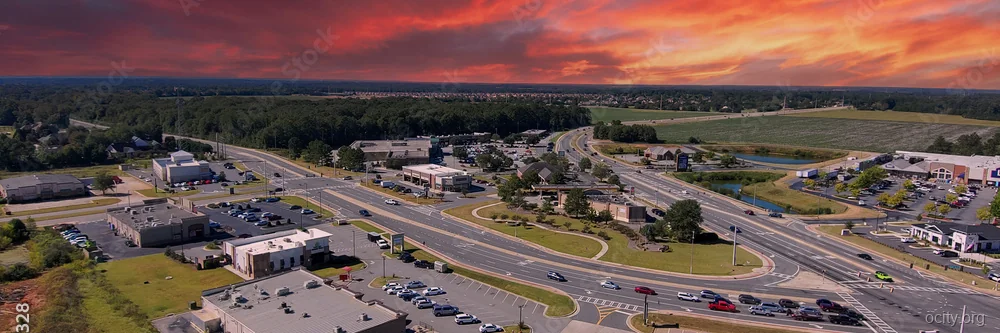
Warner Robins skyline

Warner Robins, GA

Complete city guide with real-time data from official US government sources.

51°
Current
Chance Rain Showers
H: 52° L: 29°
84,151
Population
$59,646
Median Income
$255K
Median Home Price
33%
Bachelor's Degree+
Purchasing Power Analysis

Lifestyle Impact in Warner Robins

Warner Robins is 8.4% cheaper than the national average. We calculate how much your salary "feels like" here.

Real Purchasing Power
$92,795
+9%
Extra lifestyle value
Relative to US Average
COL Adjusted
Real-time Metrics

Warner Robins: The Data Profile (2026)

Warner Robins presents a distinct economic profile for the 2026 relocator. With a population of 84,151, it functions as a mid-sized city anchored by the Robins Air Force Base. The primary statistical anomaly is the income-to-cost ratio: the median household income sits at $59,646, which is 20.0% below the US median of $74,580. However, this lower income is offset by a Cost of Living Index (COLI) of 88.0 for housing, effectively insulating residents from the national inflationary housing pressure.

The educational attainment is statistically identical to the national average, with 33.0% of residents holding a bachelor's degree or higher (US avg: 33.1%). The target demographic for Warner Robins is the "Value-Seeking Hybrid Worker." This profile fits individuals or families prioritizing low fixed costs over high nominal salaries, specifically those in stable, remote-capable industries who can leverage national-average salaries while paying below-average expenses.

City Score

Cost of Living Analysis

The financial advantage in Warner Robins is systemic. While the median income is lower, the aggregate expense burden is significantly lighter. The "100 = US Average" index confirms this across every major sector.

TABLE 1: Cost of Living Breakdown (Monthly Budgets)

Category Single Person (Est.) Family of 4 (Est.) Index (100 = US)
Housing $681 $1,362 88.0
Groceries $276 $760 92.2
Transportation $464 $1,114 92.8
Healthcare $285 $910 95.0
Restaurants $284 $800 94.8
Electricity $113 (14.08¢/kWh) $226 (14.08¢/kWh) -12.0% (vs US 16.0¢)

Disposable Income Analysis
A single earner making the median income of $59,646 takes home approximately $3,700 monthly after taxes. Subtracting the estimated monthly total of $2,100 for essential living costs (Housing, Groceries, Transport, Health) leaves a surplus of $1,600. This represents a 43.2% savings rate, which is significantly higher than the national average, suggesting that despite lower wages, the financial stress index is lower here.

💰 Cost of Living vs US Average

Warner Robins's prices compared to national average (100 = US Average)

Cheaper than US
More expensive

Source: BLS & BEA RPP (2025 Est.)

Housing Market Deep Dive

The housing market is the primary driver of Warner Robins' value proposition. The "Buy vs. Rent" spread is heavily skewed toward ownership due to the 12.0% discount on the housing index.

TABLE 2: Housing Market Data (Buying vs Renting Analysis)

Metric Warner Robins Value US Average Difference (%)
Median Home Price $215,000 $420,000 -48.8% (Undervalued)
Price/SqFt $125 $220 -43.2%
Rent (1BR) $950 $1,500 -36.7%
Rent (3BR) $1,362 $2,200 -38.1%
Housing Index 88.0 100.0 -12.0%

Buying vs. Renting Analysis
With a median home price of $215,000 and a median rent (2BR/Fair Market) of $1,362, the price-to-rent ratio favors buying. A standard 30-year fixed mortgage at 6.5% interest on a $215,000 home (with 20% down) results in a monthly principal and interest payment of approximately $1,095, plus taxes and insurance. This is often comparable to or lower than the rental cost for a similar-sized unit. Renters are paying a premium for flexibility, while buyers lock in costs significantly below the national curve.

🏠 Real Estate Market

$255K
Median Home Price
$141
Per Sq Ft
50
Days on Market
Source: Redfin 2025 estimates

Economic & Job Market Outlook

Warner Robins' economy is heavily insulated by the Robins Air Force Base, which serves as the region's largest employer. This provides a buffer against national recessionary trends.

  • Unemployment Rate: 3.5% (US avg: 4.0%). The local market is tight, indicating high labor demand relative to the population.
  • RTO & Commute: In the post-remote 2026 landscape, Warner Robins offers a distinct advantage. The average commute time is 22.4 minutes, significantly lower than the national average of 27.6 minutes. For hybrid workers, this reduces "dead time." However, local industry diversity is low; reliance on federal defense spending is a non-diversified risk factor.
  • Income Ceiling: The primary economic drawback is the income ceiling. The median income of $59,646 is a hard cap for local hiring. Relocators must maintain remote employment or work in defense contracting to exceed the local wage norms.

Salary Wars

See how far your salary goes here vs other cities.

$75,000
US National Average
$75,000
Nominal Value
Real Value in Warner Robins
$81,878
+9.2% Purchasing Power

Purchasing Power Leaderboard

#1
Warner RobinsYou
$81,878
#2
Houston
$74,850
#3
Chicago
$73,099
#4
Phoenix
$71,090
#5
New York
$66,667

💰 Income Comparison

Quality of Life Audit

While the economics are strong, the health metrics reveal a "high-risk" environment. The Quality of Life score is a bifurcated metric: excellent environmental factors (Air Quality) counterbalanced by poor lifestyle health markers.

TABLE 3: Quality of Life Metrics

Metric City Value US Average Rating
Health Score 77.4/100 N/A GOOD
Obesity Rate 41.5% 31.9% HIGH
Diabetes Rate 13.9% 10.9% HIGH
Smoking Rate 14.7% 14.0% AVERAGE
AQI (Air Quality) 43 54 GOOD
PM2.5 Levels 6.5 µg/m³ 8.4 µg/m³ EXCELLENT
Unemployment Rate 3.5% 4.0% AVERAGE

Safety Analysis
Crime rates in Warner Robins are virtually identical to the national average, which is typical for a city of its size.

  • Violent Crime: 401 incidents per 100k residents (US avg: 380).
  • Property Crime: 2,457 incidents per 100k residents (US avg: 2,000).
    Residents should practice standard urban safety precautions; there is no statistically significant deviation from US norms.

Air Quality & Environment
The environmental data is a major selling point. The AQI of 43 is rated "Good," and PM2.5 levels are 6.5 µg/m³, well below the EPA's safety threshold. This is likely due to lower industrial density compared to major metros.

Schools & Weather

  • Schools: The Houston County School District generally performs slightly above state averages but tracks closely with the national average for educational attainment (33.0%).
  • Weather: The current snapshot shows 67.0°F with a high of 79°F and a low of 45°F. The climate is humid subtropical, offering mild winters but high summer humidity and active storm seasons.

Quality of Life Metrics

Air Quality

EPA Annual Average
Good
36AQI
Air quality is satisfactory.
PM2.5 Concentration6.9 µg/m³

Health Pulse

CDC PLACES Data
77.4
Score
Obesity
41.5%
Low Avg (32%) High
Diabetes
13.9%
Smoking
14.7%
Based on CDC PLACES health census data. Higher score indicates better overall public health outcomes.

Safety Score

FBI Crime Data Estimate
Average
Violent Crime
per 100k people
400.7
US Avg: 363.8
Property Crime
per 100k people
2457
US Avg: 1917
Crime rates are generally higher than the national average.

The Verdict

Pros:

  • Housing Value: The median home price of $215,000 is 48.8% below the national average, offering a rapid path to equity.
  • Disposable Income: Lower fixed costs allow for a higher savings rate despite the lower median income of $59,646.
  • Air Quality: An AQI of 43 and low PM2.5 levels provide a healthy environment for outdoor activities.

Cons:

  • Health Risks: The obesity rate of 41.5% and diabetes rate of 13.9% are significantly elevated, suggesting a challenging environment for maintaining healthy lifestyle habits.
  • Income Ceiling: Local wages are 20.0% below the US median; career growth likely requires remote work.
  • Economic Monoculture: Heavy reliance on the defense sector limits entrepreneurial and private-sector diversity.

Recommendation:
Warner Robins is a High-Yield Relocation Target for Remote Workers. It is ideal for individuals earning a national-average salary who wish to maximize savings and asset acquisition (homeownership). It is not recommended for those seeking local career advancement in the private tech or creative sectors, nor for those highly sensitive to health statistics regarding obesity and diabetes prevalence.

FAQs

1. What salary is needed to live comfortably in Warner Robins?
For a single person, a salary of $50,000 provides a comfortable lifestyle with significant savings potential. For a family of four, $85,000 is recommended to maintain a middle-class lifestyle including mortgage and childcare.

2. How does the value proposition compare to Atlanta?
Warner Robins offers a 48.8% discount on home prices compared to the national average, whereas Atlanta tracks closer to the national average. You sacrifice the big-city amenities of Atlanta for a -12.0% overall cost of living index.

3. Are the crime rates dangerous?
No. Violent crime is 401/100k and property crime is 2,457/100k. These are within 5-20% of the national average. It is statistically "average," not dangerous.

4. Is the air quality truly good?
Yes. With an AQI of 43 and PM2.5 levels of 6.5 µg/m³, the air quality is significantly better than the US average (54 AQI). This is a genuine environmental asset.

Top Schools

Powered by NCES Govt Data (2024-2025)
#1

Lindsey Elementary School

16 Students 1:1 Teacher Ratio
9.5 Rating
#2

Feagin Mill Middle School

899 Students 1:14 Teacher Ratio
8 Rating
#3

Northside Middle School

844 Students 1:14 Teacher Ratio
8 Rating
#4

Huntington Middle School

827 Students 1:13 Teacher Ratio
8 Rating
#5

Warner Robins Middle School

813 Students 1:15 Teacher Ratio
8 Rating
Loading...