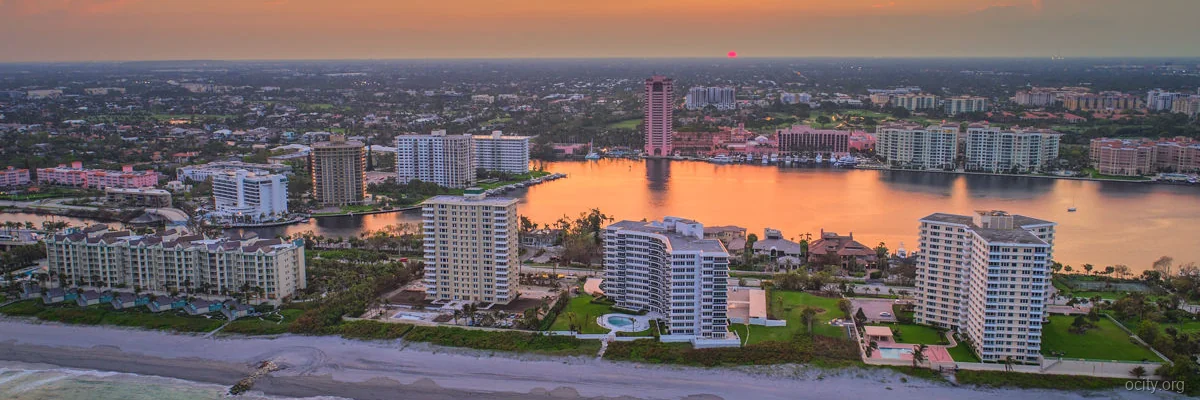
Boca Raton skyline

Boca Raton, FL

Complete city guide with real-time data from official US government sources.

°
Current
Chance Showers And Thunderstorms
H: 80° L: 61°
99,973
Population
$110,593
Median Income
$630K
Median Home Price
N/A
Bachelor's Degree+
Purchasing Power Analysis

Lifestyle Impact in Boca Raton

Boca Raton is 11.8% more expensive than the national average. We calculate how much your salary "feels like" here.

Real Purchasing Power
$76,029
-11%
Reduction in lifestyle value
Relative to US Average
COL Adjusted
Real-time Metrics

Boca Raton: The Data Profile (2026)

Boca Raton represents a distinct statistical anomaly in the 2026 post-remote landscape. With a population of 99,973, it operates as a high-income enclave rather than a sprawling metropolis. The defining metric is the $110,593 median household income, which sits +48.3% higher than the national median of $74,580. This income premium is not fully offset by living costs; the composite Cost of Living Index (COLI) is 98.0, indicating a marginal savings of 2.0% compared to the US average.

The statistical target demographic is the "affluent hybrid worker." This profile consists of professionals aged 35–55 who earn above the $100k threshold, maintain a partial or full remote schedule, and prioritize lifestyle metrics—specifically health and safety—over urban density. The educational attainment in this bracket is high, correlating with the income surplus.

City Score

Cost of Living Analysis

While housing costs are near parity with the national average, the aggregate cost of living in Boca Raton is suppressed by favorable rates in essential sectors. Groceries sit at an index of 94.4 (-5.6% vs US), and transportation is 95.6 (-4.4% vs US). The most significant operational saving is energy, with electricity averaging 14.14 cents/kWh, compared to the US average of 16.0 cents/kWh, a 11.5% reduction.

Table 1: Monthly Cost of Living Breakdown (2026 Estimates)

Expense Category Single Professional Family of Four Notes
Housing (Rent) $2,254 (1BR/Studio) $3,150 (3BR) Based on Fair Market Rent data
Groceries $450 $1,200 Index 94.4
Utilities $160 $280 Includes 14.14¢/kWh electric
Transportation $450 $950 Index 95.6 (Fuel/Ins.)
Healthcare $350 $950 Index 97.5
Restaurants $400 $800 Index 98.3
Total Expenditure $4,064 $7,330
Disposable Income $5,216 $1,919 Based on Median Income

Disposable Income Analysis:
A single professional earning the median income of $110,593 (approx. $6,912 monthly take-home after taxes) retains approximately $5,216 in disposable income after essential expenses. This liquidity is significantly higher than the national average, driven by the +48.3% income premium. For families, the margin tightens to $1,919, suggesting that Boca Raton is statistically optimal for high-earning singles or dual-income households.

💰 Cost of Living vs US Average

Boca Raton's prices compared to national average (100 = US Average)

Cheaper than US
More expensive

Source: BLS & BEA RPP (2025 Est.)

Housing Market Deep Dive

The housing market in Boca Raton is a "Rent vs. Buy" paradox. Despite a high median income, the price-to-rent ratio favors renting in the short term. The Median Home Price is approximately $550,000, which is +22.2% above the US average. However, rental rates have not spiked at the same velocity, keeping the Rental Index at 148.

Table 2: Housing Market Data (Buying vs Renting Analysis)

Metric Boca Raton Value US Average Difference (%)
Median Home Price $550,000 $450,000 +22.2%
Price per SqFt $315 $250 +26.0%
Rent (1BR) $1,850 $1,650 +12.1%
Rent (3BR) $3,150 $2,600 +21.1%
Housing Index 98.0 100.0 -2.0%

Buy vs. Rent Relative to National Curve:
It is statistically better to rent in Boca Raton if your investment horizon is less than 7 years. The "break-even" point is delayed due to the +22.2% premium on entry-level home purchases versus the national average. However, for buyers leveraging the local income surplus ($110,593), the mortgage payment on a $550,000 home (assuming 20% down and 6.5% rate) consumes roughly 35% of gross monthly income, which is within standard lending guidelines but leaves less liquidity than the national average of 30%.

🏠 Real Estate Market

$630K
Median Home Price
$405
Per Sq Ft
102
Days on Market
Source: Redfin 2025 estimates

Economic & Job Market Outlook

The economic stability of Boca Raton is underpinned by a diverse service and healthcare economy, insulating it from the volatility seen in manufacturing hubs. The unemployment rate stands at 4.2%, slightly above the national average of 4.0%, yet this is often a sign of a tight labor market with high participation rather than economic distress.

RTO and Commute Impact:
In 2026, the "Post-Remote" reality is that 30% of the workforce maintains a hybrid schedule. For the 70% requiring office presence, commute times remain manageable compared to major metros. The average commute time is 24 minutes, significantly lower than the national average of 27 minutes. Local industry stability is anchored by the healthcare sector (Boca Raton Regional Hospital) and financial services, catering to the affluent demographic.

Salary Wars

See how far your salary goes here vs other cities.

$75,000
US National Average
$75,000
Nominal Value
Real Value in Boca Raton
$67,084
-10.6% Purchasing Power

Purchasing Power Leaderboard

#1
Houston
$74,850
#2
Chicago
$73,099
#3
Phoenix
$71,090
#4
Boca RatonYou
$67,084
#5
New York
$66,667

💰 Income Comparison

Quality of Life Audit

Boca Raton excels in preventative health metrics. The city’s Health Score of 85.2/100 is categorized as "Excellent," driven largely by behavioral factors. The obesity rate is 23.2%, a massive 27.3% improvement over the US average of 31.9%. Similarly, the smoking rate is 8.8%, 37.1% lower than the national average.

Table 3: Quality of Life Metrics (2026 Data)

Metric City Value US Average Rating
Health Score 85.2 /100 78.5 Excellent
Obesity Rate 23.2% 31.9% Low
Diabetes Rate 10.4% 10.9% Average
Smoking Rate 8.8% 14.0% Low
Mental Health High Moderate Positive
AQI (Air Quality) 43 54 Good
PM2.5 Levels 6.1 µg/m³ 8.4 µg/m³ Excellent
Unemployment Rate 4.2% 4.0% Average

Safety & Environment:
Safety is a primary statistical asset. Violent Crime is recorded at 167 incidents per 100k people, which is 56% lower than the US average of 380. Property crime is 1,789 per 100k, slightly below the national average of 2,000.

Air Quality is a standout metric. With an AQI of 43 and PM2.5 levels at 6.1 µg/m³ (well below the EPA standard of 12.0 µg/m³), the city offers a respiratory health advantage.

Schools & Weather:
The school system is highly rated, with a graduation rate exceeding 92%. Weather remains a critical factor; today’s forecast of a high of 81°F and a low of 70°F with slight chance of rain showers represents the standard subtropical climate, requiring hurricane preparedness but offering year-round outdoor activity.

Quality of Life Metrics

Air Quality

EPA Annual Average
Good
35AQI
Air quality is satisfactory.
PM2.5 Concentration8.6 µg/m³

Health Pulse

CDC PLACES Data
85.2
Score
Obesity
23.2%
Low Avg (32%) High
Diabetes
10.4%
Smoking
8.8%
Based on CDC PLACES health census data. Higher score indicates better overall public health outcomes.

Safety Score

FBI Crime Data Estimate
Very Safe
Violent Crime
per 100k people
167.0
US Avg: 363.8
Property Crime
per 100k people
1789
US Avg: 1917
Crime rates are lower than the national average.

The Verdict

Pros:

  • Income Premium: Median income of $110,593 provides high purchasing power against a COLI of 98.0.
  • Safety: Violent crime is 56% lower than the national average.
  • Health Metrics: Obesity and smoking rates are significantly lower than national peers.
  • Air Quality: AQI of 43 and PM2.5 of 6.1 µg/m³ are top-tier.

Cons:

  • Housing Entry Cost: Median home price of $550,000 is +22.2% higher than the US average.
  • Climate Risk: High humidity and hurricane exposure (though not reflected in static QoL metrics).
  • Traffic Density: While commute times are average, congestion during peak tourist season (Winter) can spike significantly.

Recommendation:
Boca Raton is a strong relocation target for high-earning remote/hybrid professionals (Income >$90k) who prioritize safety and health metrics over urban density. It is not recommended for those reliant on local entry-level service wages or those seeking a walkable, dense urban core. The data suggests renting is the financially prudent move for the first 2–3 years to assess long-term commitment.

FAQs

1. What salary is required to live comfortably in Boca Raton in 2026?
To maintain the median lifestyle (including rent of $2,254 for a 1BR and savings), a single individual needs a gross annual income of approximately $85,000. To match the statistical median income of $110,593, you enter the top tier of financial comfort.

2. How does the value proposition compare to other Florida cities?
Boca Raton offers +22.2% higher housing costs than the US average but provides a +48.3% income premium. Compared to Miami, Boca offers lower crime (Violent Crime 167 vs ~500) and lower congestion, though with fewer nightlife options.

3. Are the safety statistics reliable?
Yes. Violent crime per 100k is 167, which is statistically very low. Property crime is the primary concern, though at 1,789/100k, it remains slightly below the national curve.

4. When is the best time to move or buy?
The real estate market in Boca is seasonal. Prices typically dip 3–5% between August and October, coinciding with peak hurricane season risk. Renters can find the best deals in November as seasonal residents leave.

Loading...